
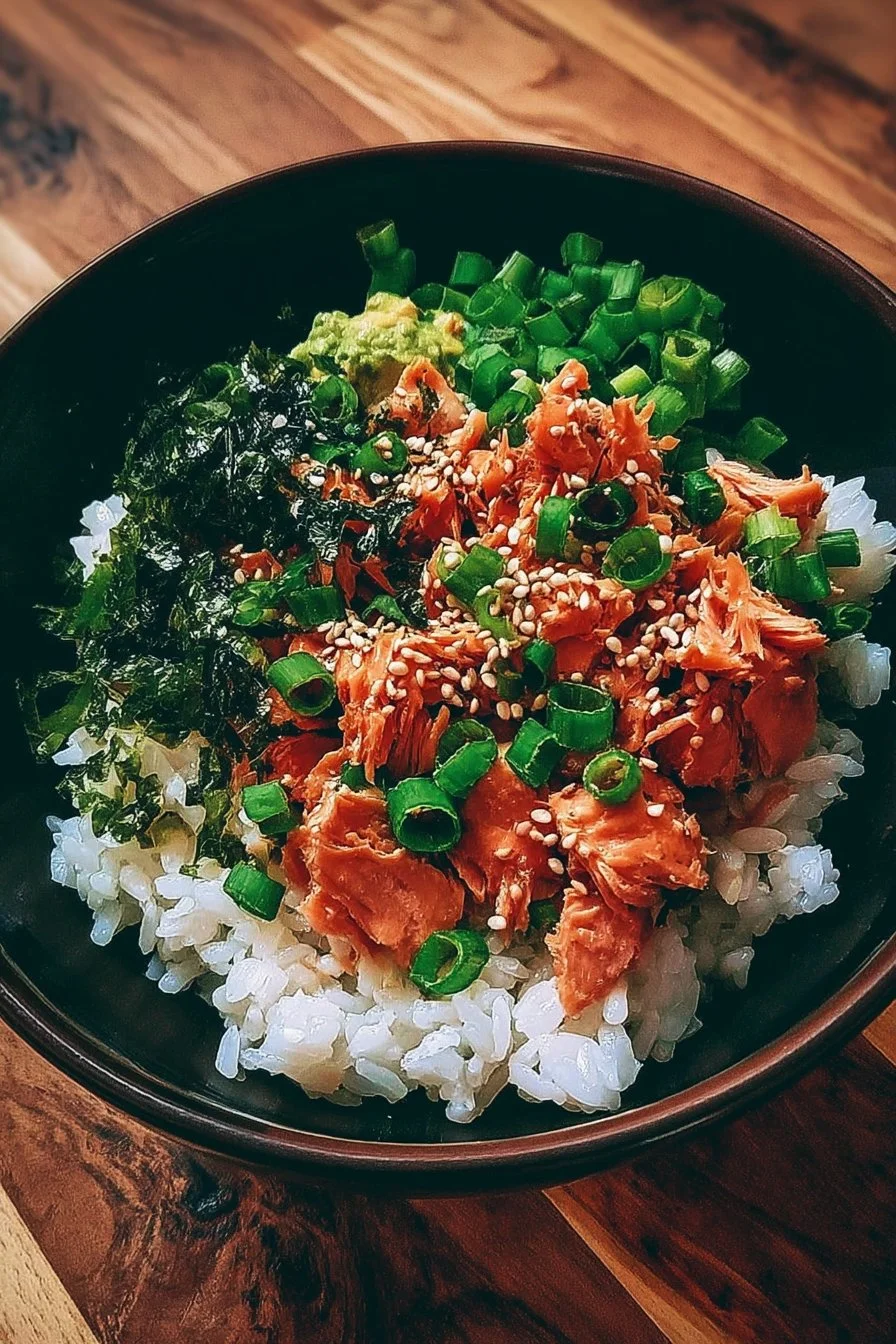
Bright, savory, and satisfyingly spicy, this Spicy Canned Salmon Rice Bowl is the kind of meal that feels homemade but comes together in minutes. Flaky canned salmon melds with warm rice, a splash of soy and sesame brings depth, and crisp, raw vegetables add crunch and freshness — all balanced by optional heat if you like a little Sriracha. It’s fast, comforting, and versatile: perfect for a no-fuss weeknight dinner, a filling lunch, or a quick meal prep option. If you want more recipe inspiration in the same vein, check out this take on the spicy canned salmon rice bowl for subtle twists and serving ideas.
Why You’ll Love This Spicy Canned Salmon Rice Bowl
- Ready in minutes using pantry staples and leftover rice — minimal cooking required.
- Bold, balanced flavors: salty soy, toasty sesame, and the rich umami of canned salmon.
- Textural contrast: soft, warm rice and flaky salmon paired with crunchy, fresh vegetables.
- Budget-friendly and protein-packed without turning to expensive cuts or fresh seafood.
- Highly adaptable — works with white or brown rice and whatever crunchy veggies you have.
- Great for meal prep: components hold up well and assemble quickly when you’re busy.
- Comforting enough for dinner, light enough for lunch — a true everyday go-to.
What Is Spicy Canned Salmon Rice Bowl?
This dish is a simple, bowl-style meal built on cooked rice and a can of seasoned or spicy canned salmon. The salmon is gently flaked into large pieces and combined with warm rice, a drizzle of soy sauce and sesame oil, plus fresh crunchy vegetables for contrast. The overall taste is savory and slightly spicy (depending on the salmon and any added hot sauce), with a toasty sesame note and the clean freshness of raw vegetables. Cooking method: mostly assembly and reheating — there’s no elaborate cooking required, making it ideal for weeknights, quick lunches, or a casual brunch. The vibe is approachable and homey — think simple comfort food that’s both nutritious and convenient.
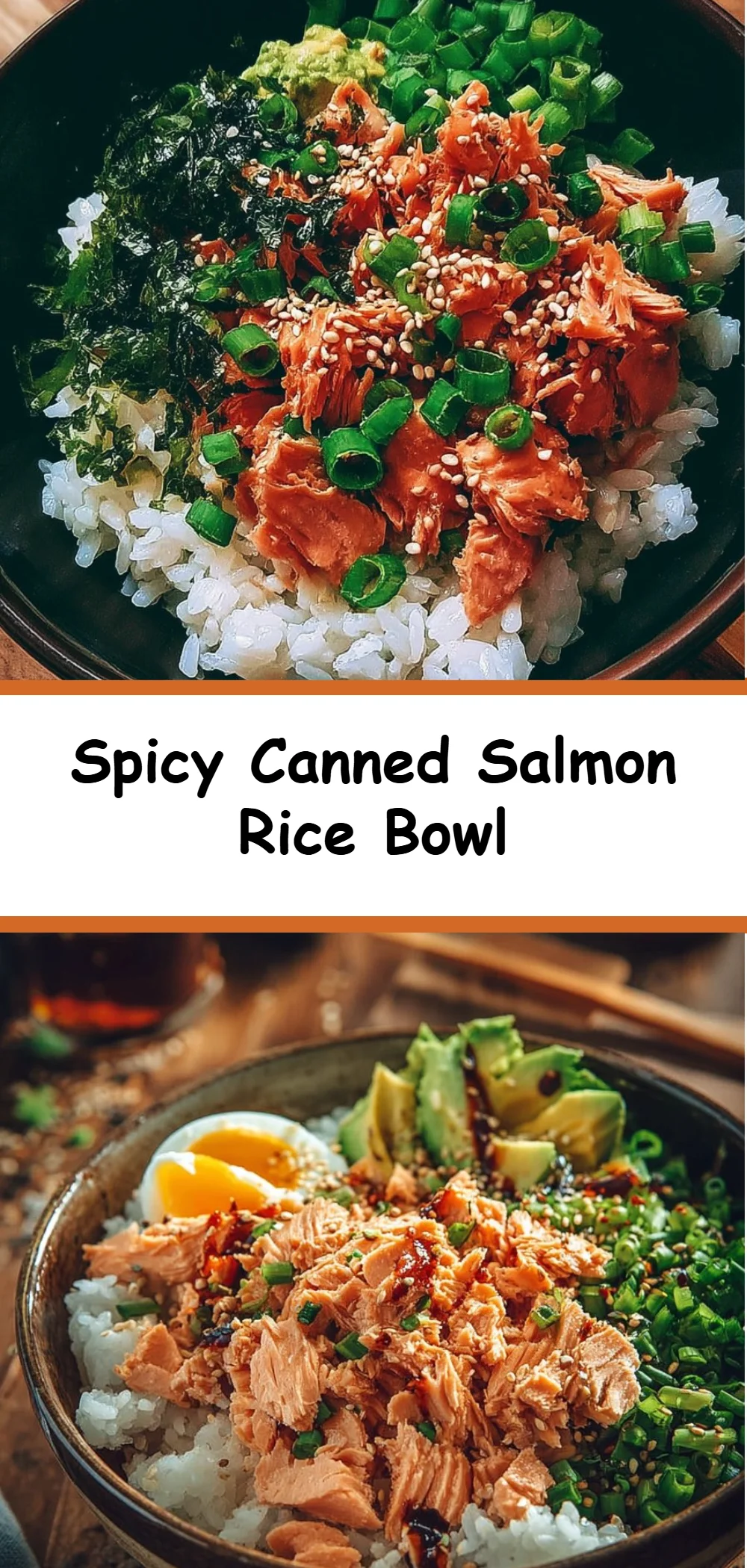
Ingredients for Spicy Canned Salmon Rice Bowl
For the Base
- 2 cups cooked rice (white or brown)
For the Protein
- 1 can of spicy salmon, drained slightly
For the Sauce
- 1 tablespoon soy sauce
- 1 teaspoon sesame oil
For the Crunch & Garnish
- 1 cup mixed crunchy vegetables (bell peppers, cucumber, carrots), chopped
- Chopped green onions for garnish
- Sriracha or hot sauce (optional)
Ingredient Notes (Substitutions, Healthy Swaps)
- Rice: Use white rice for a softer, stickier texture or brown rice for more fiber and a nuttier flavor. Both work fine; keep the measurement the same.
- Spicy canned salmon: If you can only find regular canned salmon, you can add a dash of hot sauce when assembling to bring the heat. Make sure to drain the can slightly but keep some juices for moisture if you prefer.
- Soy sauce: Swap for low-sodium soy sauce or tamari to reduce salt or to make it gluten-free (use tamari specifically labeled gluten-free).
- Sesame oil: If you don’t have sesame oil, a neutral oil (vegetable or light olive) can be used, but sesame adds a distinct flavor — consider toasted sesame seeds for a flavor lift if you omit the oil.
- Vegetables: The recipe uses crunchy raw vegetables for texture. You can substitute with shredded cabbage, radishes, or snap peas depending on seasonality and preference.
- Heat: Sriracha or another hot sauce is optional and adjustable to taste.
Step-by-Step Instructions
Step 1 – Warm the rice
If your rice is cold, warm it briefly in the microwave or on the stovetop until hot but not steaming. Warm rice will better absorb the sauce and distribute heat through the bowl.
Visual cue: The rice should be fluffy and steaming slightly, not dried out or clumped.
Step 2 – Prep the crunchy vegetables
Chop the bell peppers, cucumber, and carrots into bite-sized pieces so they mix evenly with each spoonful of rice and salmon.
Pro cue: Cut vegetables into similar-sized pieces so each bite has the same texture balance.
Step 3 – Flake and drain the salmon
Open the can of spicy salmon and use a fork to gently flake it into large pieces, removing any large bones if you prefer. Drain slightly — leaving a little liquid helps keep the bowl moist.
Visual cue: You want irregular, large flakes of salmon, not mashed or pulverized.
Step 4 – Combine rice and salmon
In a large bowl, add the warm rice, then flaked salmon. Fold gently to combine without breaking the salmon into a mush.
Pro cue: Use a folding motion with a wide spatula to preserve texture and keep the salmon chunky.
Step 5 – Dress the bowl
Drizzle the soy sauce and sesame oil over the rice-salmon mixture, then toss gently to coat everything evenly. Taste and adjust — add more soy if you like it saltier.
Visual cue: The rice should look lightly glossy from the oil and soy, and the salmon evenly distributed.
Step 6 – Add the vegetables and serve
Fold in the chopped vegetables so they stay crisp. Spoon the mixture into bowls, garnish with chopped green onions, and serve with Sriracha or hot sauce on the side.
Pro cue: Add hot sauce sparingly at first — canned salmon can already be spicy — and offer extra at the table.
Pro Tips for Success
- Warm rice is your friend: it soaks up flavors better and makes the bowl feel freshly made.
- Preserve texture: flake the salmon gently and avoid heavy stirring to keep pleasant chunks.
- Balance the seasoning: canned salmon and soy sauce can both be salty — taste after the first drizzle and adjust gradually.
- Keep the veggies crisp: chop them just before serving, or store them separately if you’re prepping ahead.
- Measure your soy sauce: 1 tablespoon is a good starting point; if you use low-sodium soy, you may want a touch more.
- Sesame oil packs a punch: 1 teaspoon adds a lot of flavor; don’t omit it entirely unless you’re substituting with a toasted sesame seed garnish.
- Use a wide bowl and a folding motion when mixing to avoid turning the salmon into a paste.
Flavor Variations (OPTIONAL)
- Spicy boost (OPTIONAL): Add extra Sriracha or a few drops of toasted chili oil for more heat while keeping the base intact.
- Citrus kick (OPTIONAL): Squeeze a little fresh lime or lemon over the finished bowl to brighten flavors — don’t mix it into the rice too early.
- Umami upgrade (OPTIONAL): Sprinkle a few toasted sesame seeds or a small pinch of furikake on top for extra depth.
- Veg-forward (OPTIONAL): Swap one of the vegetables for shredded cabbage or thinly sliced radish to change the crunch profile.
- Cooling contrast (OPTIONAL): Add thinly sliced avocado on the side for creaminess without altering the main ingredients.
- Herb lift (OPTIONAL): Toss in a handful of chopped cilantro or parsley at the end for freshness.
Serving Suggestions
- Simple sides: Serve with a side of steamed edamame or miso soup for a light, Asian-inspired meal.
- Meal pairing: Pair with a crisp cucumber salad dressed in rice vinegar for a refreshing contrast.
- Plating: Layer rice on the bottom, add salmon mixture on top, and arrange vegetables artfully for a bistro-style bowl.
- Occasion ideas: Great for casual weeknight dinners, packed lunches, or a relaxed brunch when you want something savory.
- Party-friendly: Make components in batches — rice, flaked salmon, chopped veggies — and let guests assemble their own bowls.
- Garnish suggestions: Finish with extra green onions, toasted sesame seeds, or a wedge of lime for visual appeal.
Make-Ahead, Storage & Reheating
- What you can prepare ahead: Cook the rice and chop vegetables up to 2 days in advance. Flake the salmon and store it covered in the fridge the same day you plan to serve.
- Refrigerator storage time: Store assembled bowls in an airtight container for up to 2 days. For best texture, keep rice and crunchy vegetables separate if you plan to store more than a few hours.
- Reheating methods: Reheat rice and salmon together in the microwave in short bursts, stirring between intervals until warmed through. If you prefer, reheat rice on the stovetop with a splash of water to prevent drying out, then fold in the salmon and veggies.
- Texture changes after storage: Raw vegetables will lose some crispness over time — if you like them crunchy, add them fresh at serving time.
Storage and Freezing Instructions
- Freezing the assembled bowl is not recommended because raw vegetables and rice textures won’t hold up well after thawing. The sauce and salmon can become dry and flaky.
- Better approach: Freeze cooked rice in portioned bags and store the canned salmon unopened (or flaked and sealed with a little oil) separately if you want quick future meals. Thaw and reheat rice, then assemble with fresh veggies.
- If you must freeze: Freeze only the rice (not the vegetables). Reheat rice from frozen and combine with freshly prepped veggies and drained salmon for best results.
Nutrition Facts (Per Serving)
| Calories | Protein | Carbs | Fat | Fiber | Sodium |
|———|——–|——|—–|——|——-|
| 380 kcal | 20 g | 45 g | 10 g | 3 g | 650 mg |
Nutrition values are estimates and may vary depending on ingredients and portion sizes.
FAQ About Spicy Canned Salmon Rice Bowl
Q: How spicy is this bowl?
A: The heat depends on the canned salmon and whether you add Sriracha. Start with no extra hot sauce and add to taste.Q: Can I use freshly cooked salmon instead of canned?
A: Yes — flake cooked salmon into large pieces and proceed the same way. Keep in mind the canned version has added seasoning and moisture.Q: Will the rice get soggy if I mix everything together?
A: If you use warm, slightly drier rice and drain the salmon only slightly, the rice should remain pleasantly textured. Avoid over-mixing.Q: How long will leftovers keep in the fridge?
A: Store in an airtight container for up to 2 days. Add fresh vegetables at serving time if you prefer more crunch.Q: Can I make this gluten-free?
A: Use gluten-free tamari instead of soy sauce and confirm the canned salmon has no added gluten-containing ingredients.Q: How should I reheat a stored bowl?
A: Reheat rice and salmon in short microwave bursts or on the stovetop with a splash of water, then add fresh veggies and garnish.
Notes
- Plating idea: Serve in a shallow bowl with vegetables fanned on one side and salmon-rice on the other for a restaurant-style look.
- Small flavor upgrade: Finish with a tiny drizzle of sesame oil right before serving to revive aroma.
- Seasoning adjustment: Taste after adding soy sauce; canned salmon can be salty so add more soy sparingly.
- Presentation tip: Scatter green onions last so they retain their bright color and crunch.
- Make it a meal: Add a small side salad or miso soup to turn this into a fuller spread.
- For variety: If you’re in the mood for a creamier base, consider serving the bowl over a bed of warm cauliflower rice for a lower-carb option.
For another spin that highlights coconut flavors while keeping the same quick-assembly approach, try a variation inspired by the spicy salmon bowl with coconut rice to explore a tropical twist on this pantry-friendly favorite.
Print
Spicy Canned Salmon Rice Bowl
- Total Time: 15 minutes
- Yield: 2 servings
- Diet: Pescatarian
Description
A quick and comforting rice bowl made with spicy canned salmon, warm rice, and crunchy vegetables, drizzled with soy sauce and sesame oil.
Ingredients
- 2 cups cooked rice (white or brown)
- 1 can of spicy salmon, drained slightly
- 1 tablespoon soy sauce
- 1 teaspoon sesame oil
- 1 cup mixed crunchy vegetables (bell peppers, cucumber, carrots), chopped
- Chopped green onions for garnish
- Sriracha or hot sauce (optional)
Instructions
- Warm the rice until hot but not steaming.
- Chop the bell peppers, cucumber, and carrots into bite-sized pieces.
- Open the can of spicy salmon and flake using a fork.
- Add the warm rice to a bowl with the flaked salmon and fold gently to combine.
- Drizzle the soy sauce and sesame oil over the mixture, then toss gently.
- Fold in the chopped vegetables, garnish with green onions, and serve with Sriracha on the side.
Notes
Use warm rice for better absorption of flavors. Adjust the amount of soy sauce to taste considering the saltiness of canned salmon.
- Prep Time: 10 minutes
- Cook Time: 5 minutes
- Category: Main Course
- Method: Assembly
- Cuisine: Asian