
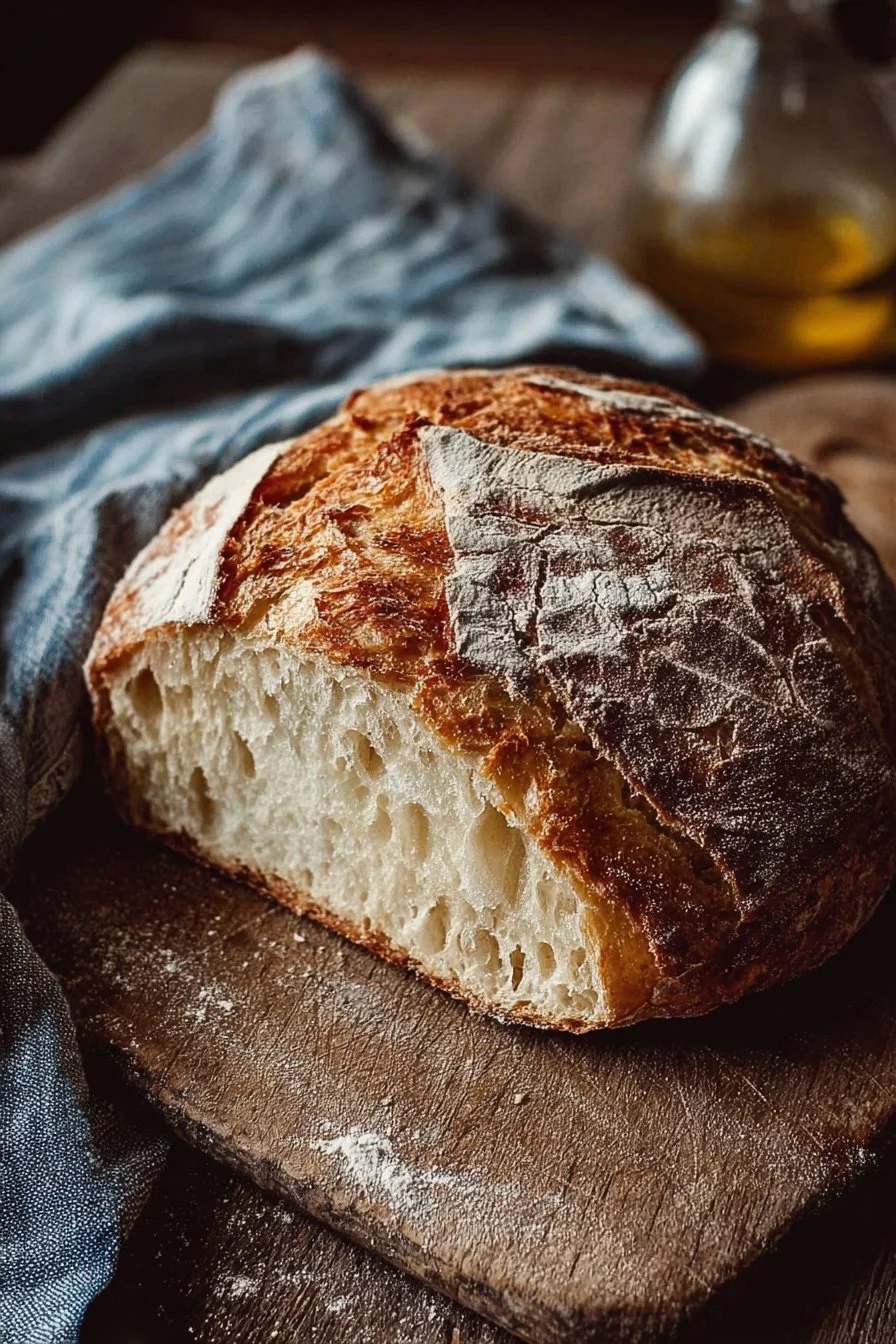
There’s something deeply satisfying about tearing into a warm loaf of sourdough: a crisp, crackly crust gives way to a chewy, open crumb with that gentle tang only a live starter can create. This recipe delivers that classic balance of flavor and texture while keeping the process approachable for home bakers — no fancy equipment, just time and a confident stretch-and-fold. Serve slices with butter and honey, use thick-cut pieces for sandwiches, or pair with soups and stews for a cozy meal. If you want a deeper dive into fermentation and troubleshooting, check out this sourdough bread guide for more background and tips.
Why You’ll Love This Sourdough Bread
- Authentic sourdough flavor: a mild, pleasant tang from an active starter — not overpowering, just flavorful.
- Great crust and crumb: crisp, golden exterior with a soft, slightly open interior perfect for sandwiches or toast.
- Minimal hands-on work: most of the time is passive — resting, folding, and a long overnight proof.
- Simple, pantry-friendly ingredients: just flour, water, starter, and salt.
- Flexible timing: the overnight cold ferment makes it easy to fit into a busy schedule.
- Versatile: perfect for breakfast, brunch, sandwiches, or alongside soups and salads.
- Teaches classic techniques: stretch-and-folds, cold proofing, and baking in a Dutch oven — skills that improve with each loaf.
What Is Sourdough Bread?
Sourdough bread is a naturally leavened loaf made with a live sourdough starter — a mixture of flour and water that contains wild yeast and beneficial bacteria. The result is a bread with a tangy, slightly sour flavor, a chewy texture, and a thick crust that crackles when sliced.
The cooking method here is the classic no-knead, long-fermentation approach: mixing, a short autolyse (rest), incorporating starter and salt, repeated stretch-and-folds, shaping, a long cold proof in the fridge, and then baking inside a preheated Dutch oven. People typically serve sourdough for breakfast or brunch, as toast or a base for avocado, or alongside hearty stews and salads for dinner. It has a comforting, artisanal vibe — simple but undeniably special.

Ingredients for Sourdough Bread
For the Dough
- 4 cups (500 g) bread flour or all-purpose flour
- 1⅔ cups (375 g) warm water
- 1 cup (200 g) active sourdough starter
- 2 teaspoons (10 g) salt
Only these four ingredients are needed to make the loaf described in this recipe. No fats, sugars, or extra commercial yeast — just time and your starter.
Ingredient Notes (Substitutions, Healthy Swaps)
- Flour: Bread flour gives a slightly chewier texture and better rise thanks to higher protein. All-purpose works well if that’s what you have. If you want a nuttier flavor, substitute up to 20% whole wheat (but expect a denser crumb).
- Water: “Warm” means comfortable to the touch (around 75–85°F / 24–29°C). If your kitchen is very cool, use slightly warmer water to help fermentation; in a hot kitchen, use cooler water.
- Starter: Use an active, recently fed starter. If your starter was refrigerated, bring it to room temperature and feed it so it’s bubbly and roughly doubled before using.
- Salt: You can use table salt, kosher salt, or sea salt. If using coarse salt, measure by weight for accuracy.
- Gluten-free note: This recipe relies on wheat proteins for structure. Converting to a gluten-free loaf requires a different ingredient set and techniques, so it’s not recommended as a direct substitution.
Step-by-Step Instructions
Follow these 7 steps to make the loaf. Keep your timings flexible — dough can be forgiving.
Step 1 – Mix flour and water
In a large mixing bowl, combine the 4 cups (500 g) flour and 1⅔ cups (375 g) warm water. Stir until a shaggy, sticky dough forms. Cover and let it rest (autolyse) for 30 minutes.
Visual cue: The dough should look shaggy with no dry flour patches; it will feel tacky but not watery.Step 2 – Add starter and salt
Add 1 cup (200 g) active sourdough starter and 2 teaspoons (10 g) salt to the dough. Use your hands or a sturdy spoon to mix until everything is fully incorporated.
Pro cue: Pinch and fold the dough until you no longer see streaks of flour or starter. It doesn’t need to be perfectly smooth at this stage.Step 3 – Bulk fermentation with stretch-and-folds
Cover the bowl and let the dough rest at room temperature. Every 30 minutes for the next 2 hours, perform gentle stretch-and-folds: reach under the dough, stretch a side up, fold it over the center, rotate the bowl and repeat until you’ve completed 4–5 folds.
Visual cue: Over the 2 hours the dough should look slightly more risen and smoother, with some bubbles forming on the surface.
Pro cue: Keep the folds gentle to preserve bubbles. If your starter is strong, the dough may become noticeably airy by the end.Step 4 – Shape and cold proof
Transfer the dough to a lightly floured surface. Shape into a round or oval loaf by folding the edges under to create surface tension. Place seam-side up in a floured proofing basket (banneton) or a bowl lined with a floured towel. Refrigerate for 8–12 hours.
Visual cue: The dough will relax and spread slightly in the basket but should hold a rounded shape.
Pro cue: Chilling overnight develops flavor and tightens the crumb structure. Don’t skip the cold ferment unless you’re short on time.Step 5 – Preheat your Dutch oven
With about 30 minutes left in the cold proof, preheat your oven to 450°F (232°C). Place your Dutch oven (lid on) inside to heat for at least 30 minutes.
Visual cue: The Dutch oven should be very hot to the touch (use oven mitts).Step 6 – Score and bake
When ready, carefully turn the proofed dough out seam-side down onto a piece of parchment. Use a sharp blade or lame to score the top of the dough with one or two slashes. Lower the loaf (on the parchment) into the hot Dutch oven, cover, and bake for 20 minutes. After 20 minutes, remove the lid and bake another 25 minutes until the crust is deep golden and crisp.
Visual cue: The loaf will expand and the crust should color uniformly after uncovering.
Pro cue: Scoring controls where the loaf expands. Make decisive, quick cuts rather than dragging the blade.Step 7 – Cool before slicing
Remove the bread from the Dutch oven and cool on a wire rack for at least 1–2 hours before slicing.
Visual cue: The crumb will set during cooling; slicing too early yields gummy texture.
Pro cue: Waiting is worth it — the interior finishes baking as it cools and you’ll get a cleaner slice.
Pro Tips for Success
- Feed your starter the day before so it’s active and bubbly at bake time.
- Use a scale for best results — weight measurements (grams) are more reliable than cups.
- Keep the dough temperature in mind: cooler dough ferments slower and benefits from a longer bulk or cold proof.
- Don’t rush the cold proof — it’s where flavor develops. 8–12 hours is ideal.
- For extra crust color, brush the loaf with water just before scoring or add a few drops of steam in the first few oven minutes if not using a lidded Dutch oven.
- If your crumb is too dense, increase hydration slightly (a few teaspoons of water) next time or extend bulk fermentation to allow more gas development.
- Use a sharp lame or razor for clean scoring; dull blades drag and deflate the dough.
Flavor Variations (Optional)
- Optional: Herb and garlic — fold 1–2 tablespoons finely chopped fresh herbs and a teaspoon of minced garlic into the dough during shaping.
- Optional: Seeded crust — sprinkle sesame, poppy, or mixed seeds on the dough after brushing with water before baking.
- Optional: Olive and rosemary — gently fold 1/2 cup chopped, pitted olives and 1 tablespoon chopped rosemary during the shaping step.
- Optional: Cheesy twist — after the first 20 minutes of baking, uncover and scatter a small handful of grated cheese on top, then return to the oven to finish baking.
- Optional: Spicy kick — add 1 teaspoon red pepper flakes to the dough for subtle heat.
All variations are optional and keep the base recipe intact — add mix-ins sparingly so they don’t interfere with the dough’s structure.
Serving Suggestions
- Thick slices slathered with butter and a drizzle of honey for breakfast.
- Toasted and topped with smashed avocado, lemon juice, and a pinch of salt for brunch.
- Served alongside a bowl of tomato soup or beef stew for a hearty dinner.
- Use for sandwiches — grilled cheese on sourdough is a classic.
- For entertaining, slice thin and make crostini with ricotta or herb spreads.
- Pair with a soft cheese board and sliced fruit for a relaxed gathering.
- For a contrast in texture, serve warm with olive oil and a sprinkle of flaky sea salt.
If you want a different quick-bread option to serve alongside this loaf at brunch, try pairing it with a lighter recipe like a two-ingredient cottage cheese bread for variety.
Make-Ahead, Storage & Reheating
- Make-ahead: The shaped dough can be refrigerated for 8–12 hours (or up to 24 in a very cool fridge) before baking. This is the best make-ahead step to fit baking into your schedule.
- Refrigerator storage: Once baked and cooled, store the loaf at room temperature in a paper bag or loosely wrapped in a kitchen towel for 1–2 days to preserve crust. For longer storage, keep in an airtight container which will soften the crust but keep the crumb moist.
- Reheating: To refresh the crust and warm the loaf, preheat the oven to 350°F (175°C), mist the bread lightly with water, and bake for 8–10 minutes. For single slices, toast until golden.
- Texture changes: The crust will soften over time. Re-crisp in the oven or toaster when needed.
Storage and Freezing Instructions
- Freezing: This sourdough freezes well. Slice the cooled loaf first for easier use. Wrap slices tightly in plastic or foil and place in a freezer-safe bag for up to 3 months.
- Reheating from frozen: Toast slices directly from the freezer or warm whole frozen slices/loaves wrapped in foil at 325°F (160°C) until heated through (15–25 minutes depending on size).
- If freezing a whole loaf, cool completely, wrap tightly in plastic and foil to prevent freezer burn. Thaw at room temperature and refresh in a 350°F (175°C) oven for 10–15 minutes.
- If you prefer not to freeze, consider turning stale slices into breadcrumbs or croutons instead of discarding them.
Nutrition Facts (Per Serving)
Assumes the loaf yields 12 slices.
| Calories | Protein | Carbs | Fat | Fiber | Sodium |
|———|——–|——|—–|——|——-|
| 180 kcal | 6 g | 38 g | 1.5 g | 2 g | 330 mg |
Nutrition values are estimates and may vary depending on ingredients and portion sizes.
FAQ About Sourdough Bread
Q: My loaf didn’t rise much — what went wrong?
A: Most likely the starter wasn’t active or fermentation was too cold/short. Make sure your starter is bubbly and doubled after feeding before using. Give bulk fermentation more time or slightly warmer conditions.
Q: Why is my crumb gummy after baking?
A: Slicing too soon (less than 1 hour) often causes a gummy interior. Also underbaking or not enough oven spring due to insufficient fermentation can cause gumminess. Let the loaf cool fully and check bake time/temperature.
Q: Can I bake without a Dutch oven?
A: Yes — use a pizza stone and create steam in the oven (place a pan of hot water below or mist the oven) during the first 10–15 minutes to mimic the steam-trapping effect.
Q: How do I know if my starter is “active”?
A: An active starter will double in size within 4–8 hours of feeding (depending on temperature) and be bubbly with a pleasant tang.
Q: Can I use whole wheat flour instead?
A: You can substitute up to 20% whole wheat without major changes. Whole wheat absorbs more water and can make the loaf denser; you may need to increase hydration slightly.
Q: What’s the best way to store leftover slices?
A: For short-term (1–2 days), keep at room temperature in a paper bag. For longer, freeze sliced and toast directly from frozen as needed.
Notes
- For an impressive presentation, dust the top lightly with flour before scoring to highlight the pattern.
- If you want a darker, shinier crust, brush lightly with water before scoring or at the end of baking brush with a little oil.
- When in doubt about doneness, the internal temperature should be around 205–210°F (96–99°C) for a fully baked sourdough.
- Keep a small jar of starter discard for experimental bakes or pancakes — nothing goes to waste in a sourdough kitchen.
- Small flavor upgrades: mix in a teaspoon of honey into the water for a subtle sweetness, or sprinkle coarse salt on top before baking for a savory finish.

Classic Sourdough Bread
- Total Time: 12 hours 5 minutes
- Yield: 12 slices
- Diet: Vegetarian
Description
Enjoy the tangy flavor and chewy texture of homemade sourdough bread, made with just four simple ingredients and minimal hands-on work.
Ingredients
- 4 cups (500 g) bread flour or all-purpose flour
- 1⅔ cups (375 g) warm water
- 1 cup (200 g) active sourdough starter
- 2 teaspoons (10 g) salt
Instructions
- Mix flour and water in a large bowl until a shaggy, sticky dough forms. Cover and let rest for 30 minutes.
- Add the active sourdough starter and salt to the dough, mixing until fully incorporated.
- Cover the bowl and let the dough rest at room temperature. Every 30 minutes for 2 hours, perform gentle stretch-and-folds.
- Transfer the dough to a lightly floured surface, shape into a loaf, and place seam-side up in a proofing basket. Refrigerate for 8–12 hours.
- Preheat your Dutch oven to 450°F (232°C) about 30 minutes before the end of the cold proof.
- Score the dough and lower it into the hot Dutch oven, cover, and bake for 20 minutes. Remove the lid and bake for another 25 minutes until golden.
- Cool the bread on a wire rack for at least 1–2 hours before slicing.
Notes
For a crustier loaf, brush with water before scoring or add steam in the first few minutes of baking.
- Prep Time: 20 minutes
- Cook Time: 45 minutes
- Category: Bread
- Method: Baking
- Cuisine: Italian