
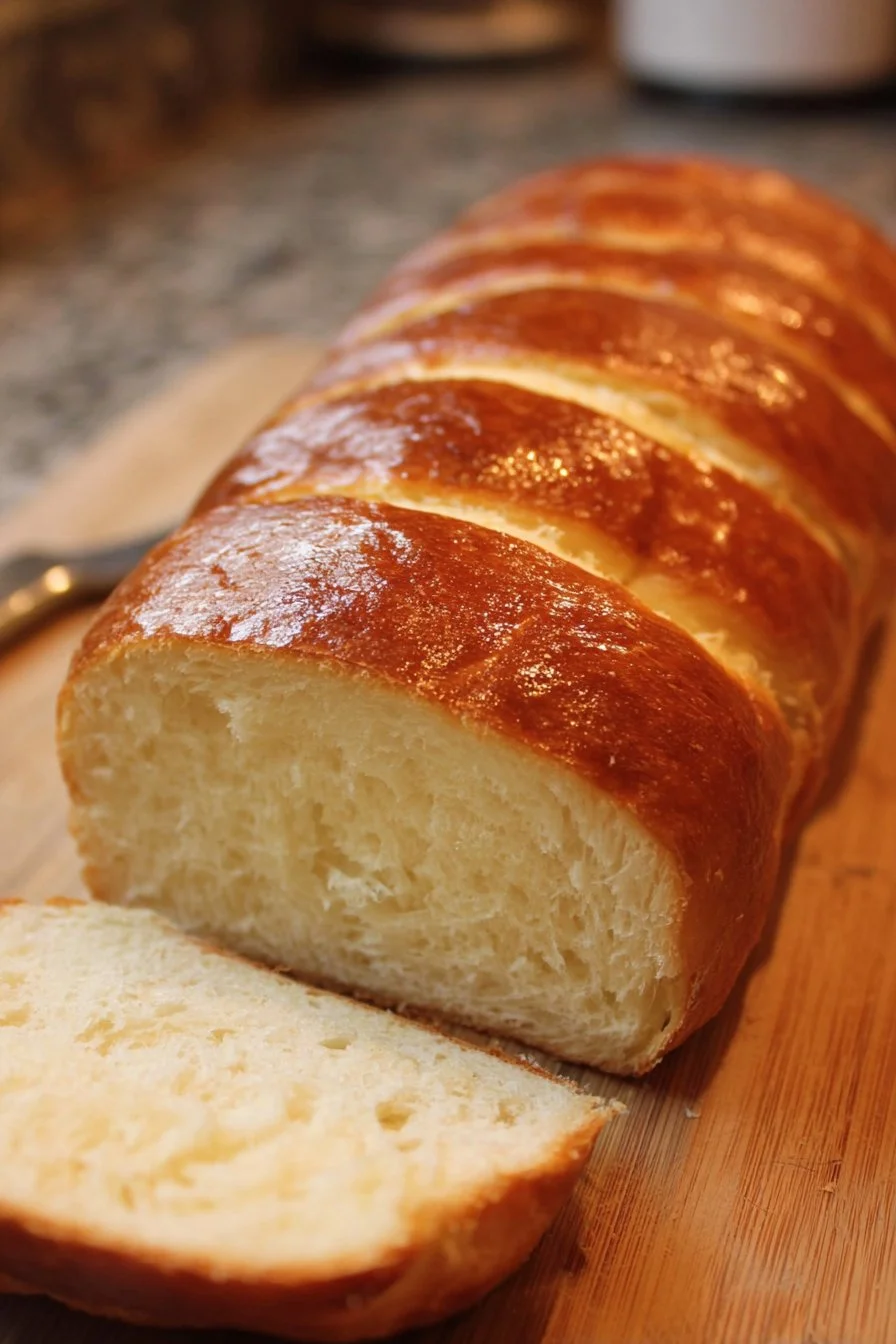
This soft, buttery loaf captures everything you love about Raising Cane’s bread—an airy crumb, a golden crust, and that pull-apart richness brushed with garlic butter. It’s comforting and simple, perfect to serve alongside crispy chicken fingers, a green salad, or just to tear up and dunk in your favorite sauce. The method is straightforward: activate yeast, mix, knead briefly, let it rise, shape, and bake—no fuss, no fancy equipment. Even if you’re new to bread baking, the steps are forgiving and the result feels special. If you enjoy copycat fast-food breads, you might also like my homemade spin on the classic Copycat Raising Cane’s Garlic Bread for a stronger garlicky finish.
Why You’ll Love This Copycat Raising Cane’s Bread
- Soft, tender interior with a slightly crisp, golden crust—perfect for tearing.
- Mild, buttery flavor accented with a hint of garlic; very kid-friendly.
- Uses pantry basics and a single rise method that’s reliable for home bakers.
- Quick hands-on time: brief kneading (5–7 minutes) keeps it accessible.
- Versatile: pairs with weeknight dinners, picnic spreads, or sandwich-making.
- Makes a generous loaf that’s easy to slice or pull apart for sharing.
- Great for slightly customizing without changing the core recipe.
What Is Copycat Raising Cane’s Bread?
This loaf is a homemade recreation of the soft, buttery bread served at Raising Cane’s restaurants. It’s a yeast-leavened white bread with a tender crumb and a light chew. The baking method is straightforward: mix a simple dough, allow it to rise until doubled, shape it into a loaf, brush with butter and garlic, then bake until golden. People usually serve it alongside fried chicken or sandwiches, but it’s just as welcome at brunch, family dinners, or casual gatherings. The overall vibe is approachable comfort food—unfussy, familiar, and satisfying.
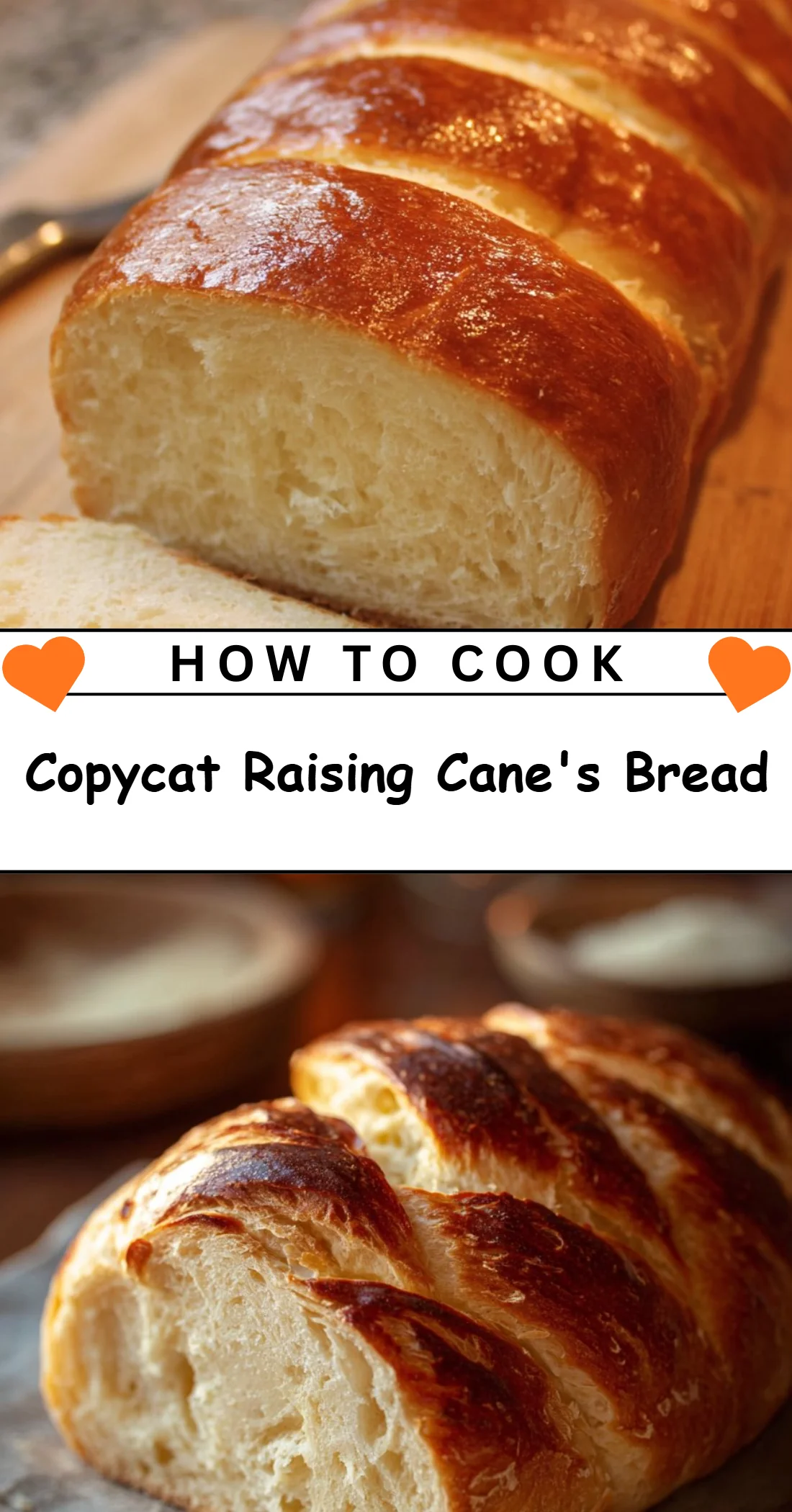
Ingredients for Copycat Raising Cane’s Bread
For the loaf
- 3 cups all-purpose flour
- 1 packet (2 1/4 teaspoons) active dry yeast
- 1 cup warm water (110°F / 43°C)
- 2 tablespoons sugar
- 1 teaspoon salt
- 3 tablespoons unsalted butter, melted
- 1 teaspoon garlic powder
For brushing
- Extra butter for brushing (about 1 tablespoon), melted
Ingredient Notes (Substitutions, Healthy Swaps)
- Flour: All-purpose is what gives this loaf its classic texture. For a slightly higher-protein loaf, try bread flour (it will be chewier). If you need gluten-free, use a 1:1 gluten-free baking blend designed for yeast bread—texture will vary.
- Yeast: Active dry yeast is specified here. If you only have instant yeast, reduce the amount slightly (use about 2 teaspoons) and mix it directly into the flour—no proofing needed.
- Butter: For a dairy-free option, use an equal amount of vegan buttery spread for the melted butter and brushing. The flavor will be slightly different but still rich.
- Sugar: You can swap granulated sugar for honey or maple syrup (use about 1 1/2 tablespoons) if you prefer a different sweetener—this will slightly change the flavor profile.
- Lower-fat swap (optional): Replace half of the melted butter with a neutral oil (like canola) if you want to reduce saturated fat—this will affect the flavor and crust a little.
- For another simple, surprising bread idea, try the quick 2-Ingredient Cottage Cheese Bread as an optional bonus to stretch your pantry.
Step-by-Step Instructions
Step 1 – Activate the yeast
- Pour 1 cup warm water (about 110°F / 43°C) into a small bowl and stir in the 2 tablespoons sugar until dissolved.
- Sprinkle the 1 packet (2 1/4 teaspoons) active dry yeast over the water and let it sit for 5–10 minutes until foamy and fragrant.
Visual cue: The surface should be bubbly and foamy—if nothing happens after 10 minutes, your yeast may be expired or the water too hot/cold.
Step 2 – Combine dry ingredients
- In a large mixing bowl, whisk together 3 cups all-purpose flour and 1 teaspoon salt.
- Make a well in the center and pour in the melted butter and the foamy yeast mixture.
Pro cue: Start stirring with a wooden spoon until the dough comes together in a shaggy mass. Don’t worry if it looks slightly sticky at this stage.
Step 3 – Knead the dough
- Turn the dough out onto a lightly floured surface and knead for 5–7 minutes until smooth and elastic.
Visual cue: The dough should be soft, slightly tacky but not clinging to your hands; it will become glossy and spring back slowly when poked.
Pro cue: If the dough sticks heavily, dust your hands and surface with a little flour—but avoid adding too much or the loaf can become dense.
Step 4 – First rise
- Place the kneaded dough in a greased bowl, turning once to coat the surface. Cover loosely with plastic wrap or a clean kitchen towel.
- Let rise in a warm, draft-free spot until doubled in size (about 60–90 minutes).
Visual cue: The dough should visibly double and feel light when you press it gently.
Pro cue: If your kitchen is cool, preheat the oven to 200°F (93°C) for 2 minutes, turn it off, then place the covered bowl inside to create a warm proofing environment.
Step 5 – Shape and second rise
- Gently deflate the dough, shape it into a loaf (a tight log or oval), and place it into a greased 9×5-inch loaf pan or on a parchment-lined baking sheet if shaping free-form.
- Cover and let rise again until puffy and nearly doubled (30–45 minutes).
Visual cue: The loaf should look rounded and soft, nearly filling the pan.
Pro cue: Handle gently—don’t over-deflate during shaping to preserve the airy crumb.
Step 6 – Brush, season, and bake
- Preheat the oven to 350°F (175°C).
- Brush the top with about 1 tablespoon melted butter and sprinkle evenly with 1 teaspoon garlic powder.
- Bake for 25–30 minutes until the top is deep golden brown and the loaf sounds hollow when tapped on the bottom.
Visual cue: Golden-brown top and an internal temperature around 190–200°F (88–93°C) if you use an instant-read thermometer.
Pro cue: If the top browns too quickly, tent loosely with aluminum foil for the remaining bake time.
Pro Tips for Success
- Measure flour by spooning into the cup and leveling with a knife to avoid a dry, dense loaf.
- Keep water around 110°F (43°C) to activate yeast without killing it—too hot and it won’t rise.
- Short, focused kneading helps develop gluten for structure while keeping tenderness.
- For an extra shiny crust, brush with an egg wash (optional) before baking—note this changes the recipe slightly.
- Use a thermometer for reliable doneness: 190–200°F (88–93°C) internal temperature is ideal for white loaves.
- Avoid overproofing: dough that collapses when pressed has risen too long and will lose oven spring.
- Let the loaf cool 10–15 minutes before slicing to keep the crumb from becoming gummy.
Flavor Variations (OPTIONAL)
- Spicy butter brush: Add 1/4 teaspoon cayenne or smoked paprika to the melted butter before brushing.
- Cheesy twist: After the first 10 minutes of baking, sprinkle 1/3–1/2 cup shredded cheddar on top and return to oven until melted and golden.
- Herb-infused: Mix 1 teaspoon dried Italian seasoning into the melted butter before brushing for a fragrant loaf.
- Garlic-forward: Increase garlic powder to 2 teaspoons or use 1–2 minced garlic cloves sautéed in the melted butter (optional; this slightly changes texture).
- Sweet dinner roll: Brush with honey-butter (1 tablespoon honey mixed into the melted butter) after baking for a lightly sweet finish.
(These are optional ideas that keep the basic dough intact.)
Serving Suggestions
- Serve warm with fried chicken fingers, coleslaw, and Cane’s-style dipping sauce for a restaurant feel.
- Use thick slices for grilled cheese sandwiches or as a base for open-faced melts.
- Slice and toast for breakfast with jam or honey.
- Cube into croutons for salads or pan-fry for bread pudding.
- Bring to potlucks or family dinners—torn pieces are perfect for sharing.
Make-Ahead, Storage & Reheating
- Make-ahead: Prepare dough through the first rise, then punch down and refrigerate in a lightly oiled bowl, covered, for up to 24 hours. Bring back to room temperature and let finish rising before shaping and baking.
- Refrigerator storage: Store cooled bread in a bread box or airtight container at room temperature for up to 3 days. Refrigeration speeds staling and is not recommended for daily storage.
- Reheating: Reheat slices in a toaster or warm whole loaf in a 300°F (150°C) oven for 8–10 minutes, wrapped in foil to prevent drying. For a freshly baked feel, brush with a little melted butter before serving.
Storage and Freezing Instructions
- Freezing: This bread freezes well. Wrap the fully cooled loaf tightly in plastic wrap, then in aluminum foil, or slice and place between layers of parchment in a freezer bag. Freeze for up to 3 months.
- To thaw: Transfer to the refrigerator overnight or thaw at room temperature for a few hours. Refresh in a 300°F (150°C) oven for 10–12 minutes (wrapped in foil for most of the time), then unwrap to crisp the crust.
- If you plan to freeze, slice before freezing for quick single-serve toasting later.
Nutrition Facts (Per Serving)
| Calories | Protein | Carbs | Fat | Fiber | Sodium |
|———|——–|——|—–|——|——-|
| 151 kcal | 3 g | 25 g | 3.8 g | 0.8 g | 192 mg |
Nutrition values are estimates and may vary depending on ingredients and portion sizes.
FAQ About Copycat Raising Cane’s Bread
- How do I know if my yeast is active?
- If the yeast foams and bubbles within 5–10 minutes after being sprinkled into warm, sweetened water, it’s active. No foam = replace yeast.
- My loaf came out dense—what went wrong?
- Likely under-kneading, too much flour, or insufficient rising time. Measure flour accurately and knead until the dough is smooth and elastic.
- Can I use instant yeast instead of active dry yeast?
- Yes. Reduce to about 2 teaspoons of instant yeast and mix it directly with the flour; skip the proofing step.
- How can I tell when the loaf is fully baked?
- The crust should be deep golden and the bottom should sound hollow when tapped. An internal temp of 190–200°F (88–93°C) confirms doneness.
- Will this bread keep well the next day?
- Yes—kept in an airtight container at room temperature, it should stay soft for up to 3 days. Refresh briefly in the oven before serving for best texture.
- Can I make rolls instead of a loaf?
- Yes. Divide the dough into equal pieces after the first rise, shape into rolls, let rise again, then brush and bake slightly less time (about 15–20 minutes).
Notes
- For presentation, brush one final time with hot melted butter immediately after baking for an irresistible sheen.
- If you prefer a stronger garlic kick, use garlic powder in the dough plus on top, but remember less is more for balance.
- Slice with a serrated knife for clean cuts and minimal crumb tearing.
- Adjust garlic powder to taste—start with the recipe amount, then increase in future batches if desired.
- A light sprinkle of coarse sea salt over the butter-brushed top before baking can add a nice contrast to the sweetness.
- Serve warm when possible; the aromas and texture are at their best right out of the oven.
Copycat Raising Cane’s Bread
- Total Time: 45 minutes
- Yield: 1 loaf
- Diet: Vegetarian
Description
A soft, buttery loaf inspired by Raising Cane’s bread, perfect for pairing with meals or enjoying on its own.
Ingredients
- 3 cups all-purpose flour
- 1 packet (2 1/4 teaspoons) active dry yeast
- 1 cup warm water (110°F / 43°C)
- 2 tablespoons sugar
- 1 teaspoon salt
- 3 tablespoons unsalted butter, melted
- 1 teaspoon garlic powder
- Extra butter for brushing (about 1 tablespoon), melted
Instructions
- Pour 1 cup warm water into a small bowl and stir in the sugar until dissolved. Sprinkle the yeast over the water and let it sit for 5–10 minutes until foamy and fragrant.
- In a large mixing bowl, whisk together the flour and salt. Make a well in the center and pour in the melted butter and foamy yeast mixture.
- Turn the dough out onto a lightly floured surface and knead for 5–7 minutes until smooth and elastic.
- Place the kneaded dough in a greased bowl, cover loosely, and let rise in a warm spot until doubled in size (about 60–90 minutes).
- Gently deflate the dough, shape it into a loaf, and let rise again until puffy (30–45 minutes).
- Preheat the oven to 350°F (175°C). Brush the top with melted butter, sprinkle with garlic powder, and bake for 25–30 minutes until golden brown.
Notes
For a richer flavor, brush with melted butter after baking. Customize with additional garlic or cheese if desired.
- Prep Time: 15 minutes
- Cook Time: 30 minutes
- Category: Bread
- Method: Baking
- Cuisine: American