
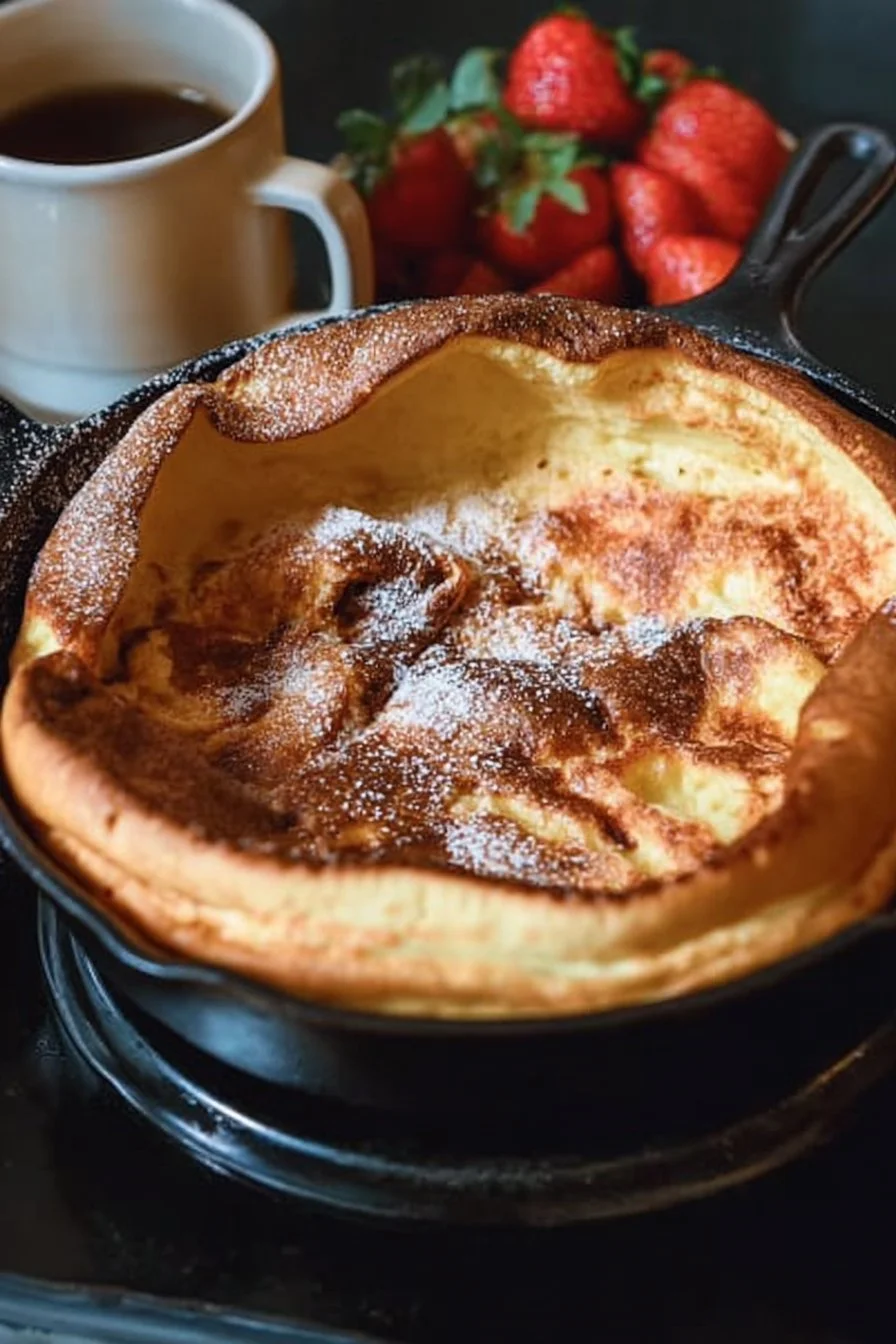
I still remember the first time a Dutch baby puffed up like a golden volcano in my oven — the edges soared, the center stayed custardy, and the kitchen smelled like browned butter and nostalgia. A Dutch baby is essentially an oven-baked pancake: airy, dramatic, and fast. People make it for weekend brunches, easy dinner swaps, or when they want something impressive with minimal fuss. After testing five different methods to get the highest possible rise, I learned which steps actually matter — and which are kitchen myths. If you’re feeding a crowd (especially kids who love showy food), pair it with other simple mains like these 5 kid-friendly dinners they’ll beg for to keep the menu effortless and satisfying.
Why you’ll love this dish
A Dutch baby feels special but behaves like a weekday hero. It takes about 10 minutes to mix, 20–25 minutes to bake, and costs very little in pantry staples. It’s adaptable — sweet for brunch with lemon and powdered sugar, savory with herbs and roasted vegetables, or kid-approved with maple syrup. The dramatic rise makes it a natural centerpiece for holiday breakfasts or a fast, family-style dinner.
“We made this for a sleepy Sunday — it looked like a showstopper and tasted better than any folded pancake. Crisp edges, custardy center — total crowd-pleaser.” — a tester’s quick review
Reasons to choose this for your next meal:
- Speed: minimal hands-on time, oven does the heavy lifting.
- Versatility: sweet or savory, easily scaled.
- Theater: the puff is a real visual treat for guests and kids.
- Economical: flour, eggs, milk, butter — that’s basically it.
How this recipe comes together
Before you dive in, here’s the nutshell process: whisk eggs with milk and a little flour, heat an oven-safe skillet with plenty of butter until smoking-hot, pour the batter into the skillet, and bake in a very hot oven until the edges have puffed and browned. We tried five approaches — blender vs. whisk, batter temperature, resting vs. no rest, skillet types (cast iron vs. ovenproof nonstick), and oven temperatures. The clear winner for consistent sky-high rise: a room-temperature batter, preheated cast-iron skillet, and a very hot oven (425–450°F). For more background on the classic preparation and history, see this concise Dutch Baby guide that covers technique and variations.
Expectations set: total time about 30–35 minutes; active time roughly 10 minutes.
What you’ll need
- 3 large eggs, room temperature (bring to room temp for best rise)
- 3/4 cup (180 ml) whole milk, room temperature (use full-fat for richer custard; substitute non-dairy milk but expect slight texture change)
- 3/4 cup (95 g) all-purpose flour, sifted or whisked to remove lumps
- 1 tablespoon granulated sugar (optional; omit for savory versions)
- 1/2 teaspoon fine salt
- 1 teaspoon vanilla extract (optional for sweet)
- 3 tablespoons unsalted butter (more if your skillet is large)
- Toppings: powdered sugar, lemon wedges, maple syrup, roasted fruit, whipped cream, or savory toppings like chives, smoked salmon, or roasted mushrooms
Substitution notes:
- For gluten-free: use a 1:1 gluten-free flour blend and expect slightly different browning.
- For dairy-free: use coconut oil or vegan butter and a full-fat plant milk. The structure will be close but a touch less custardy.
Step-by-step instructions
- Preheat the oven to 425°F (220°C). Place a 10- to 12-inch cast-iron skillet in the oven to heat for at least 10 minutes. A very hot pan is essential for the initial steam blast that lifts the batter.
- While the oven heats, whisk the eggs vigorously in a medium bowl until frothy (about 30 seconds). Add milk, flour, sugar, salt, and vanilla, and whisk until completely smooth. You can use a blender for a silkier batter, but don’t overblend — you want air, not heat. Let the batter rest briefly while the skillet heats (2–5 minutes).
- Remove the hot skillet from the oven (use oven mitts). Add the butter and swirl to melt and foam; it should be bubbling but not burnt. Immediately pour the batter into the pan — it will sizzle.
- Return the skillet to the oven and bake undisturbed for 18–22 minutes. Do not open the oven during this time; the change in temperature will make the pancake fall. The Dutch baby is done when the edges are high and browned and the center is set but still custardy.
- Remove from oven and serve immediately — it will deflate within minutes. Dust with powdered sugar, squeeze lemon, or add desired toppings.
Timing tip: for taller edges, bake at 450°F for the first 10 minutes, then drop to 425°F for the remaining time. Only try if your oven holds steady; oven variability is the main reason rises differ.
Best ways to enjoy it
Serve the Dutch baby straight from the skillet for maximum drama. Sweet ideas:
- Classic: powdered sugar and a generous squeeze of fresh lemon.
- Berry compote and whipped cream for a brunch centerpiece.
- Sliced apples sautéed in butter and brown sugar folded over the center.
Savory ideas:
- Top with crème fraîche, smoked salmon, and dill.
- Fold in a pile of roasted mushrooms and finish with chives.
- Add shredded Gruyère and serve with a simple arugula salad on the side.
Pairings: strong coffee, a light sparkling wine for brunch, or a crisp cider for a cozy fall meal.
Storage and reheating tips
- Short-term: leftovers keep in an airtight container in the refrigerator for up to 2 days. The rise collapses, so textures change.
- To reheat: warm individual pieces in a 350°F oven for about 8–10 minutes or in a skillet over medium heat until warm and slightly crisp at the edges. Avoid microwaving if you want crispness; it makes the pancake rubbery.
- Freezing: not ideal. You can freeze portions wrapped tightly for up to 1 month, but texture will be compromised. Reheat from frozen in a preheated oven at 350°F until hot throughout.
Food safety: store within two hours of baking and don’t keep at room temperature for longer than that.
Pro chef tips
- Bring eggs and milk to room temperature: it helps the batter trap air and puff more reliably.
- Preheat the pan: the hottest pan equals the most dramatic lift. A cold pan won’t produce the steam burst you need.
- Avoid opening the oven: even a 10–15 second peek can drop the rise. Use the oven light instead.
- Butter generously: the fat at the edges crisps and browns the batter. Clarified butter gives deeper flavor and less burning at higher temps.
- Batter consistency: it should be pourable, like heavy cream. If it’s too thick, add a splash more milk.
Creative twists
- Lemon ricotta Dutch baby: fold 1/2 cup ricotta into the batter and add lemon zest for extra custard texture.
- Savory herb version: omit sugar and vanilla, add 2 tablespoons chopped fresh herbs and 1/4 cup grated Parmesan.
- Mini Dutch babies: pour into a muffin tin or small ramekins (adjust baking time to 12–15 minutes) for individual servings.
- Gluten-free or paleo: almond flour works in small quantities mixed with a binder (like an extra egg), but expect less puff.
Common questions
Q: Why did my Dutch baby deflate as soon as I took it out of the oven?
A: That’s normal — the dramatic rise is caused by steam and trapped air. It will always fall a bit as it cools. To preserve more height, serve immediately straight from the skillet and minimize time between oven and table.
Q: Can I make the batter ahead of time?
A: You can mix the dry and wet ingredients separately, but for best rise mix the batter and bake within 30–60 minutes. Long resting (several hours) can let the flour absorb liquid and reduce lift. If you must prep early, keep the batter chilled and bring it back to room temperature before baking.
Q: Is a blender better than whisking by hand?
A: Both work. A blender gives a perfectly smooth batter and incorporates air quickly, but it can warm the batter if blended too long. A vigorous hand whisk produces similar results and keeps temperatures stable. Either way, don’t overmix.
Q: Can I make a dairy-free Dutch baby?
A: Yes—use a plant milk (oat or soy gives closest texture) and vegan butter or coconut oil. The texture will be slightly different but still quite good.
Q: How do I scale the recipe?
A: For a larger skillet, increase ingredients proportionally (per additional egg: ~1/4 cup milk and 1/4 cup flour). Keep the oven temperature the same and adjust baking time; larger pans may need a few more minutes.
If you want more family-friendly meal ideas to pair with this showy pancake, check out that roundup of easy, reliable dinners I mentioned earlier.
Enjoy the puff — and don’t be surprised if guests clap when you bring this to the table.
Print
Dutch Baby Pancake
- Total Time: 30–35 minutes
- Yield: 4 servings
- Diet: Vegetarian
Description
An impressive oven-baked pancake that puffs up like a volcano, perfect for brunch or dinner.
Ingredients
- 3 large eggs, room temperature
- 3/4 cup (180 ml) whole milk, room temperature
- 3/4 cup (95 g) all-purpose flour, sifted
- 1 tablespoon granulated sugar (optional)
- 1/2 teaspoon fine salt
- 1 teaspoon vanilla extract (optional)
- 3 tablespoons unsalted butter
- Toppings: powdered sugar, lemon wedges, maple syrup, roasted fruit, whipped cream, chives, smoked salmon, roasted mushrooms
Instructions
- Preheat the oven to 425°F (220°C) and place the skillet inside for at least 10 minutes.
- Whisk the eggs vigorously until frothy. Add milk, flour, sugar, salt, and vanilla; whisk until smooth.
- Remove the hot skillet from the oven, add butter, and swirl to melt.
- Pour the batter into the skillet and bake for 18–22 minutes without opening the oven.
- Serve immediately, dust with powdered sugar or desired toppings.
Notes
For gluten-free, use a 1:1 flour blend. For dairy-free, use vegan butter and plant milk.
- Prep Time: 10 minutes
- Cook Time: 20–25 minutes
- Category: Breakfast
- Method: Baking
- Cuisine: American