
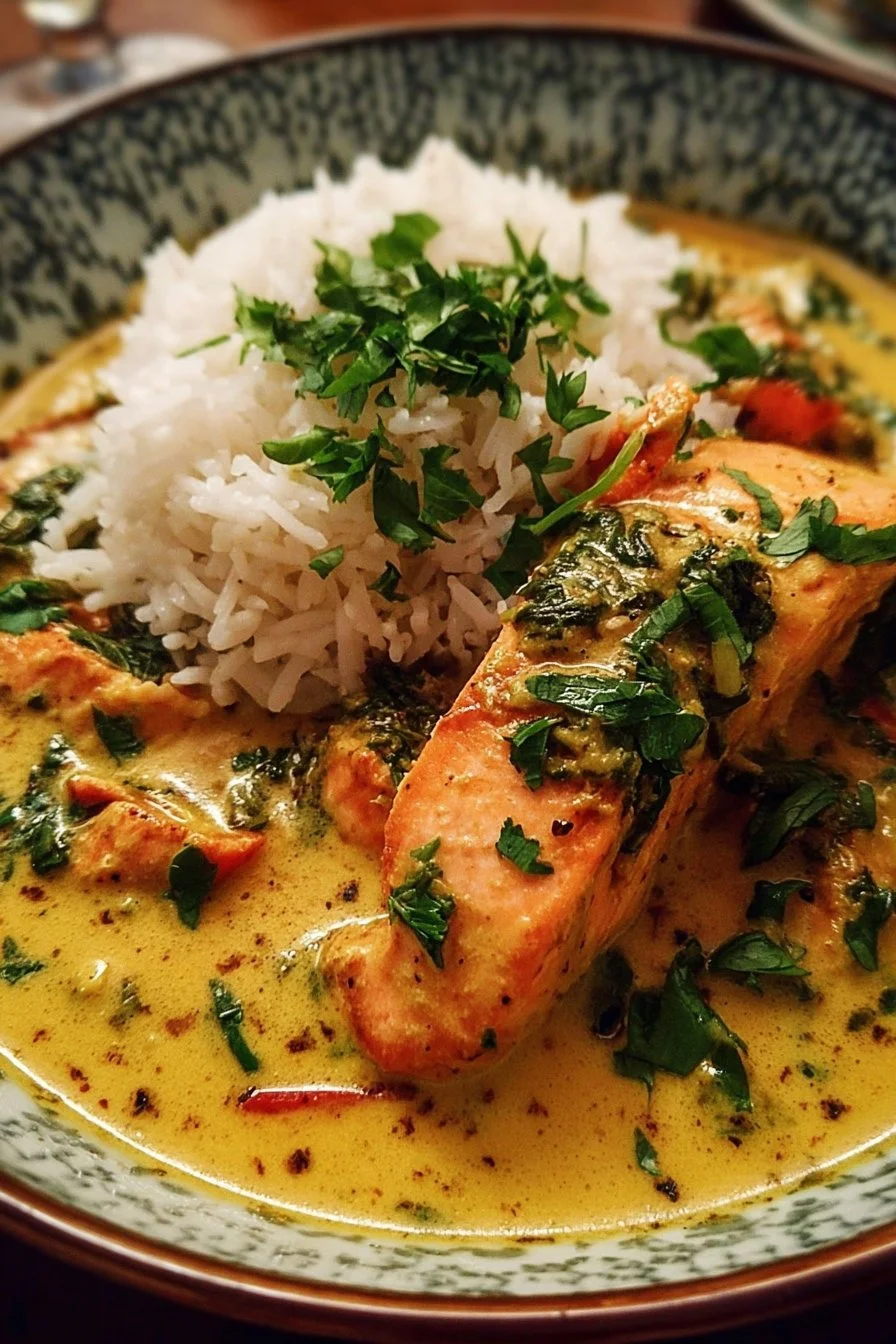
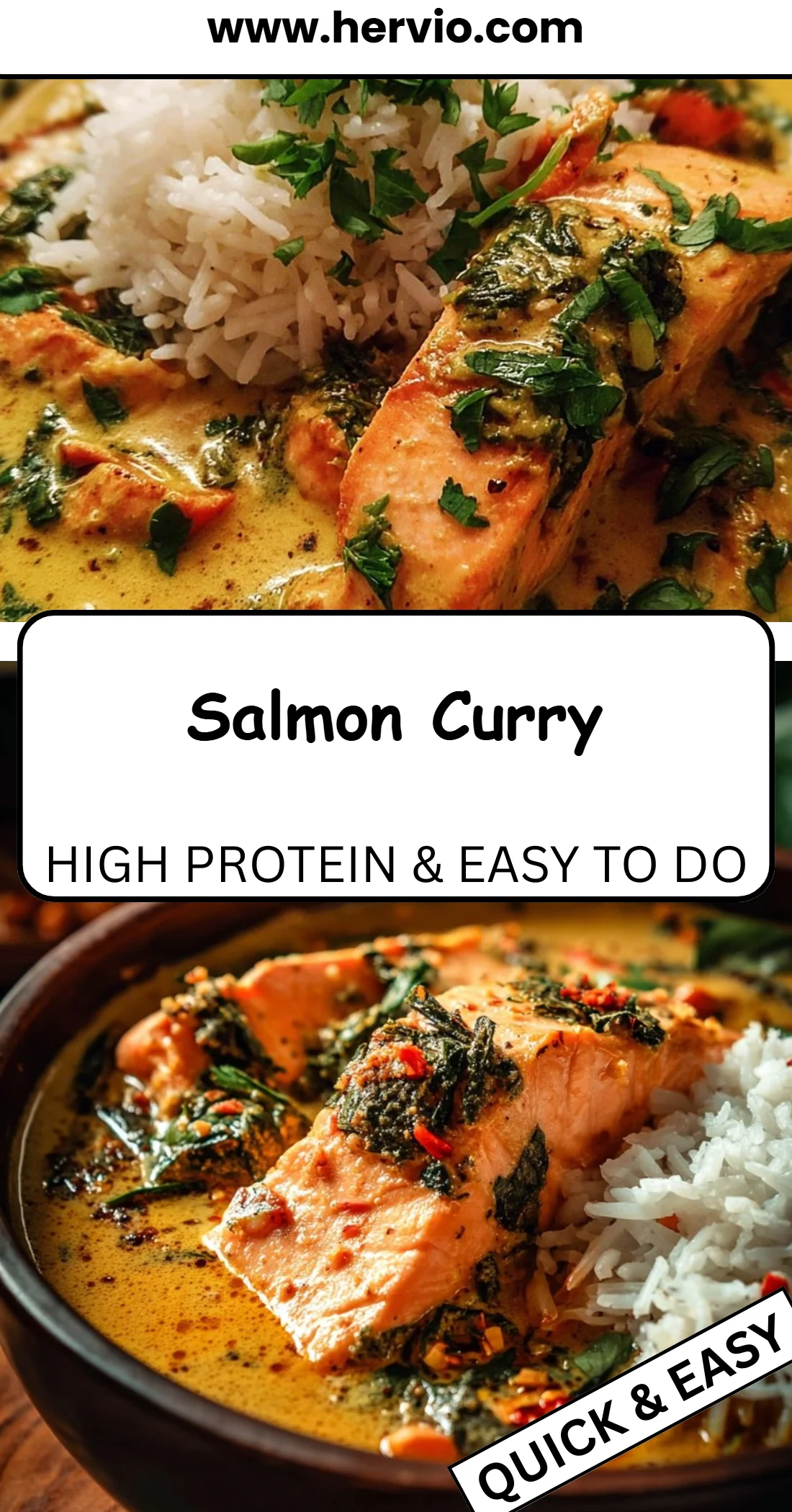
Silky coconut cream, bright lime, and a warming hit of Thai red curry paste come together in this Salmon Curry to create a dish that’s at once comforting and vibrantly fresh. The salmon stays tender and flaky after a quick bake, then is folded into a fragrant coconut-based sauce with just-wilted spinach for a touch of green. It’s an easy, weeknight-friendly recipe that feels special enough for company, and it pairs beautifully with jasmine rice or a simple cucumber salad. If you love the interplay of creamy and spicy, check out this Thai-style coconut curry salmon for further inspiration on similar flavor profiles.
Why You’ll Love This Salmon Curry
- Creamy, spicy, and tangy: coconut milk, red curry paste, and lime juice balance beautifully.
- Tender salmon: baking keeps the fish moist and flaky without fuss.
- Fast weeknight dinner: most hands-off time is in the oven while you make the sauce.
- Minimal ingredients: pantry-friendly items create a restaurant-style curry.
- Versatile: serve over rice or use as a saucy topping for bowls or noodles.
- One-pan finishing: the sauce and salmon come together in a single skillet for easy cleanup.
- Light greens included: spinach wilts into the sauce, adding color and nutrients.
What Is Salmon Curry?
Salmon Curry is a simple dish where baked salmon fillets meet a rich, coconut-based curry sauce. The final result is creamy, slightly spicy from Thai red curry paste, and brightened with fish sauce and lime. This recipe uses a two-part method: the salmon is baked until just flaky, and the curry sauce is simmered on the stovetop before folding the fish into it. It’s commonly served as a comforting weeknight dinner but is elegant enough for a casual dinner party. The overall vibe is warming and satisfying — think coastal Thai flavors made approachable for a busy evening.
Ingredients for Salmon Curry
For the Salmon
- 2 salmon fillets
- Salt and pepper, to taste
- 1 tablespoon vegetable oil
For the Sauce
- 1 can coconut milk (13.5 oz)
- 2 tablespoons Thai red curry paste
- 1 tablespoon fish sauce
- 1 tablespoon lime juice
- 1 cup spinach
For Serving
- Cooked rice for serving
Ingredient Notes (Substitutions, Healthy Swaps)
- Coconut milk: Use light coconut milk to reduce calories and fat; the sauce will be a bit less rich but still flavorful.
- Vegetable oil: Swap for olive oil or avocado oil for a different flavor profile.
- Fish sauce: Replace with tamari or soy sauce for a milder, vegetarian-friendly umami (note: this shifts the dish slightly away from traditional Thai flavor). Use tamari to keep it gluten-free.
- Lime juice: Lemon juice can be used in a pinch, though lime has a brighter taste that complements coconut and curry.
- Spinach: Baby spinach works best for quick wilting. For a heartier green, use sliced kale but cook it a bit longer until tender.
- Rice: Use brown rice for more fiber or cauliflower rice for a low-carb option.
Step-by-Step Instructions
Step 1 – Prep and season the salmon
Pat the salmon fillets dry with paper towels and season both sides with salt and pepper. Place the fillets skin-side down in a baking dish and drizzle with the vegetable oil.
Visual cue: The salmon should have an even sheen from the oil and a light dusting of salt and pepper.
Step 2 – Bake the salmon
Preheat the oven to 375°F (190°C). Bake the salmon for 15–20 minutes, checking at 15 minutes for flakiness with a fork. Remove from the oven when the center is just opaque and flakes easily.
Pro cue: Check doneness by inserting a fork into the thickest part and twisting gently — it should flake but still look moist.
Step 3 – Start the curry base
While the salmon bakes, heat the vegetable oil over medium heat in a skillet. Add the Thai red curry paste and sauté for 1–2 minutes until fragrant and the oil begins to separate slightly. This blooms the spices.
Visual cue: The paste will darken slightly and smell aromatic.
Step 4 – Add coconut milk and seasonings
Stir in the coconut milk, fish sauce, and lime juice. Bring the mixture to a gentle simmer and cook for 3–4 minutes to meld flavors and slightly thicken the sauce.
Pro cue: Keep the heat moderate — boiling can break the coconut milk and make the sauce grainy.
Step 5 – Wilt the spinach
Add the spinach to the sauce and cook until wilted, about 1–2 minutes. Stir to incorporate the greens evenly into the curry.
Visual cue: The spinach should be vibrant and tender, not limp and gray.
Step 6 – Fold in the salmon and serve
Flake the baked salmon into large pieces and gently fold them into the sauce so they stay intact. Serve over cooked rice and spoon extra sauce over the top.
Pro cue: Flake the salmon into chunky pieces rather than shredding; it holds texture better in the warm sauce.
Pro Tips for Success
- Heat control: Keep the sauce at a gentle simmer to prevent the coconut milk from breaking.
- Texture control: Don’t over-flake the salmon — large chunks look and feel better in the curry.
- Season gradually: Taste after adding fish sauce and lime; a little goes a long way.
- Timing: Start the sauce when you place the salmon in the oven so both components finish around the same time.
- Freshness: Use fresh lime juice for the brightest flavor — bottled juice is less vibrant.
- Spinach substitute: If using kale, add a splash of water and cook a few minutes longer to soften.
- Avoid dryness: If the salmon looks slightly underdone when you remove it from the oven, it will finish cooking gently in the hot sauce.
Flavor Variations (Optional)
- Spicier version: Add more Thai red curry paste (extra 1/2–1 tablespoon) or a pinch of red pepper flakes.
- Herb-lifted: Finish with chopped cilantro or Thai basil for a fresh aromatics boost (optional garnish).
- Lighter version: Use light coconut milk and serve over cauliflower rice to reduce calories.
- Extra veg: Stir in thinly sliced bell peppers or shredded carrots with the spinach for added crunch and color (add them when you sauté the curry paste).
- Tangier twist: Increase lime to 1.5 tablespoons for a brighter, more citrus-forward sauce.
- Milder curry: Use less curry paste and add a touch of sweetener (½ teaspoon sugar or honey) to balance—optional and adjust to taste.
Serving Suggestions
- Over jasmine rice: The classic choice — the rice soaks up the rich coconut curry sauce.
- With steamed vegetables: Broccoli or green beans add texture and freshness.
- Light salad: A crisp cucumber and red onion salad dressed with lime makes a cool contrast.
- Casual tacos: Flake leftover salmon into tortillas with a spoonful of sauce for fish tacos — see a different take on salmon in these BBQ salmon tacos.
- Family-style bowl: Serve rice, curry, and extra greens in bowls for build-your-own dinners.
- Special occasion: Plate the salmon chunks over coconut-lime rice and top with a lime wedge for a dinner-party presentation.
Make-Ahead, Storage & Reheating
- Make-ahead: You can bake the salmon and prepare the sauce separately up to one day ahead. Store them separately in airtight containers and combine before reheating to maintain the best texture.
- Refrigerator storage: Keep leftovers in a covered container for up to 3 days.
- Reheating on stovetop: Gently rewarm the sauce in a skillet over low heat, add the salmon pieces, and heat just until warmed through to avoid overcooking.
- Microwave reheating: Use short bursts (30–45 seconds), stirring gently between intervals to maintain texture. Cover loosely to retain moisture.
Storage and Freezing Instructions
- Freezing: The curry can be frozen, but note that coconut milk and fish texture may change slightly. If you plan to freeze, freeze the sauce and salmon together in a freezer-safe container for up to 1 month. Thaw overnight in the fridge before reheating slowly on the stovetop.
- Better alternative: Freeze the sauce separately and add freshly cooked salmon after reheating for the best texture. If you must freeze cooked salmon in sauce, expect a slight softening of the fish.
Nutrition Facts (Per Serving)
| Calories | Protein | Carbs | Fat | Fiber | Sodium |
|———|——–|——|—–|——|——-|
| 920 kcal | 42 g | 50 g | 60 g | 3 g | 720 mg |
Nutrition values are estimates and may vary depending on ingredients and portion sizes.
FAQ About Salmon Curry
How do I know when the salmon is cooked?
Check for flakiness with a fork in the thickest part; it should flake easily but still look moist inside.My sauce looks separated — what went wrong?
High heat can cause coconut milk to split. Reduce heat to a gentle simmer and whisk the sauce; adding a splash of lime at the end can help bring it together.Can I use frozen salmon?
Yes — thaw fully, pat dry, and proceed with the recipe. Baking time may vary slightly depending on thickness.Can I make this dairy-free or gluten-free?
This recipe is naturally dairy-free. For gluten-free, use tamari instead of soy sauce if substituting fish sauce or ensure your fish sauce is gluten-free.How do I reheat leftovers without drying out the salmon?
Reheat gently on low heat in a skillet with a splash of water or broth, or microwave in short bursts covered to retain moisture.Can I double the recipe for a crowd?
Yes. Multiply ingredients accordingly and use a larger baking dish; check salmon doneness earlier if fillets are thinner.
Notes
- Plating idea: Spoon rice onto the plate first, lay salmon chunks atop, and finish with extra sauce spooned around the fish for an elegant look.
- Small flavor upgrade: Add a finishing squeeze of lime right before serving for a bright pop.
- Seasoning adjustments: Taste the sauce after simmering and adjust with a pinch more salt or a splash more lime to balance.
- Presentation tip: Keep salmon pieces large when folding into the sauce to maintain visual appeal.
- Leftover uses: Turn leftovers into a curry bowl with fresh greens and a zested lime wedge for brightness.
Salmon Curry
- Total Time: 30 minutes
- Yield: 2 servings
- Diet: Dairy-Free, Gluten-Free
Description
A comforting and vibrant dish featuring tender baked salmon fillets in a creamy coconut-based sauce with Thai red curry paste and fresh spinach.
Ingredients
- 2 salmon fillets
- Salt and pepper, to taste
- 1 tablespoon vegetable oil
- 1 can coconut milk (13.5 oz)
- 2 tablespoons Thai red curry paste
- 1 tablespoon fish sauce
- 1 tablespoon lime juice
- 1 cup spinach
- Cooked rice for serving
Instructions
- Pat the salmon fillets dry with paper towels and season both sides with salt and pepper. Place the fillets skin-side down in a baking dish and drizzle with the vegetable oil.
- Preheat the oven to 375°F (190°C). Bake the salmon for 15–20 minutes, checking at 15 minutes for flakiness with a fork. Remove from the oven when the center is just opaque and flakes easily.
- Heat the vegetable oil over medium heat in a skillet. Add the Thai red curry paste and sauté for 1–2 minutes until fragrant.
- Stir in the coconut milk, fish sauce, and lime juice. Bring to a gentle simmer and cook for 3–4 minutes to meld flavors and slightly thicken the sauce.
- Add the spinach to the sauce and cook until wilted, about 1–2 minutes.
- Flake the baked salmon into large pieces and gently fold them into the sauce. Serve over cooked rice.
Notes
Use light coconut milk for fewer calories, and feel free to substitute spinach with kale or other greens as desired.
- Prep Time: 10 minutes
- Cook Time: 20 minutes
- Category: Main Course
- Method: Baking
- Cuisine: Thai