
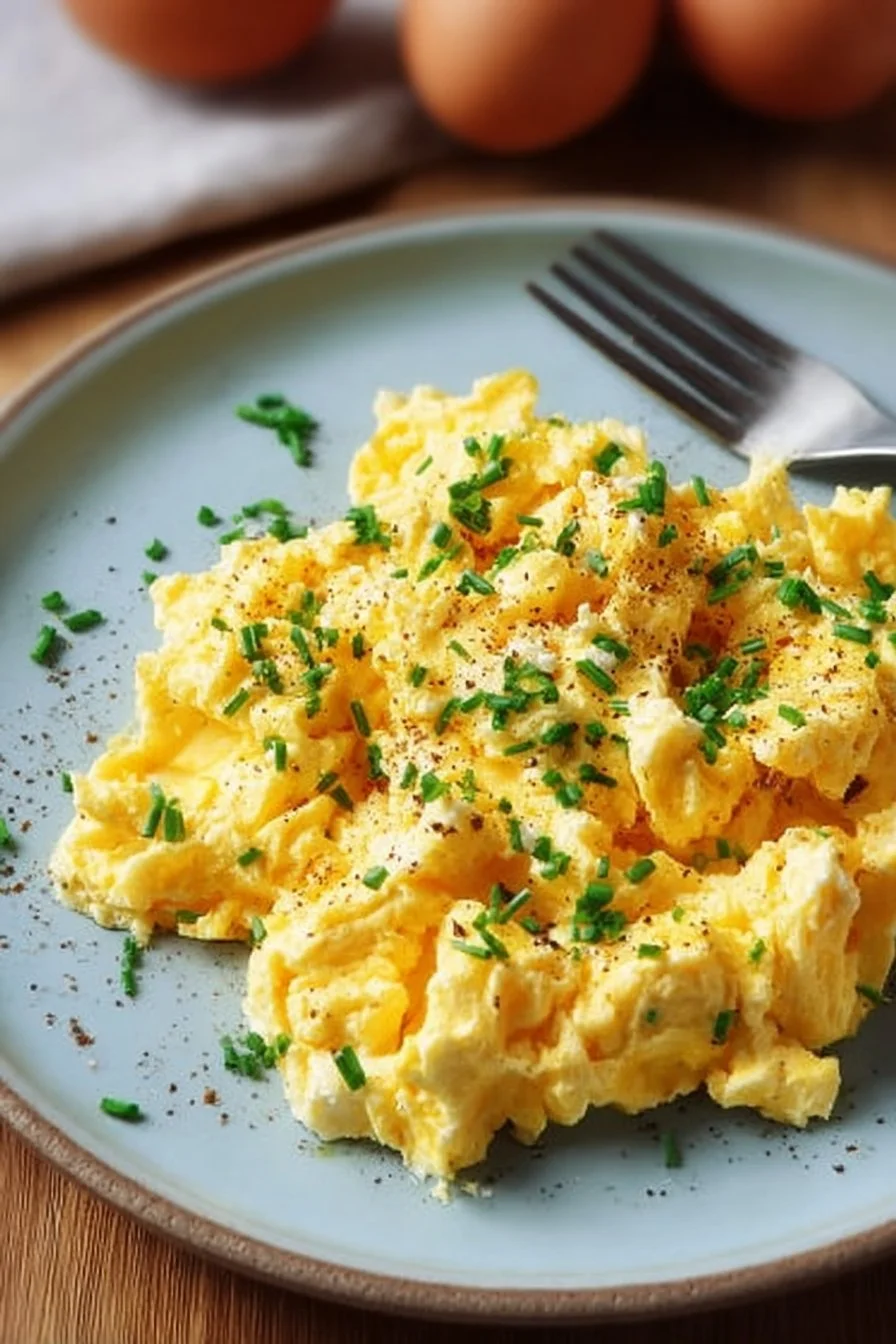
I grew up on plain scrambled eggs, but the first time I stirred cottage cheese into the pan I felt like I’d unlocked a cheat code for creaminess and protein. This simple pairing—2 eggs, about 1/3 cup cottage cheese, a pinch of garlic powder, salt and pepper, and a pat of butter—turns ordinary scrambled eggs into a silky, tangy breakfast that reheats well and keeps you full. If you want to check the original Flirty Food reference for inspiration, see the original Flirty Food recipe for comparison.
Why you’ll love this dish
Cottage cheese scrambled eggs feel indulgent without a lot of fuss. The curds add a subtle tang and extra protein, while the cheese melts into pockets of creamy richness during cooking. It’s fast to make, forgiving for beginner cooks, and an easy upgrade for meal-prep breakfasts.
“So creamy and satisfying — like scrambled eggs, but elevated. Perfect for mornings when you want something quick but not boring.”
Quick benefits:
- High-protein start (roughly 18–22 g protein per serving depending on the cottage cheese)
- Ready in about 5–7 minutes
- Budget-friendly ingredients you probably already have
- Textural interest from the curds — mild and approachable for kids and adults
The cooking process explained
Before you cook: whisk eggs lightly and fold in cottage cheese and seasonings; cook over moderate-low heat in butter; stir gently until curds just set. The whole process is about gentle heat and timing—overcooking will dry them out, undercooking leaves them too loose.
Timing snapshot:
- Prep: 2–3 minutes
- Cook: 3–5 minutes
- Total: 5–8 minutes
What you’ll need
- 2 large eggs
- 1/3 cup cottage cheese (small- or medium-curd works; for super-smooth eggs, use small curd or briefly blend)
- 1/8 teaspoon salt (roughly a pinch)
- 1/8 teaspoon freshly ground black pepper
- 1 teaspoon unsalted butter (or olive oil for a dairy-free swap)
- Pinch garlic powder (optional; adds a gentle savory lift)
Substitutions and notes:
- Low-fat cottage cheese works but produces less creaminess; consider a splash of milk or a teaspoon of butter.
- If you prefer a uniform texture, pulse the cottage cheese in a quick blender jar before adding to eggs.
Step-by-step instructions
- Crack the eggs into a bowl. Whisk briefly until yolks and whites are combined but not foamy.
- Stir in 1/3 cup cottage cheese, the garlic powder, salt, and pepper. Let the mixture sit while you heat the pan—this relaxes the proteins and helps gentle curd formation.
- Heat a nonstick skillet over medium-low heat and melt 1 teaspoon butter so it coats the surface.
- Pour the egg–cottage cheese mix into the skillet. Let it sit undisturbed for about 20–30 seconds so the edges begin to set.
- Using a silicone spatula, gently fold the eggs from the edges toward the center every 15–20 seconds. Keep the heat low; you want creamy curds, not dry shreds.
- When the eggs are mostly set but still slightly glossy (carryover will finish them), remove from heat. Serve immediately.
Quick safety note: Cook eggs until there’s no raw liquid visible. For those at higher risk (pregnant, elderly, immune-compromised), cook fully to firm curds.
Best ways to enjoy it
These eggs are a canvas. Spoon them over toasted sourdough and top with chopped chives and a squeeze of lemon for brightness. For a low-carb plate, pair with sautéed spinach and cherry tomatoes. If you want a heartier brunch, serve alongside avocado slices and a crisp green salad.
For a convenient bread pairing that keeps the meal light and cottage-cheese-forward, try this quick 2-ingredient cottage cheese bread—it complements the eggs without overpowering them.
Plating tip: pile the eggs in the center of a warm plate, sprinkle flaky sea salt and freshly cracked pepper, and finish with a few herb leaves for contrast.
Storage and reheating tips
Refrigeration: Cool leftovers within two hours. Store in an airtight container for up to 3–4 days. Reheat gently to avoid rubbery eggs.
Reheating methods:
- Microwave: cover loosely and heat at 50% power in 20–30 second bursts, stirring between intervals.
- Stovetop: warm a nonstick pan over low heat, add a drop of butter, and gently rewarm eggs while folding them until heated through.
Freezing: I don’t recommend freezing cooked cottage cheese scrambled eggs—the texture becomes watery and grainy. If you want to prep ahead, store the dry ingredients separately and assemble/cook fresh.
Helpful cooking tips
- Low and slow wins: cook on low to moderate heat so the cottage cheese melts gradually without breaking down.
- Remove slightly early: pull eggs off the heat a touch underdone; residual heat will finish them.
- Texture control: blend cottage cheese for smooth eggs; leave it as-is for curdty pockets.
- Nonstick + silicone spatula: prevents sticking and keeps curds intact.
- Double-batch trick: make two servings at once and cool quickly for meal-prep breakfasts (see storage notes).
Creative twists
- Herb-forward: fold in chopped dill, chives, or parsley right before serving.
- Smoky: top with a few flakes of smoked salmon or a sprinkle of smoked paprika.
- Veg boost: sauté mushrooms, spinach, or diced bell pepper first, then add eggs to the pan.
- Cheesy swap: replace cottage cheese with ricotta for a sweeter, silkier profile.
- Vegetarian upgrade: add black beans and salsa on top for a Southwestern-style bowl.
- Egg-white version: use 1 egg + 2 egg whites plus cottage cheese for a lighter texture.
Common questions
Q: Can I use low-fat or fat-free cottage cheese?
A: Yes. Low-fat versions will reduce creaminess and richness; add a teaspoon of butter or a splash of milk to compensate. Fat-free cottage cheese can work but tends to make eggs drier.
Q: Is it safe to eat eggs with cottage cheese if I prefer runnier eggs?
A: If you’re in a higher-risk group (pregnant, elderly, very young, immunocompromised), cook eggs until fully set. For healthy adults, remove eggs when they’re slightly glossy and let residual heat finish them. Always avoid visibly raw egg whites.
Q: Can I prepare the mixture ahead of time?
A: You can whisk eggs and cottage cheese together up to one day ahead and refrigerate in a sealed container. Bring to room temperature for 10–15 minutes before cooking for more even results. Do not keep the mixed raw eggs longer than 24 hours.
Q: How many calories and protein are in one serving?
A: Roughly estimated: 2 large eggs ~140 kcal and ~12–13 g protein; 1/3 cup cottage cheese ~50–70 kcal and ~6–8 g protein. Total per serving is about 200–230 kcal and ~18–22 g protein depending on brands and fat levels.
Q: Can I add other cheeses or spices?
A: Absolutely. Stir in grated cheddar or parmesan toward the end of cooking, or season with cumin, smoked paprika, or za’atar for a different flavor profile.
If you want more quick, cottage-cheese-based ideas or variations, these tips and pairings should keep breakfasts interesting without extra fuss.
Print
Cottage Cheese Scrambled Eggs
- Total Time: 8 minutes
- Yield: 1 serving
- Diet: Vegetarian
Description
Elevate your breakfast with these creamy and protein-packed cottage cheese scrambled eggs, ready in just minutes.
Ingredients
- 2 large eggs
- 1/3 cup cottage cheese
- 1/8 teaspoon salt
- 1/8 teaspoon freshly ground black pepper
- 1 teaspoon unsalted butter
- Pinch garlic powder (optional)
Instructions
- Crack the eggs into a bowl. Whisk briefly until yolks and whites are combined but not foamy.
- Stir in the cottage cheese, garlic powder, salt, and pepper.
- Heat a nonstick skillet over medium-low heat and melt the butter.
- Pour the egg mixture into the skillet and let it sit undisturbed for 20–30 seconds.
- Using a silicone spatula, gently fold the eggs from the edges toward the center every 15–20 seconds.
- When the eggs are mostly set but still glossy, remove from heat and serve immediately.
Notes
For best texture, cook over low heat and remove slightly underdone. Can add herbs or spices for variation.
- Prep Time: 3 minutes
- Cook Time: 5 minutes
- Category: Breakfast
- Method: Cooking
- Cuisine: American