
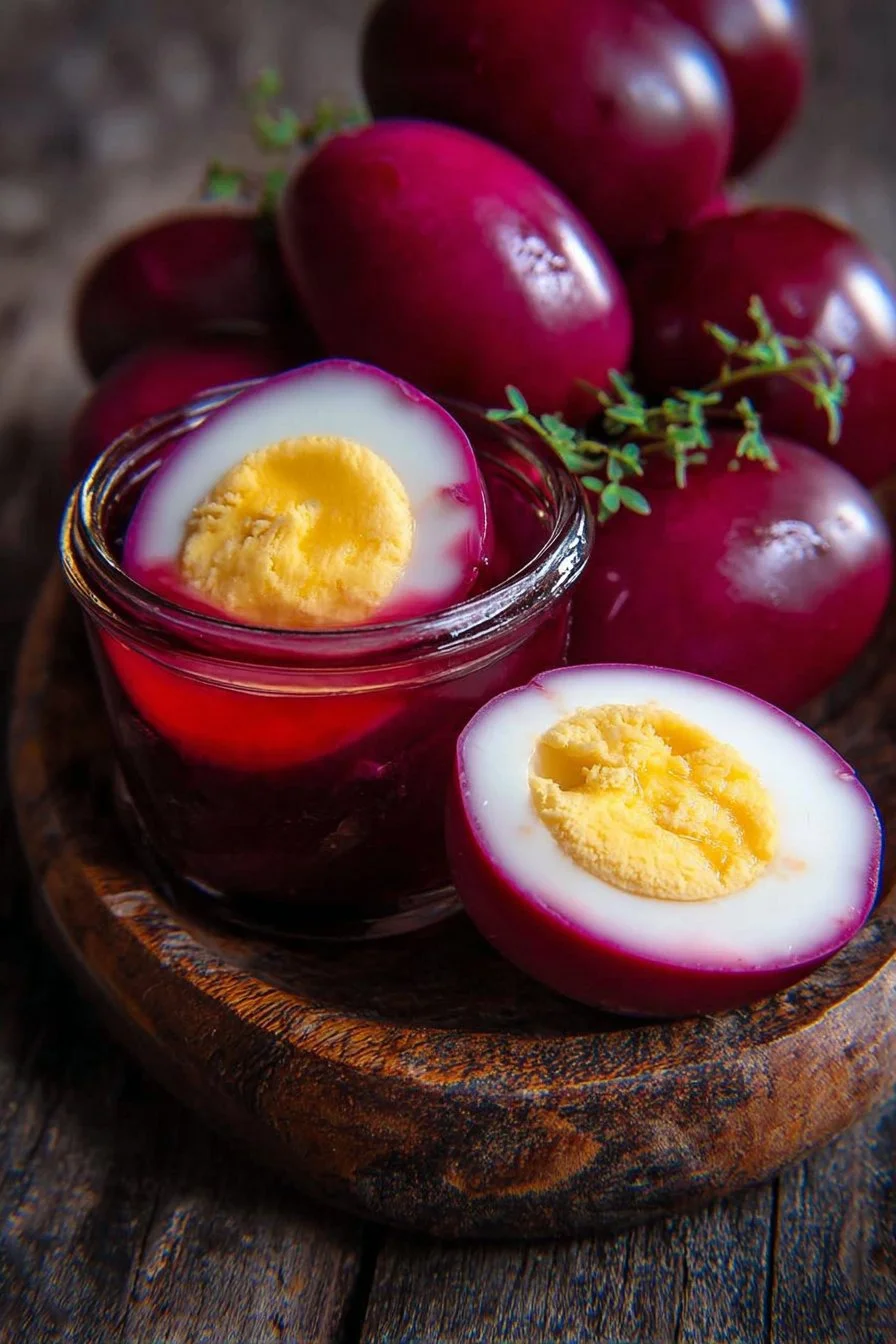
These pickled eggs are ruby-red, slightly sweet, and wonderfully tart — with firm whites and creamy yolks that soak up the beet-bright marinade. The flavor is clean and tangy, with a subtle earthy note from the beets and just enough sugar to balance the vinegar. Texture-wise they’re satisfyingly dense but silky when sliced, making them perfect for snacking, salads, or a colorful addition to a brunch spread. The whole process is delightfully simple — no special equipment, just a jar and a little patience. If you love quick make-ahead bites, pair these eggs with a hearty sandwich like Easy Chicken Alfredo Sloppy Joes for an easy meal that’s as pretty as it is tasty.
Why You’ll Love This Easy Red Beet Pickled Eggs
- Brilliant color: the beet liquid turns eggs a stunning pink-red, making any plate instantly festive.
- Simple pantry recipe: uses canned beets and basic staples — no canning skills required.
- Make-ahead convenience: flavor improves after 24 hours, so they’re perfect to prepare in advance.
- Versatile use: eat them as a snack, slice for salads, or serve on sandwiches and charcuterie boards.
- Balanced flavor: sweet, tangy, and slightly earthy — approachable for all palates.
- Long-lasting: they store well in the fridge, giving you ready-to-eat protein for several days.
- Low effort, high impact: minimal hands-on time for a visually impressive result.
- Kid-friendly: the sweet-tang combo and fun color make them appealing to children.
What Is Easy Red Beet Pickled Eggs?
Easy Red Beet Pickled Eggs are hard-boiled eggs that have been marinated in a bright beet-based pickling liquid. The canned beets and their liquid provide color and a mild earthy sweetness; combined with vinegar, sugar, salt, and water, they form a quick pickling brine that flavors the eggs and stains them a gorgeous crimson tone. The cooking method is simple cold pickling — cook the eggs first, then let them sit in a seasoned beet liquid in the refrigerator. People typically serve them as appetizers, snacks, or as part of brunch or picnic spreads. The overall vibe is comforting and nostalgic, with a modern, colorful twist that dresses up easy meals and gatherings.
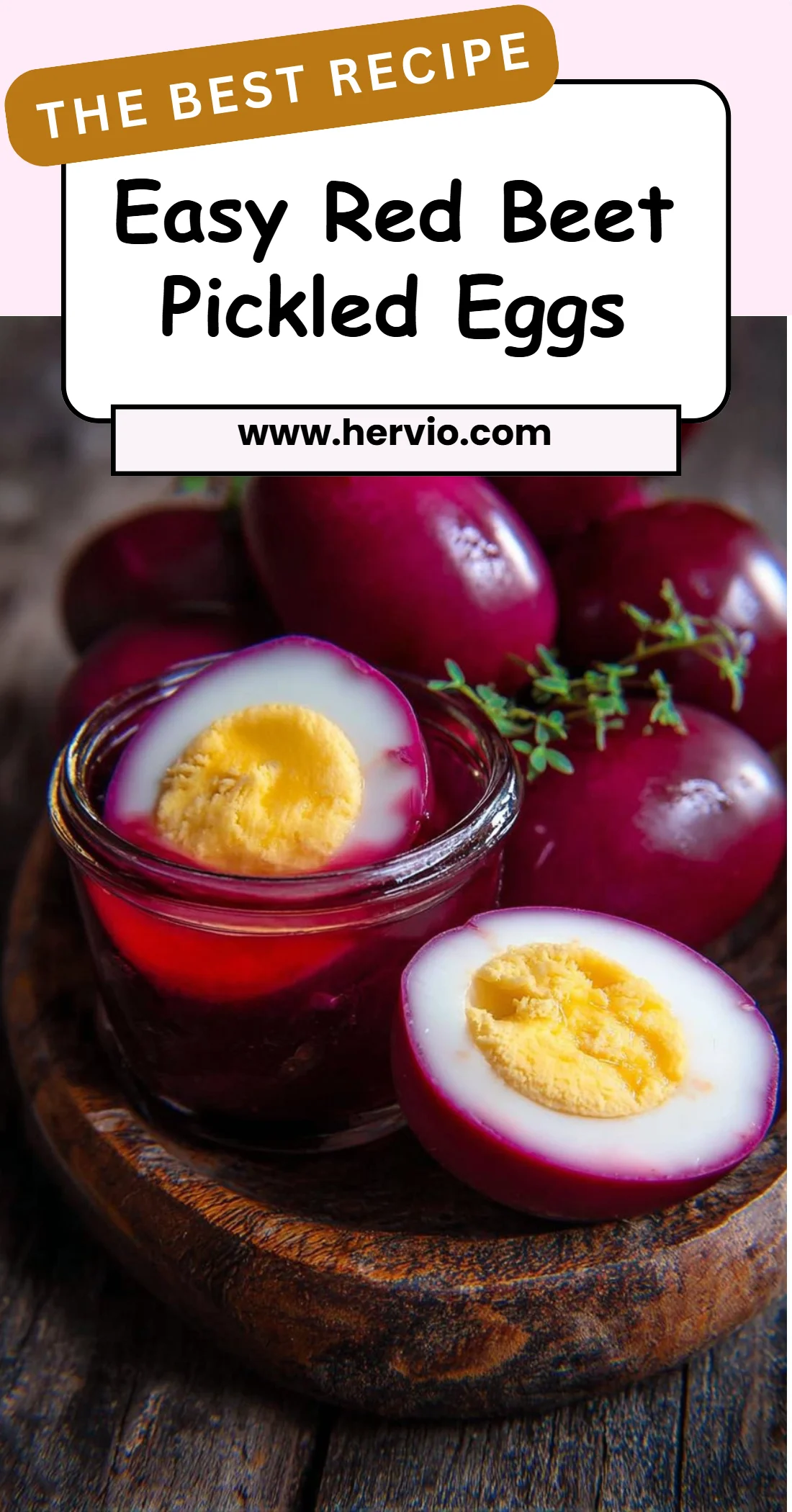
Ingredients for Easy Red Beet Pickled Eggs
For the Pickled Eggs
- Hard-boiled eggs
- Canned beets (with their liquid)
- Vinegar
- Sugar
- Salt
- Water
That’s it — straightforward pantry ingredients and no extra frills. Quantities can be adjusted to the size of your jar and how many eggs you want to pickle.
Ingredient Notes (Substitutions, Healthy Swaps)
- Vinegar: The recipe lists vinegar generically so you can use what you have — white vinegar for a neutral tang, apple cider vinegar for a slightly fruitier note, or white wine vinegar for mild acidity. All keep the recipe true to form.
- Sugar: If you prefer less sweetness, reduce the sugar amount to taste. A small amount is needed to balance the vinegar, but you can scale down for a tarter brine.
- Salt: Table salt or kosher salt both work. If using kosher salt, you may need to use slightly more by volume because it’s less dense.
- Canned beets: Use fresh-cooked beets if preferred as an optional swap (drain and reserve the cooking liquid). The canned version is the easiest and gives consistent color.
- Water: Adjust water to control brine strength — more water softens acidity, less concentrates flavor.
- Dietary considerations: This recipe is naturally gluten-free and vegetarian-friendly.
Step-by-Step Instructions
Step 1 – Hard-boil and cool the eggs
- Hard-boil the eggs until the yolks are fully set, then cool completely and peel.
Visual cue: The shells should slip off cleanly and the yolks should be firm with no runny center.
Pro cue: Use older eggs if possible; they peel more easily than ultra-fresh eggs.
Step 2 – Make the beet marinade
2. In a bowl, mix the canned beets and their liquid with vinegar, sugar, salt, and water, stirring until the sugar is dissolved.
Visual cue: The liquid should be a uniformly pink/red color and the sugar should be fully dissolved — no grainy texture.
Pro cue: Taste the brine and adjust balance — if it’s too sharp, add a bit more sugar or water; if too mild, add a splash more vinegar.
Step 3 – Arrange eggs in the jar
3. Place the peeled eggs in a clean jar, arranging them in a single layer.
Visual cue: Eggs should fit snugly without crushing; a mason jar or any airtight container works well.
Pro cue: A single layer ensures even exposure to the brine at first; for taller jars, you can pack a second layer later once the eggs begin absorbing color.
Step 4 – Pour in the beet marinade
4. Pour the beet marinade over the eggs until fully submerged.
Visual cue: Eggs should be completely covered by the pink liquid so every surface can absorb flavor and color.
Pro cue: If some eggs float, weigh them down with a small clean plate or folded piece of parchment so they stay submerged.
Step 5 – Seal and refrigerate
5. Seal the jar and refrigerate for at least 24 hours to develop flavor and color.
Visual cue: After 24 hours the whites will start to tint pink; by 48–72 hours they’ll be deeply colored.
Pro cue: For the best color and flavor depth, wait 48–72 hours before serving; however, they’re safe and tasty after the minimum 24 hours.
Pro Tips for Success
- Peel carefully: Start peeling at the wider end where an air pocket often forms; this helps the shell come off in larger pieces.
- Chill before peeling: Cooked eggs tossed into an ice bath cool faster and peel easier.
- Use a clear jar: A transparent container helps you monitor color development and presentation.
- Don’t dilute too much: Keep a good balance of beet liquid and vinegar for vibrant color — if you must add water, maintain some beet liquid for color transfer.
- Avoid metal lids during long storage if they’re not lined — long-term acid exposure can affect flavor and lid integrity.
- Label the jar: Note the date you started pickling to track freshness.
- Rotate gently: If eggs are layered after packing, gently turn the jar once or twice a day to help even coloring.
Flavor Variations (Optional)
- Spicy kick (optional): Add a pinch of red pepper flakes to the brine for a subtle heat. (Keep the original brine ingredients intact.)
- Sweeter brine (optional): Increase sugar slightly for a sweeter, milder pickled egg while keeping the same liquid components.
- Extra-strong beet color (optional): Use more canned beet liquid relative to water to intensify the hue without changing other ingredients.
- Milder vinegar note (optional): Use half and half water and vinegar to soften acidity while preserving the core pickling method.
- Layered presentation (optional): After the initial 24 hours, remove a few eggs for a lightly tinted result, then keep the rest longer for deeper color variety on a platter.
Serving Suggestions
- Sliced on a salad: Cut into halves or slices and nestle on leafy greens to add color and protein.
- Appetizer platter: Arrange on a board with pickles, cheese, crackers, and crackers for a striking snack tray.
- Sandwich topper: Halved pickled eggs add tang to sandwiches — try them on rustic toast or a hearty roll.
- Brunch plate: Serve alongside roasted potatoes and fruit for a weekend spread.
- Picnic addition: They travel well in a cooler and are an easy, mess-free option.
- On bagels: For a fun breakfast, serve sliced pickled eggs on bagels such as 2-Ingredient Bagels with a smear of butter or cream cheese.
Make-Ahead, Storage & Reheating
- Make-ahead: These eggs are ideal to make a day or two ahead. Flavor and color deepen after time in the brine.
- Refrigerator storage time: Store the sealed jar in the refrigerator for up to 1–2 weeks for best texture and safety. Check for any off-odors before eating.
- Reheating: No reheating required — these are best served chilled or at cool room temperature. Warming can change the texture of the yolk and is not recommended.
- Texture changes: The longer they sit, the firmer the white can become and the yolk texture may slightly dry at edges; consume within the suggested timeframe for the best balance.
Storage and Freezing Instructions
- Freezing not recommended: Freezing hard-boiled eggs changes their texture dramatically — the whites become rubbery and the yolks develop a crumbly texture. Because pickled eggs rely on that firm-yet-creamy profile, freezing is not a good option.
- Best alternative to freezing: If you have surplus eggs, store them in the pickling brine in the refrigerator for up to two weeks, or boil and refrigerate plain eggs (peeled or unpeeled) for up to one week to pickle later.
- Jar care: Keep the pickled eggs fully submerged to avoid discoloration or off textures. If brine level drops, top with more of the original brine proportions (beet liquid/vinegar/water/sugar/salt).
Nutrition Facts (Per Serving)
| Calories | Protein | Carbs | Fat | Fiber | Sodium |
|———|——–|——|—–|——|——-|
| 110 kcal | 6 g | 5 g | 7 g | 1 g | 220 mg |
Nutrition values are estimates and may vary depending on ingredients and portion sizes.
FAQ About Easy Red Beet Pickled Eggs
Q: How long do I need to wait before eating them?
A: Wait at least 24 hours for noticeable flavor and color uptake; 48–72 hours gives a deeper color and fuller flavor.
Q: My eggs taste too vinegary. What went wrong?
A: Either the vinegar ratio is high or you didn’t include enough sugar/water to balance it. For future batches, reduce vinegar slightly or add a touch more sugar or water.
Q: Why aren’t my eggs turning pink?
A: If you used little to no beet liquid, the color transfer will be weak. Using more canned beet liquid or letting them sit longer improves color.
Q: Can I reuse the brine for a second batch of eggs?
A: Reusing brine is possible but will be less potent and may thin out the color and flavor. For best results, make a fresh brine.
Q: Are these safe to keep in the fridge? How long?
A: Yes — store sealed in the refrigerator and consume within 1–2 weeks. Always check for off smells or mold before eating.
Q: Can I eat the beets too?
A: Yes, the canned beets you used in the brine are perfectly fine to eat alongside the eggs — they’ll have picked-up flavor from the vinegar and sugar.
Notes
- Slice for presentation: Halve or quarter the eggs and fan them on a plate to show off the vivid color gradient.
- Brighten before serving: A quick drizzle of the pickling liquid over plated eggs refreshes glaze and color.
- Adjust seasoning: Taste the brine before pouring over eggs and tweak sugar or salt to match your preference.
- Small jars are fine: If you only have a few eggs, use a smaller jar to keep them submerged and limit excess brine.
- Plate contrast: Serve on a neutral-colored plate (white or wood) to make the pink hues pop visually.
- Pairing note: Because these eggs are tangy, serve with milder, creamy components (like soft cheeses or avocado) to balance the palate.
Easy Red Beet Pickled Eggs
- Total Time: 25 minutes
- Yield: 6 servings
- Diet: Vegetarian
Description
These pickled eggs are ruby-red, slightly sweet, and wonderfully tart, perfect for snacking, salads, or brunch spreads.
Ingredients
- 6 Hard-boiled eggs
- 1 can Canned beets (with their liquid)
- 1/2 cup Vinegar
- 1/4 cup Sugar
- 1 tsp Salt
- 1 cup Water
Instructions
- Hard-boil the eggs until fully set, then cool completely and peel.
- Mix the canned beets and their liquid with vinegar, sugar, salt, and water, stirring until the sugar is dissolved.
- Place the peeled eggs in a clean jar, arranging them in a single layer.
- Pour the beet marinade over the eggs until fully submerged.
- Seal the jar and refrigerate for at least 24 hours to develop flavor and color.
Notes
For best results, wait 48-72 hours before serving for deeper color and flavor. Use older eggs for easier peeling.
- Prep Time: 15 minutes
- Cook Time: 10 minutes
- Category: Snack
- Method: Cold Pickling
- Cuisine: American