
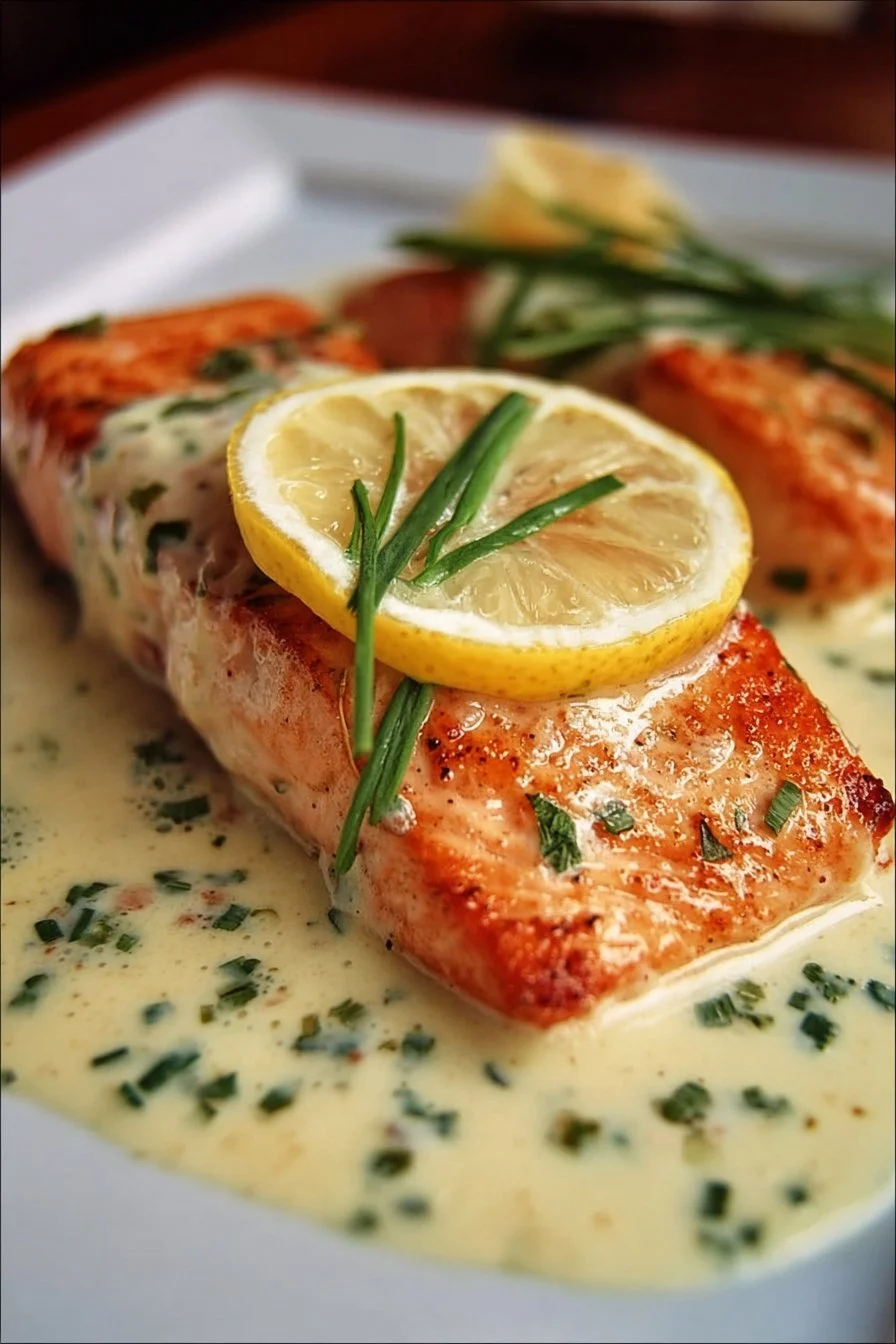
Bright, silky, and utterly comforting, this Baked Salmon with Lemon Butter Cream Sauce pairs flaky, oven-roasted salmon with a velvety garlic–butter cream sauce that brightens each bite with fresh lemon. The salmon is marinated briefly in lemon, Dijon and a touch of olive oil to wake up the fish, then baked until just opaque and tender. The sauce comes together in minutes—rich butter, a hit of garlic, and heavy cream reduced to a smooth finish. It’s an elegant weeknight dinner that feels special without fuss, and it’s lovely served over rice, buttery mashed potatoes, or a bed of greens. If you love creamy seafood dishes, try pairing this with a pasta twist like creamy garlic butter salmon fettuccine for an indulgent meal.
Why You’ll Love This Baked Salmon with Lemon Butter Cream Sauce
- Bright lemon and tangy Dijon cut through the richness of the cream for a perfectly balanced sauce.
- Quick marinade and high oven temperature mean dinner is on the table in about 25–30 minutes.
- The sauce is luxuriously smooth and coats the fish—great for spooning over rice or pasta.
- Uses pantry-friendly ingredients with minimal prep: garlic, butter, cream, lemon, and mustard.
- Versatile enough for weeknight dinners or a low-key dinner party main course.
- Mild, family-friendly flavors that please picky eaters while still feeling gourmet.
- The method keeps salmon moist and flaky without overcooking.
What Is Baked Salmon with Lemon Butter Cream Sauce?
This dish features skinless salmon fillets lightly marinated in lemon juice, olive oil, garlic, and Dijon mustard, then baked in a hot oven until just cooked through. The star accompaniment is a lemon butter cream sauce made from unsalted butter, garlic, and heavy cream, finished with more lemon if you like. Flavor-wise it’s rich, garlicky, and bright—creamy but cut through by citrus and mustard notes. It’s typically served as a main course for dinner, and works well for relaxed weeknights, date nights, or brunches that call for something special yet simple. The overall vibe is comforting and elegant: familiar flavors elevated by a silky sauce.
Ingredients for Baked Salmon with Lemon Butter Cream Sauce
For the Base
- 2 tablespoons freshly squeezed lemon juice
- 1 tablespoon olive oil
- 1 minced garlic clove
- 2 tablespoons old-style Dijon mustard
- 5 skinless salmon fillets (about 5 oz each)
- 1/2 teaspoon ground black pepper
- salt (to taste)
For the Sauce
- 1/4 cup unsalted butter (1/2 stick)
- 1 1/2 tablespoons minced garlic cloves
- 1/2 cup heavy cream
- 1–2 tablespoons freshly squeezed lemon juice (optional)
For Serving
- 1 tablespoon parsley (finely chopped)
- lemon slices for serving
Ingredient Notes (Substitutions, Healthy Swaps)
- Heavy cream: For a lighter sauce, use half-and-half or a mixture of milk and a small amount of butter, but the sauce will be less rich and slightly thinner. For dairy-free, substitute canned coconut cream—expect a subtle coconut flavor.
- Unsalted butter: If you only have salted butter, reduce added table salt when seasoning the salmon. You can also use a neutral oil (like avocado) in the sauce for a lighter fat profile, though you’ll miss some of the butter’s flavor.
- Dijon mustard: Old-style Dijon is specified for texture and flavor; if unavailable, smooth Dijon can be used (same quantity).
- Garlic: Fresh garlic gives the brightest flavor. If using jarred minced garlic, use slightly less—about 1 teaspoon for the marinade and 1 tablespoon for the sauce.
- Salt control: Start with a light sprinkle and adjust after the sauce has finished—cream can mute saltiness, so a final seasoning check is useful.
- Salmon: Any skinless fillets work; if your fillets are thicker or thinner than 5 oz, adjust baking time slightly.
Step-by-Step Instructions
Step 1 – Preheat and Marinate the Salmon
- Preheat your oven to 425°F (220°C).
- In a bowl, whisk together 2 tablespoons lemon juice, 1 tablespoon olive oil, 1 minced garlic clove, and 2 tablespoons old-style Dijon mustard. Coat the salmon fillets thoroughly in the marinade and season with 1/2 teaspoon ground black pepper and salt to taste. Let sit for 10–15 minutes.
Visual cue: The fillets should look glossy and evenly coated with the mustard-lemon mixture. Tiny bubbles or beads of marinade on the surface are normal.
Step 2 – Bake the Salmon
- Arrange the marinated fillets in a single layer in a baking dish.
- Bake for about 10–15 minutes until the salmon is opaque and flakes easily with a fork.
Pro cue: Start checking at the 10-minute mark—overcooked salmon becomes dry fast. For medium doneness, the center should still be slightly translucent before resting.
Step 3 – Make the Lemon Butter Cream Sauce
- While the salmon bakes, melt 1/4 cup unsalted butter in a saucepan over low–medium heat. Add 1 1/2 tablespoons minced garlic and sauté until fragrant, about 30–45 seconds.
- Stir in 1/2 cup heavy cream; bring to a gentle boil, reduce heat, and simmer until it thickens slightly. Taste and add 1–2 tablespoons freshly squeezed lemon juice if desired.
Visual cue: The sauce should thicken enough to coat the back of a spoon and look glossy—avoid a rolling boil which can cause the cream to separate.
Step 4 – Finish and Rest
- Pour the warm lemon butter cream sauce over the cooked salmon fillets. Let rest for 5–10 minutes to allow the flavors to settle.
- Sprinkle with 1 tablespoon finely chopped parsley and serve with lemon slices.
Pro cue: Spoon some sauce over each fillet again just before serving to keep the top moist and glossy.
Pro Tips for Success
- Pat salmon dry before marinating to help the marinade cling and promote even baking.
- Use a high oven temperature (425°F) to get a quick roast that seals in moisture—long, slow baking can dry the fish.
- Mince the garlic finely for the sauce so it disperses flavor evenly; a quick sauté will mellow its sharpness.
- Keep the sauce at a gentle simmer; high heat can separate the cream and make it grainy.
- Taste and adjust lemon at the end—start with 1 tablespoon and add more if you want a brighter finish.
- If plating ahead of time, reserve a small amount of sauce to re-warm and pour over the salmon just before serving.
- Use a probe thermometer if unsure: aim for an internal salmon temperature of 125–130°F for medium (carryover will finish it during rest).
Flavor Variations (OPTIONAL)
- Spicy Kick: Stir in 1/4–1/2 teaspoon red pepper flakes into the sauce while it simmers for a warm background heat.
- Herb Brightness: Add chopped dill or chives to the parsley garnish for a fresher herbal note.
- Caper-Lemon Twist: Fold in 1–2 tablespoons capers to the finished sauce for briny pops (optional).
- Mustardy Cream: Stir 1 teaspoon extra Dijon into the cream while it reduces for a tangier sauce.
- Lighter Version: Use half-and-half instead of heavy cream and reduce butter to 2 tablespoons; sauce will be lighter but still tasty.
(Note: All variations are optional and don’t replace any core ingredients in the base recipe.)
Serving Suggestions
- Spoon the salmon and sauce over steamed white rice, jasmine, or basmati to soak up the sauce.
- Serve with buttery mashed potatoes or garlic roasted potatoes for a comforting plate.
- A simple green salad dressed with lemon vinaigrette brightens the meal and balances richness.
- Roast or steam asparagus, green beans, or broccoli for a quick vegetable side.
- For a casual spread, serve this salmon with contrasting textures like baked cream cheese chicken taquitos—the creamy sauce and crispy bites make a fun combo.
- Plate family-style for a dinner party: place fillets on a platter, pour sauce over, and pass sides separately.
Make-Ahead, Storage & Reheating
- Make-ahead: The marinade can be mixed and stored up to 24 hours in the refrigerator. You can also marinate the salmon for up to 15 minutes ahead of baking (do not marinate much longer—acid will begin to “cook” the fish).
- Sauce ahead: Prepare the lemon butter cream sauce up to a day in advance and refrigerate. Reheat gently over low heat, whisking to re-emulsify; add a splash of cream or milk if it’s too thick.
- Refrigeration: Store cooked salmon (with or without sauce) in an airtight container in the refrigerator for up to 3 days. Keep sauce separately if you prefer to avoid texture changes.
Storage and Freezing Instructions
- Freezing: Cooked salmon will freeze but the texture can change; it’s best to freeze raw marinated fillets wrapped tightly for up to 2 months. Thaw overnight in the fridge before baking.
- Sauce freezing: Cream-based sauces can separate when frozen and reheated. If you must freeze the sauce, do so in an airtight container and reheat slowly, whisking in a bit of cream or milk to help smooth it out. For best texture, store sauce in the refrigerator and consume within 3 days.
- Not recommended: Freezing cooked salmon already coated in the cream sauce because the sauce may become grainy and separate upon reheating.
Nutrition Facts (Per Serving)
| Calories | Protein | Carbs | Fat | Fiber | Sodium |
|———|——–|——|—–|——|——-|
| 490 kcal | 34 g | 3 g | 36 g | 0 g | 450 mg |
Nutrition values are estimates and may vary depending on ingredients and portion sizes.
FAQ About Baked Salmon with Lemon Butter Cream Sauce
How can I tell when salmon is done?
- Salmon is done when it flakes easily with a fork and is opaque through most of the fillet. For a juicier result, aim for an internal temperature of 125–130°F and let it rest—the carryover heat will finish it.
My sauce looks thin—what went wrong?
- Either you didn’t reduce the cream long enough or the heat was too low. Simmer gently until it thickens to coat the back of a spoon. If needed, simmer a bit longer to concentrate.
Can I skip the butter and just use olive oil?
- You can, but the sauce will lose some of its richness. Olive oil yields a lighter sauce but a different flavor profile.
How do I prevent the cream sauce from separating?
- Avoid boiling the cream at high heat. Keep it at a gentle simmer and add lemon juice at the end. Reheat gently if serving later.
Can I use frozen salmon?
- Yes—thaw in the refrigerator overnight before marinating and baking for even cooking.
How long will leftovers keep?
- Refrigerate leftovers in an airtight container for up to 3 days. Reheat gently in a low oven or on the stovetop with a splash of cream or milk.
Notes
- Plating idea: For a restaurant-style presentation, place salmon on a smear of sauce, spoon additional sauce over the top, and garnish with parsley and a lemon wheel.
- Small flavor upgrade: Finish with a tiny grate of lemon zest for extra brightness right before serving.
- Seasoning adjustment: Taste the sauce before adding salt—Dijon and butter can carry saltiness.
- Presentation tip: If serving to guests, reheat the sauce and spoon it over just-baked fillets to keep everything glossy and warm.

Baked Salmon with Lemon Butter Cream Sauce
- Total Time: 30 minutes
- Yield: 5 servings
- Diet: Gluten-Free
Description
A comforting and elegant dish featuring flaky baked salmon paired with a bright lemon butter cream sauce.
Ingredients
- 2 tablespoons freshly squeezed lemon juice
- 1 tablespoon olive oil
- 1 minced garlic clove
- 2 tablespoons old-style Dijon mustard
- 5 skinless salmon fillets (about 5 oz each)
- 1/2 teaspoon ground black pepper
- Salt (to taste)
- 1/4 cup unsalted butter (1/2 stick)
- 1 1/2 tablespoons minced garlic cloves
- 1/2 cup heavy cream
- 1–2 tablespoons freshly squeezed lemon juice (optional)
- 1 tablespoon parsley (finely chopped)
- Lemon slices for serving
Instructions
- Preheat your oven to 425°F (220°C).
- Whisk together lemon juice, olive oil, minced garlic, and Dijon mustard. Coat the salmon fillets and season with pepper and salt. Let marinate for 10–15 minutes.
- Arrange the marinated fillets in a baking dish and bake for about 10–15 minutes until opaque and flaky.
- While the salmon bakes, melt butter in a saucepan, add minced garlic, and sauté until fragrant.
- Stir in heavy cream; bring to a gentle boil, then simmer until slightly thickened. Adjust lemon juice to taste.
- Pour the lemon butter cream sauce over the salmon and let rest for 5–10 minutes before serving topped with parsley and lemon slices.
Notes
Adjust seasoning as needed, and for lighter options, substitute with half-and-half or coconut cream.
- Prep Time: 15 minutes
- Cook Time: 15 minutes
- Category: Main Course
- Method: Baking
- Cuisine: American