
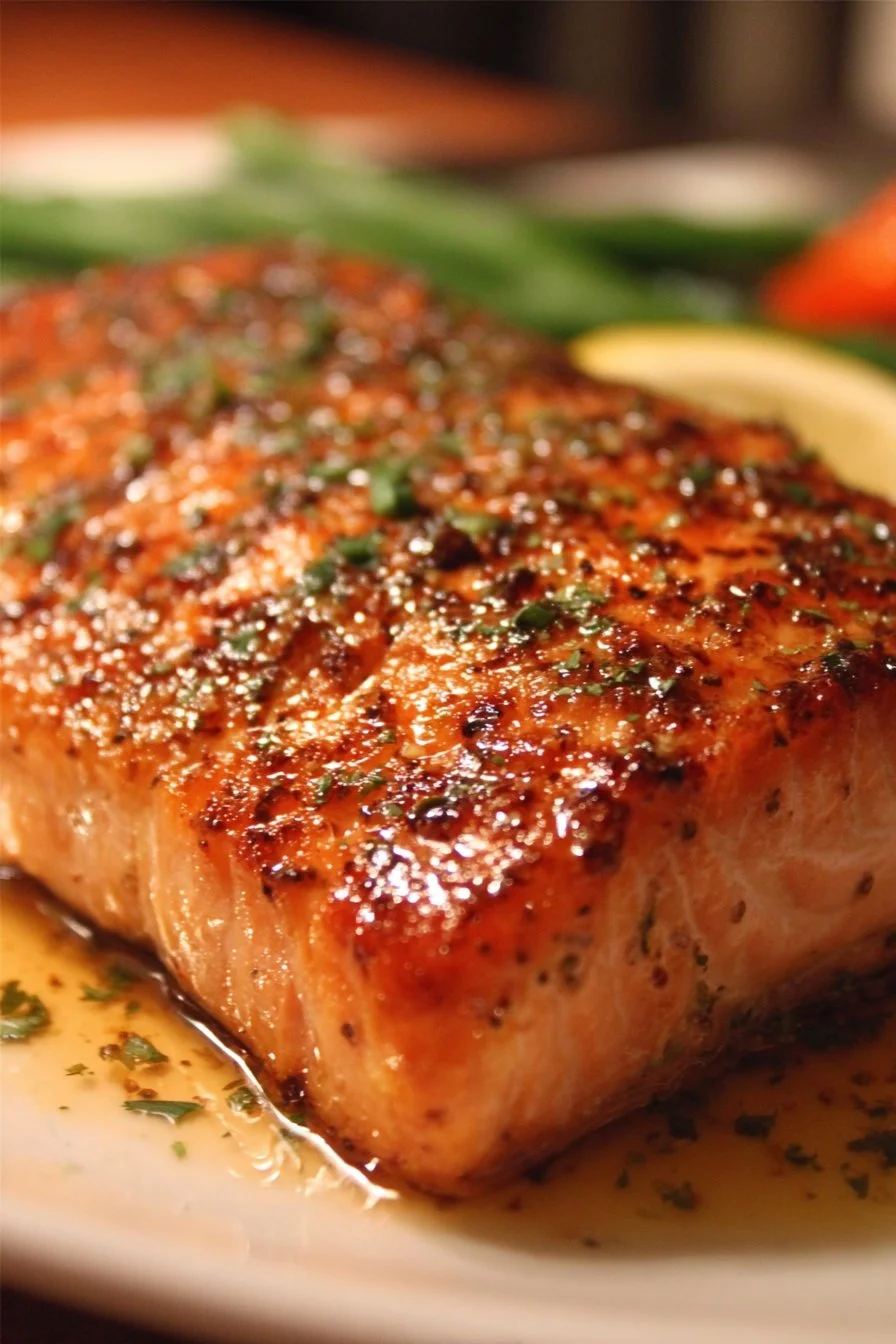
The first time I made this Texas Roadhouse–style salmon at home I was struck by how the sticky, sweet-savory glaze caramelized in minutes and made each bite glossy and irresistible. The skin crisps up beautifully on the skillet while the flesh stays moist and flaky, with a perfect balance of brown sugar sweetness, honey warmth, and a kiss of soy for depth. It’s fast enough for a weeknight and elegant enough for guests — serve it with simple roasted vegetables or a bed of fluffy rice for an easy, restaurant-worthy meal. If you love the bold flavors here, check out my Texas Roadhouse-style salmon primer for more inspiration.
Why You’ll Love This Delicious Texas Roadhouse Salmon in Minutes at Home
- Sweet, sticky glaze that caramelizes into a glossy finish — impressive without fuss.
- Crispy skin paired with tender, flaky salmon for a satisfying contrast in every bite.
- Ready in about 10–12 minutes from skillet to plate — perfect for quick weeknights.
- Minimal ingredients and pantry-friendly components make it economical and simple.
- Versatile: pairs with rice, salads, potatoes, or steamed greens to suit any mood.
- Great for meal-prep dinners — reheats well and still tastes flavorful the next day.
- Crowd-pleaser: restaurant-style flavors that feel special but require zero special equipment.
What Is Delicious Texas Roadhouse Salmon in Minutes at Home?
This dish is a pan-seared salmon fillet finished with a sticky brown sugar-soy glaze inspired by the bold, sweet-savory flavors you might expect from a popular steakhouse. The cooking method is a quick skillet sear: salmon is crisped skin-side down, flipped briefly, then generously basted with the simple glaze until tacky and glossy. Flavor-wise, expect caramelized brown sugar and honey sweetness balanced by salty soy sauce and a gentle warmth from paprika and black pepper. It’s most commonly served as a comforting weeknight main or a quick dinner party entrée — approachable, homey, and satisfying.
Ingredients for Delicious Texas Roadhouse Salmon in Minutes at Home
For the Base
- 4 6 oz salmon fillets (skin-on recommended) (about 170 g each)
For the Glaze
- 1/4 cup brown sugar (packed) (about 55 g)
- 1/4 cup soy sauce (60 ml)
- 2 tablespoons melted butter (30 g)
- 2 tablespoons honey (30 ml)
- 1 teaspoon garlic powder
- 1/2 teaspoon black pepper
- 1 teaspoon paprika
For Serving
- 2 tablespoons fresh parsley, chopped (for garnish)
Ingredient Notes (Substitutions, Healthy Swaps)
- Soy sauce: For a lower-sodium option, use low-sodium soy sauce — flavor will be slightly milder but still excellent. Coconut aminos can work as a gluten-free, soy-free alternative but expect a sweeter, less salty glaze.
- Brown sugar & honey: If you want less sweetness, reduce brown sugar to 3 tablespoons and honey to 1 tablespoon; the glaze will still caramelize but be less sweet. For vegan swaps, replace butter with a neutral oil (like avocado oil) and honey with maple syrup.
- Butter: Use olive oil or avocado oil for a lighter, dairy-free option, but the butter adds richness and helps the glaze set; melting it first is key for even mixing.
- Garlic powder & paprika: Smoked paprika ups the smoky depth if you prefer that profile; cayenne or red pepper flakes (optional addition) will give some heat but keep this optional.
- Salmon: Skin-on is recommended for texture and to help keep the fillet intact during searing. Use similarly sized fillets for even cooking.
Step-by-Step Instructions
Step 1 – Make the glaze
Combine the brown sugar, soy sauce, melted butter, honey, garlic powder, black pepper, and paprika in a small bowl. Stir until mostly dissolved and somewhat smooth — the mixture will be liquidy but slightly grainy from the brown sugar.
Visual cue: The glaze should be glossy and pourable, with the sugar largely incorporated.
Step 2 – Prep the salmon
Pat the salmon fillets dry with paper towels to remove surface moisture. Lightly season both sides with a pinch of the garlic powder and black pepper from the ingredient list.
Visual cue: Dry skin will look dull rather than wet — this helps it crisp. The fillets should be uniformly seasoned.
Step 3 – Sear skin-side down
Heat a large skillet over medium-high heat and add a thin film of oil if your salmon’s skin isn’t fatty enough to render—use a neutral oil. Place the fillets skin-side down and press gently for a few seconds to ensure full contact. Sear for about 4–5 minutes, or until the skin is golden and crisp.
Visual cue: The skin will turn deep golden-brown and pull away slightly from the skillet edges when ready.
Pro cue: Leave the fillets undisturbed while searing to build a crisp crust. Tilt the pan occasionally to spoon hot fat over the skin for even browning.
Step 4 – Flip and glaze
Carefully flip each fillet. Spoon the prepared glaze over the top of the salmon immediately, coating each fillet generously. Cook for 1–2 minutes while you baste the tops with the pan juices and glaze.
Visual cue: The glaze should begin to bubble and thicken on the surface, becoming sticky.
Pro cue: Use a spoon to continually baste the glaze over the fish — continuous contact helps the sugars caramelize without burning.
Step 5 – Baste until finished
Continue to baste the salmon until the glaze feels tacky and coats the fillets — about 1–2 minutes longer. Remove from heat and rest for a minute. Sprinkle with chopped parsley and serve immediately.
Visual cue: The glaze will be glossy, slightly thick, and cling to the salmon rather than run off.
Pro cue: If glaze caramelizes too quickly, lower the heat. You want thickness and shine, not a burnt crust.
Pro Tips for Success
- Temperature matters: Medium-high heat is ideal. Too hot and the glaze will burn; too cool and the skin won’t crisp.
- Dry skin = crisp skin: Always pat salmon skin dry before searing to maximize browning.
- Even thickness: Choose fillets of similar thickness so they cook at the same rate.
- Don’t overflip: One flip is usually enough. Excess handling disrupts the crust and can dry the fish.
- Finish gentle: The fish will carryover cook once off the heat; remove while slightly underdone if you prefer medium-rare to medium.
- Watch the sugars: Brown sugar and honey brown fast — watch closely during basting to prevent burning.
- Rest briefly: Let the fillets sit 30–60 seconds after cooking — the glaze sets and juices redistribute.
Flavor Variations (Optional)
- Spicy honey glaze (optional): Add 1/4–1/2 teaspoon cayenne or two pinches of red pepper flakes to the glaze for a warm kick.
- Citrus brightness (optional): Add 1 teaspoon lemon zest to the glaze right before basting to brighten the overall flavor profile.
- Smoky paprika (optional): Swap regular paprika for smoked paprika for a deeper, smokier note without adding heat.
- Maple swap (optional): Replace honey with pure maple syrup for a woodsy sweetness that pairs well with the soy sauce.
- Lighter glaze (optional): Reduce brown sugar to 3 tablespoons and omit butter — use 1 tablespoon oil instead for a lighter finish while keeping the same glaze flavor.
Serving Suggestions
- Classic: Serve over steamed white or brown rice to soak up that glossy glaze.
- Veg-forward: Plate with roasted asparagus, green beans, or a simple lemon-garlic sautéed spinach for a bright contrast.
- Potato pairing: Crispy roast potatoes or mashed potatoes make the meal hearty and comforting.
- Salad: Serve on a bed of mixed greens and cucumber for a lighter dinner; drizzle any remaining glaze as dressing.
- Party idea: Slice and serve as part of a buffet with lemon wedges and fresh herbs.
- Fun combo: For a playful, indulgent pairing, serve alongside loaded fries for an over-the-top comfort meal — try my loaded fries recipe if you want ideas.
Make-Ahead, Storage & Reheating
- Make-ahead: You can make the glaze up to 24 hours in advance and refrigerate in an airtight container; bring to room temperature before using.
- Refrigeration: Store leftover cooked salmon in an airtight container in the refrigerator for up to 3 days.
- Reheating: To reheat, place fillets in a lightly oiled skillet over low heat and warm gently, spooning any reserved glaze over the top. Alternatively, reheat in a 300°F (150°C) oven for 8–10 minutes until warmed through. Avoid microwaving if you want to preserve texture, as microwaves can make salmon rubbery.
- Texture changes: Cooked salmon may firm up after refrigeration and lose some of that freshly-seared crispness. Re-crisp the skin in a hot skillet for 1–2 minutes if desired.
Storage and Freezing Instructions
- Freezing raw: You can freeze uncooked, glazed fillets (wrap tightly) but best results come from freezing plain raw salmon and glazing after thawing; the glaze contains sugar that may change texture when frozen.
- Freezing cooked: Cooked salmon can be frozen, but texture will degrade slightly. If freezing cooked fillets, cool fully, wrap tightly in plastic wrap and foil, and freeze up to 2 months.
- Thawing: Thaw frozen salmon overnight in the refrigerator. Re-glaze and reheat gently to restore flavor and tackiness.
- Recommendation: For best texture and glaze quality, freeze raw salmon plain and prepare the glaze fresh after thawing.
Nutrition Facts (Per Serving)
| Calories | Protein | Carbs | Fat | Fiber | Sodium |
|———|——–|——|—–|——|——-|
| 420 kcal | 34 g | 22 g | 18 g | 0 g | 900 mg |
Nutrition values are estimates and may vary depending on ingredients and portion sizes.
FAQ About Delicious Texas Roadhouse Salmon in Minutes at Home
- How do I know when salmon is done?
- Salmon is done when it flakes easily with a fork and is opaque through most of the fillet. For a slightly pink center, cook until an instant-read thermometer reads 125–130°F (52–54°C).
- My glaze burned — how can I prevent that?
- Reduce heat slightly and baste quickly. Burnt glaze is usually from too-high heat or letting the sugar sit uncovered on very high heat. Lower stove temperature and keep the glaze moving by basting.
- Can I use skinless salmon?
- Yes, but you’ll lose the crispy skin texture. Cook briefly on each side and be gentler when flipping to keep the fillet intact.
- Will this work with frozen salmon?
- Thaw completely before cooking, pat dry, and proceed as directed. Thawing in the refrigerator overnight is best.
- How should I reheat leftovers to keep the crust?
- Re-crisp in a hot skillet skin-side down for 1–2 minutes, then warm the top with the lid on low heat or a low oven. Avoid microwaving.
- Can I make the glaze thicker or less sweet?
- To thicken, simmer the glaze briefly until it reduces and becomes syrupy (careful not to burn). To reduce sweetness, cut the brown sugar or honey amounts by a third.
Notes
- Plating idea: Serve salmon on a long spoon of mashed potatoes or a pool of olive oil-scented rice for an elegant presentation.
- Small flavor upgrade: Finish with a squeeze of fresh lemon if you like brightness — adds contrast to the sweet glaze.
- Seasoning tweak: Taste the glaze before glazing and tweak saltiness with more soy sauce or balance sweetness by adding a splash more soy if it feels too sweet.
- Presentation tip: Wipe skillet edges and plate with a light drizzle of any remaining glaze for a glossy restaurant look.
- Leftovers: Flake cooled salmon into salads or grain bowls — the glaze adds immediate flavor without extra fuss.
Enjoy the quick, sticky-sweet goodness of this Texas Roadhouse–inspired salmon — it’s one of those recipes that looks like you spent time in the kitchen but tastes like you ordered out.
Print
Delicious Texas Roadhouse Salmon in Minutes at Home
- Total Time: 15 minutes
- Yield: 4 servings
- Diet: Gluten-Free, Dairy-Free (with substitutes)
Description
A quick and easy Texas Roadhouse-style salmon with a sticky, sweet-savory glaze that caramelizes beautifully and delivers restaurant-style flavors in just minutes.
Ingredients
- 4 6 oz salmon fillets (skin-on recommended)
- 1/4 cup brown sugar (packed)
- 1/4 cup soy sauce
- 2 tablespoons melted butter
- 2 tablespoons honey
- 1 teaspoon garlic powder
- 1/2 teaspoon black pepper
- 1 teaspoon paprika
- 2 tablespoons fresh parsley, chopped (for garnish)
Instructions
- Combine the brown sugar, soy sauce, melted butter, honey, garlic powder, black pepper, and paprika in a small bowl. Stir until mostly dissolved.
- Pat the salmon fillets dry with paper towels and lightly season with garlic powder and black pepper.
- Heat a large skillet over medium-high heat and add a thin film of oil. Place the fillets skin-side down and sear for about 4–5 minutes.
- Carefully flip each fillet and spoon the prepared glaze over the top. Cook for 1–2 minutes while basting.
- Continue to baste until the glaze is tacky and coats the fillets. Remove from heat and rest for a minute before serving.
Notes
For less sweetness, reduce brown sugar and honey. Use skin-on salmon for best texture and maintain a quick cooking process without over-flipping.
- Prep Time: 10 minutes
- Cook Time: 5 minutes
- Category: Main Course
- Method: Pan-searing
- Cuisine: American