
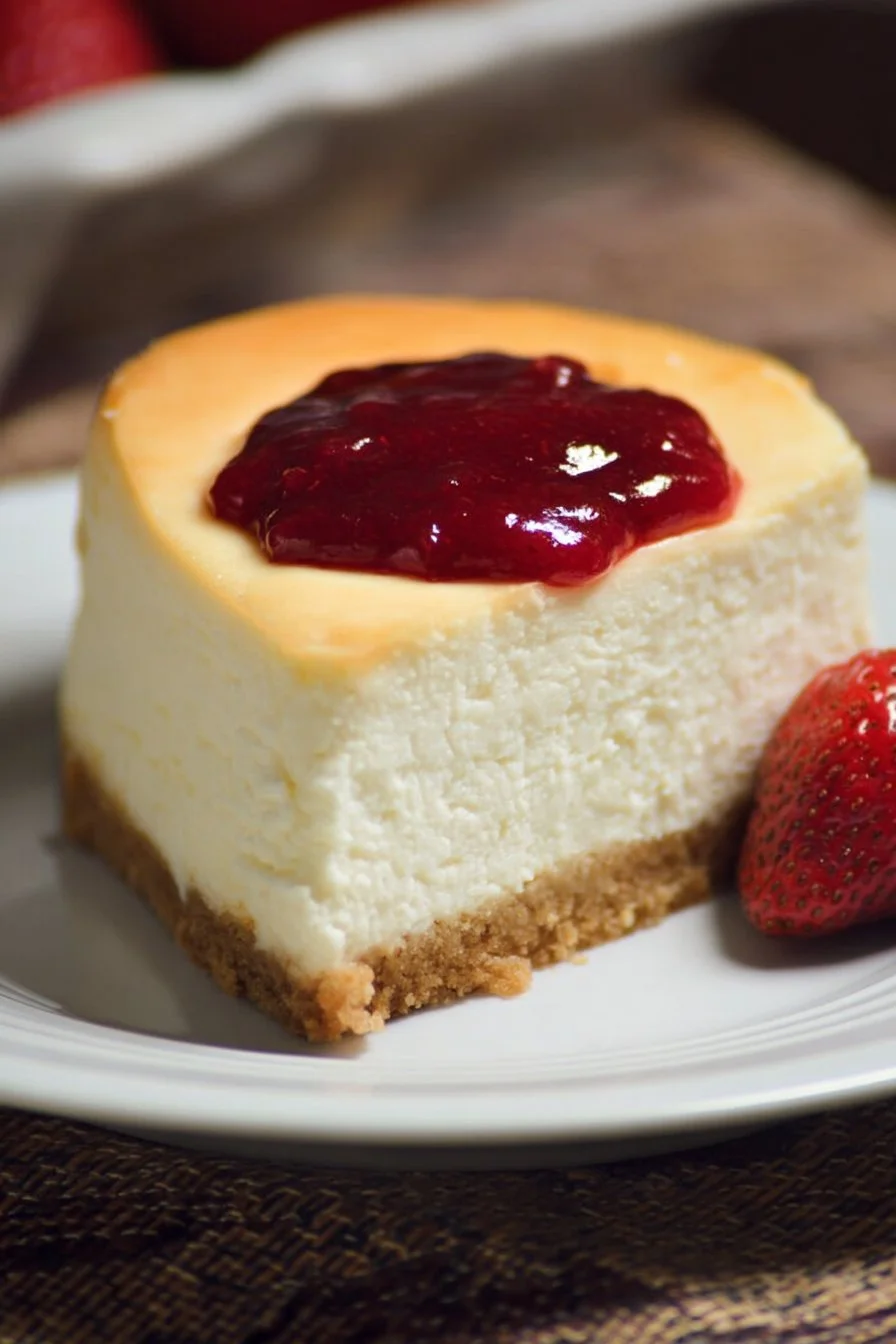
Creamy, tangy, and surprisingly light — this 0 Point Cheesecake feels like an indulgence without the heavy guilt. The texture is silky and smooth, with a delicate jiggle in the center and slightly set edges that give way to a melt-in-your-mouth bite. Bright lemon and vanilla lift the cream cheese base, while non-fat Greek yogurt keeps the cheesecake airy and protein-forward. It’s a comforting dessert that’s also great for brunch or a lighter finish to dinner; serve with fresh berries or a spoonful of sugar-free jam for a simple, elegant touch. If you’re pairing it with a savory main, try it alongside a quick skillet dinner like the 20-minute skillet mushroom chicken recipe for an easy balanced meal.
Why You’ll Love This 0 Point Cheesecake
- Light but satisfying: non-fat Greek yogurt and egg whites keep the texture creamy without heaviness.
- Bright flavor: lemon juice and vanilla give a fresh, balanced tang that cuts through the richness.
- Quick and simple: minimal ingredients and straightforward steps make it approachable for home cooks.
- Versatile serving: pairs well with fresh fruit, sugar-free sauces, or a dusting of cinnamon.
- Diet-friendly feel: uses a sugar substitute to lower carbs while still delivering sweetness.
- Great for entertaining: looks classic and elegant with minimal hands-on time.
- Make-ahead friendly: chills well, so you can prepare it a few hours before guests arrive.
- Kid-approved texture: smooth and custardy, it’s an easy dessert for picky eaters.
What Is 0 Point Cheesecake?
This is a pared-down, lower-calorie-style cheesecake that keeps the classic flavor profile — cream cheese, lemon, and vanilla — but relies on non-fat Greek yogurt, egg whites, and a sugar substitute to lighten the overall recipe. It tastes like a traditional cheesecake: tangy, creamy, and slightly sweet, but with a fresher, less dense mouthfeel.
The cooking method is a straightforward oven-bake: a batter made from blended cream cheese and Greek yogurt is enriched with vanilla, lemon, and egg whites, then baked until the edges are set and the center is slightly jiggly. It’s typically served chilled and sliced, making it a great dessert for dinner parties, holidays, or a weekend brunch. The overall vibe is comforting and approachable — a lighter take on a classic that still feels special.
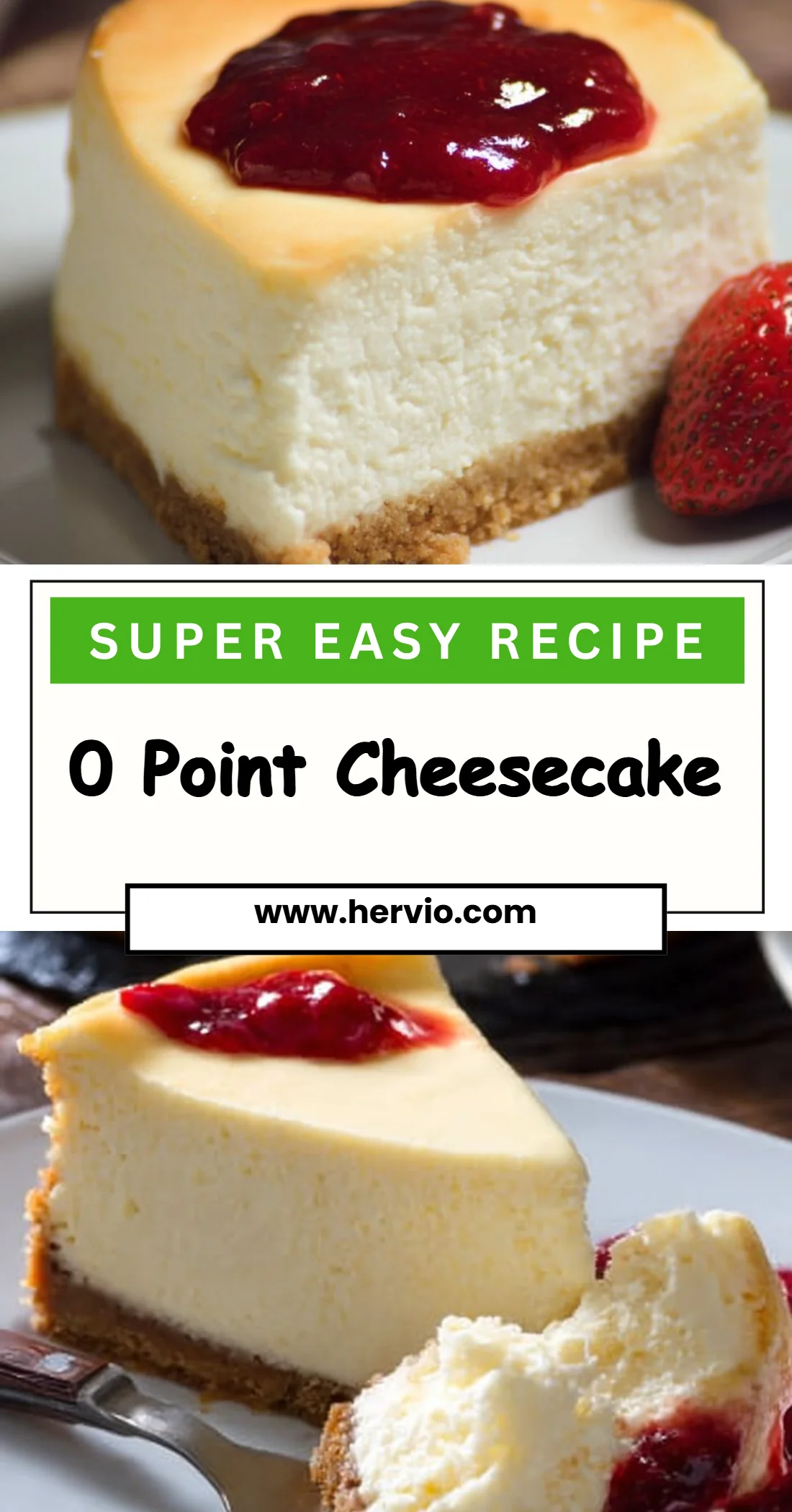
Ingredients for 0 Point Cheesecake
Makes one small cheesecake (about 6–8 servings)
- 1 package (8 ounces) cream cheese, softened
- 1 cup plain non-fat Greek yogurt (about 8 oz / 240 g)
- 1/2 cup sugar substitute (such as Stevia or monk fruit)
- 1 teaspoon vanilla extract
- 2 egg whites
- Juice of half a lemon (about 1–2 tablespoons)
Ingredient Notes (Substitutions, Healthy Swaps)
- Cream cheese: For a lighter version, use reduced-fat cream cheese — the texture will be almost the same but slightly less rich. Full-fat gives the creamiest result.
- Greek yogurt: Stick with plain non-fat Greek yogurt as written for texture and tang. If you prefer a dairy-free option, try an unsweetened, thick plant-based yogurt (be aware texture and flavor will change).
- Sugar substitute: Use your preferred granulated zero-calorie sweetener. If you prefer natural sugar, replace with 1/2 cup granulated sugar but note the dessert will no longer be “0 Point” style.
- Egg whites: Use pasteurized egg whites if serving to guests who are sensitive to raw egg. Whole eggs are not recommended here as they change texture.
- Lemon: Fresh lemon juice is best for brightness; bottled juice will work but may be flatter in flavor.
Step-by-Step Instructions
Step 1 – Preheat and prepare pan
Preheat your oven to 350°F (175°C) and grease a pie dish or a small springform pan. Greasing helps the cheesecake release cleanly after baking.
Visual cue: The pan should glisten slightly with butter or nonstick spray.
Step 2 – Blend the base
In a mixing bowl, blend the softened cream cheese and plain non-fat Greek yogurt together until completely smooth and lump-free. Use a hand mixer or stand mixer for easiest results.
Visual cue: The mixture should look glossy and uniform, without streaks of cream cheese.
Step 3 – Add flavorings
Add the sugar substitute, vanilla extract, and lemon juice to the mixture and mix until combined. Taste quickly and adjust lemon or vanilla if you prefer a brighter or more aromatic profile.
Pro cue: Start with the lower end of the lemon juice (about 1 tablespoon) and add up to 2 tablespoons if you want more zing.
Step 4 – Fold in egg whites
Gently fold in the egg whites until evenly incorporated. Do not overmix; aim for a smooth batter with a little air.
Visual cue: The batter should be slightly airy but pourable, with no large streaks of egg white.
Step 5 – Bake
Pour the mixture into the prepared pan and bake for 30–35 minutes until the edges are set and the center remains slightly jiggly. Avoid overbaking — the cheesecake will continue to set as it cools.
Pro cue: A slight wobble in the center is perfect; an overset center will yield a dense, dry texture.
Step 6 – Cool and chill
Cool at room temperature for about 30–60 minutes, then refrigerate for at least 2 hours before serving. Chilling helps the cheesecake firm up and develop flavor.
Visual cue: After chilling, slices should hold their shape with a smooth top and clean edges.
Pro Tips for Success
- Let the cream cheese come fully to room temperature before mixing to avoid lumps.
- Use a mixer to achieve a silky, lump-free batter; scrape the bowl sides as you go.
- Don’t skip the chill time — refrigeration improves texture and slicing.
- Avoid overbaking: remove when center still jiggles slightly. It will finish setting off heat.
- For clean slices, run a sharp knife under hot water, wipe dry, and slice; repeat between cuts.
- If your batter seems too thick, a splash of additional yogurt (1–2 teaspoons) can loosen it, but keep additions minimal.
- Use fresh lemon juice for the best bright, clean flavor.
Flavor Variations
(OPTIONAL — keep base ingredients intact)
- Lemon-Blueberry: Top chilled slices with fresh or thawed blueberries and a drizzle of sugar-free blueberry sauce.
- Cinnamon-Orange: Add 1/4 teaspoon ground cinnamon to the batter and a teaspoon of orange zest for a warm citrus twist.
- Berry Swirl: Spoon a small amount of sugar-free strawberry or raspberry jam on top and swirl gently before chilling.
- Vanilla-Bean Boost: Split a vanilla bean and scrape the seeds into the batter in place of vanilla extract for a richer vanilla flavor.
- Spiced Honey (if not strict on sweeteners): Drizzle a small amount of honey over servings for guests who aren’t avoiding sugar.
Serving Suggestions
- Simple and fresh: Serve slices with a handful of fresh raspberries or sliced strawberries.
- Saucy finish: Top with a spoonful of sugar-free jam or warmed sugar-free fruit compote.
- Brunch pairing: Add to a brunch spread with light egg dishes and fruit salads. For a balanced spread, serve with the 30-minute cottage cheese pizza bowl.
- Elegant dessert: Plate with a mint leaf and a dusting of finely grated lemon zest.
- Snack: Cut into small squares and serve chilled for a protein-forward snack.
- Holiday table: Great as a lighter option among richer holiday desserts.
Make-Ahead, Storage & Reheating
- Make-ahead: You can bake the cheesecake a day in advance. Allow to cool completely, then refrigerate covered. It’s best after at least 2 hours of chilling.
- Storage: Store in an airtight container or covered pan in the refrigerator for up to 4 days. This maintains texture and freshness.
- Reheating: Cheesecake is best served cold. If you prefer a slightly softer slice, let it sit at room temperature for 10–15 minutes before serving — avoid microwaving, which can make it watery and change texture.
- Texture changes: Chilling firms the cheesecake and melds flavors; the texture may become denser after a couple of days but will still be enjoyable.
Storage and Freezing Instructions
- Freezing: This cheesecake can be frozen, but texture may change slightly (a bit grainier) after thawing because of the dairy and egg whites. To freeze: wrap whole cheesecake tightly in plastic wrap and then foil, or slice and individually wrap pieces. Freeze for up to 2 months.
- Thawing: Thaw overnight in the refrigerator. For best texture, consume within 24 hours of thawing.
- If you prefer not to freeze: Make smaller portions and refrigerate up to 4 days to avoid textural loss from freezing.
Nutrition Facts (Per Serving)
| Calories | Protein | Carbs | Fat | Fiber | Sodium |
|———|——–|——|—–|——|——-|
| 120 kcal | 5 g | 3 g | 10 g | 0 g | 120 mg |
Nutrition values are estimates and may vary depending on ingredients and portion sizes.
Always add
tag before Ingredients.
FAQ About 0 Point Cheesecake
Q: Why did my cheesecake crack on top?
A: Cracks usually result from overbaking or rapid temperature changes. Remove when the center still jiggles slightly and cool gradually at room temperature before chilling.Q: My batter had lumps — how can I avoid that?
A: Make sure the cream cheese is fully softened to room temperature and use a mixer to beat lumps out. Scrape the bowl sides as you mix.Q: How do I know when it’s done?
A: The edges should be set while the center has a gentle jiggle. It will finish setting as it cools.Q: Can I use whole eggs instead of egg whites?
A: The recipe relies on egg whites for a lighter texture. Using whole eggs will change richness and texture — not recommended if you want the lighter outcome.Q: How long will leftovers keep in the fridge?
A: Store covered in the refrigerator for up to 4 days for best quality.Q: Can I make this sugar-free if I don’t use a sugar substitute?
A: To keep it sugar-free as written, use a zero-calorie sugar substitute. If you use regular sugar, it will no longer be a sugar-free/“0 Point” style cheesecake.
Notes
- Plating idea: Slice and serve on chilled plates for cleaner presentation and better texture on the tongue.
- Small flavor upgrade: Grate a little lemon zest over the top right before serving to intensify aroma.
- Sweetness check: Sweetness levels vary by sugar substitutes; always taste the batter (a small spoonful) before baking and adjust if needed.
- Presentation tip: For pristine slices, chill thoroughly and wipe the knife between cuts with a hot towel.
- Texture tweak: If you want a denser, more traditional cheesecake mouthfeel, refrigerate longer (up to 6 hours) before serving.
0 Point Cheesecake
- Total Time: 50 minutes
- Yield: 6 servings
- Diet: Low-Calorie
Description
A light and creamy cheesecake made with non-fat Greek yogurt and sugar substitutes, perfect for a guilt-free indulgence.
Ingredients
- 1 package (8 ounces) cream cheese, softened
- 1 cup plain non-fat Greek yogurt (about 240 g)
- 1/2 cup sugar substitute (such as Stevia or monk fruit)
- 1 teaspoon vanilla extract
- 2 egg whites
- Juice of half a lemon (about 1–2 tablespoons)
Instructions
- Preheat your oven to 350°F (175°C) and grease a pie dish or small springform pan.
- Blend the softened cream cheese and Greek yogurt until smooth.
- Add the sugar substitute, vanilla extract, and lemon juice; mix until combined.
- Fold in the egg whites until evenly incorporated.
- Pour the mixture into the prepared pan and bake for 30–35 minutes until edges are set.
- Cool at room temperature for 30–60 minutes, then refrigerate for at least 2 hours before serving.
Notes
For a lighter version, consider using reduced-fat cream cheese. Always chill the cheesecake for the best texture.
- Prep Time: 15 minutes
- Cook Time: 35 minutes
- Category: Dessert
- Method: Baking
- Cuisine: American