
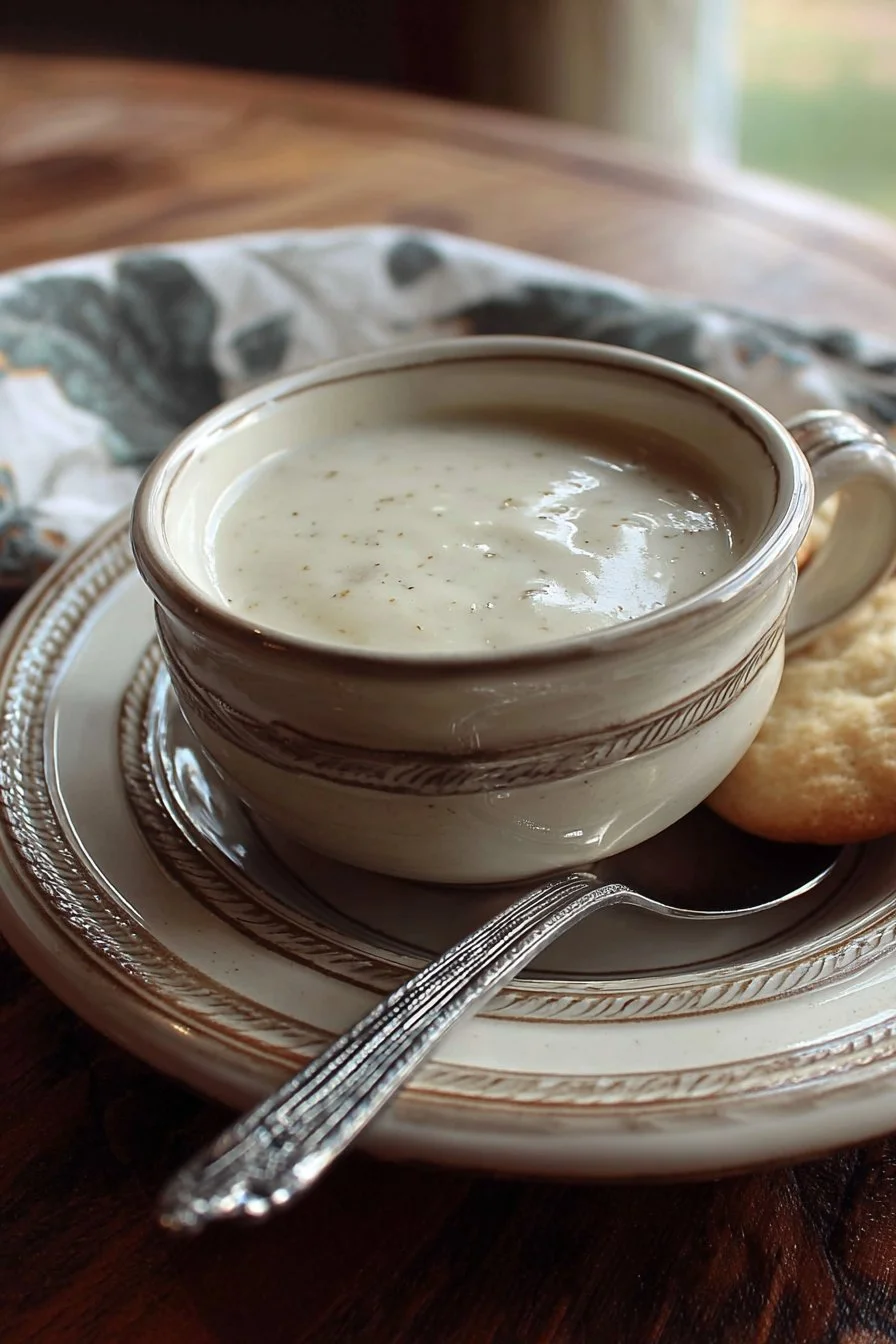
Warm, velvety, and unapologetically comforting—this 4-Ingredient Homemade White Gravy is what weeknight dinners (and slow Sunday mornings) are made of. Silky butter-and-flour roux transforms into a glossy, lightly seasoned sauce when whisked with milk, giving you a creamy texture that naps perfectly over flaky biscuits, mashed potatoes, or crispy fried meats. It’s effortless to make, forgiving if you’re new to sauces, and pure nostalgia in a bowl. If you love classic Southern gravies, you’ll appreciate this straightforward version—think of it as the blank canvas for cozy meals and quick family favorites; you can even compare to a richer take like Southern-style white gravy for inspiration.
Why You’ll Love This 4-Ingredient Homemade White Gravy
- Ultra-simple: just four pantry staples and five quick steps from start to finish.
- Classic comfort: rich, creamy mouthfeel with a mellow buttery flavor.
- Fast to make: ready in about 10 minutes—perfect for last-minute dinners.
- Versatile: pairs beautifully with biscuits, potatoes, fried chicken, or spooned over casseroles.
- Forgiving technique: whisking and gentle heat make it hard to go wrong.
- Customizable: season simply or add optional twists (see variations).
- Economical: uses basic ingredients you likely already have.
- Kid-friendly: mild, creamy flavor that appeals to picky eaters.
What Is 4-Ingredient Homemade White Gravy?
This is a classic American white gravy—sometimes called “country gravy” or “sawmill gravy”—made from a butter-and-flour roux whisked with milk until thick and smooth. It tastes of rich butter with a creamy, milky backbone and a black-pepper bite when seasoned. The cooking method is a stovetop roux-to-milk technique that thickens as it simmers gently. People serve it most often over warm biscuits for breakfast or brunch, but it’s equally at home spooned over mashed potatoes or fried meats for dinner. The overall vibe is homestyle comfort food—simple, filling, and familiar.
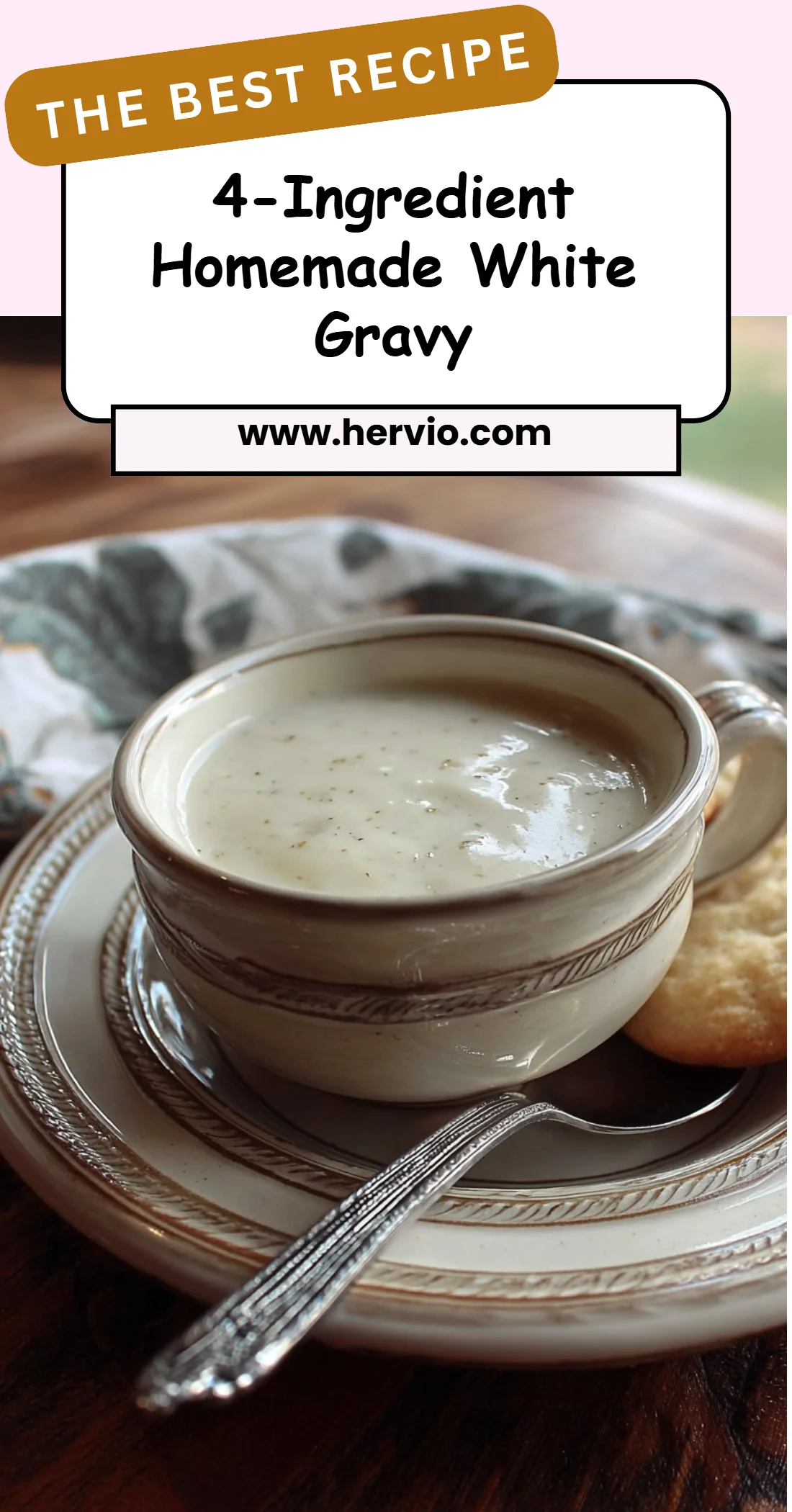
Ingredients for 4-Ingredient Homemade White Gravy
For the Base
- 4 tablespoons butter
For the Thickener
- 1/4 cup all-purpose flour
For the Sauce
- 2 cups milk (whole milk recommended)
For Seasoning
- Salt to taste
- Pepper to taste
Ingredient Notes (Substitutions, Healthy Swaps)
- Dairy alternatives (optional): Use a full-fat plant milk (like oat or soy) for a similar creaminess, but expect a slightly different flavor. Because these milks vary in thickness, the gravy may be thinner; simmer a little longer to reduce.
- Lower-fat swap (optional): Use 2% milk instead of whole milk; gravy will be a touch less rich but still pleasant.
- Gluten-free option (optional): Substitute 1/4 cup gluten-free all-purpose flour blend that’s meant for thickening. Mix thoroughly to avoid graininess.
- Butter choices: If you prefer less sodium, use unsalted butter and season with salt at the end.
- Keep the identity: Do not skip the roux (butter + flour)—it’s essential for texture and flavor in this gravy.
Step-by-Step Instructions
Step 1 – Melt the butter
- Place a medium skillet over medium heat and add 4 tablespoons butter.
- Melt until the butter is bubbling but not browned.
Visual cue: The butter should be fully melted and bubbling gently, with a slight glossy sheen.
Step 2 – Make the roux
- Whisk in 1/4 cup all-purpose flour to form a smooth paste.
- Cook for about 1 minute while stirring constantly to remove the raw flour taste.
Visual cue: The mixture will become a smooth, paste-like roux that loses its raw white flour look and becomes slightly glossy.
Pro cue: Keep the heat at medium so the roux cooks through without coloring—this keeps the gravy light and classic.
Step 3 – Add the milk
- Slowly pour in 2 cups milk while whisking constantly to prevent lumps.
- Begin adding the milk in a thin stream and whisk energetically until the mixture is homogeneous.
Visual cue: The mixture will loosen from a paste to a thinner sauce and start to smooth out with no visible flour clumps.
Pro cue: If you see any lumps, whisk vigorously and press them against the side of the pan with the whisk; gentle vigor usually dissolves them quickly.
Step 4 – Simmer and thicken
- Reduce heat to low and simmer, whisking until the gravy thickens to your desired consistency.
- This will take a few minutes—keep stirring so it doesn’t stick to the pan.
Visual cue: The gravy should coat the back of a spoon and leave a clean line when you run your finger across it.
Pro cue: For a silkier finish, whisk constantly for the first minute of simmering, then stir frequently until it reaches thickness.
Step 5 – Season and serve
- Season with salt and pepper to taste.
- Serve immediately over biscuits, mashed potatoes, or fried meats.
Visual cue: A glossy, smooth gravy with a pale cream color speckled with black pepper.
Pro cue: Taste as you season—start with a small pinch of salt and adjust gradually to avoid oversalting.
Pro Tips for Success
- Heat control: Melt butter over medium—not high—to avoid browning; the classic white gravy should remain light in color.
- Whisk constantly when adding milk: This prevents lumps and creates a smooth emulsion.
- Texture control: If gravy becomes too thick, whisk in a splash of milk off the heat until you reach the right consistency.
- Season gradually: Salt late in the process to better judge how much the gravy really needs.
- Prevent scorching: Use a heavy-bottomed skillet to distribute heat evenly and reduce the risk of hot spots.
- Leftover smoothing: If you refrigerate and the gravy separates, reheat gently and whisk in a small amount of milk to revive the texture.
- Timing: Serve immediately—this gravy is at its best hot and freshly made.
Flavor Variations
All variations below are optional and keep the base recipe intact.
- Spicy pepper gravy (optional): Add a pinch of cayenne or a few cracks of extra black pepper when seasoning for heat.
- Cheesy white gravy (optional): Stir in 1/2 cup grated mild cheddar off the heat until melted for a creamy cheese version.
- Herb-lifted (optional): Fold in a teaspoon of finely chopped fresh parsley or chives at the end for a fresh note.
- Mustardy twist (optional): Whisk in 1 teaspoon Dijon mustard after the gravy is off the heat for a subtle tang.
- Lighter version (optional): Use 2% milk and reduce butter by 1 tablespoon—texture will be slightly lighter but still satisfying.
- Pepper-forward (optional): Toast whole black peppercorns lightly and grind fresh into the finished gravy for a bright pepper flavor.
Serving Suggestions
- Classic biscuits: Spoon generous amounts over warm flaky biscuits for a breakfast classic.
- Potatoes: Ladle over mashed potatoes or roasted potato wedges for a comforting side.
- Fried meats: Serve over fried chicken, pork chops, or country-fried steaks for a hearty dinner.
- Casserole topper: Use as the sauce layer in a baked breakfast or dinner casserole—this gravy shines in dishes like a biscuits-and-gravy casserole and pairs well with eggy bakes; try this idea for a twist on weeknight comfort: biscuits and gravy casserole.
- Plating tip: For a rustic look, spoon over food in a shallow pool and sprinkle with freshly cracked black pepper.
Make-Ahead, Storage & Reheating
- Make-ahead: You can make the gravy up to 24 hours ahead and refrigerate. Keep it in an airtight container.
- Refrigerator storage time: Store in the fridge for up to 3 days.
- Reheating: Rewarm gently over low heat, whisking constantly. Add a tablespoon or two of milk if the gravy has thickened too much.
- Texture changes: The gravy may thicken and become slightly grainy after refrigeration due to starch retrogradation; whisking in a little milk while reheating restores creaminess.
Storage and Freezing Instructions
- Freezing: Freezing is not recommended for this gravy. Dairy-based gravies with a roux often separate and develop a grainy texture after thawing due to changes in milk proteins and starches.
- Alternative: If you want longer storage, keep the gravy refrigerated for up to 3 days and reheat as described, or prepare the roux (butter + flour) separately and freeze it; when ready, heat the roux gently and whisk in fresh milk to finish the sauce for best texture.
Nutrition Facts (Per Serving)
| Calories | Protein | Carbs | Fat | Fiber | Sodium |
|———|——–|——|—–|——|——-|
| 205 kcal | 4.8 g | 11.8 g | 15.5 g | 0.5 g | 350 mg |
Nutrition values are estimates and may vary depending on ingredients and portion sizes.
FAQ About 4-Ingredient Homemade White Gravy
Q: Why did my gravy get lumpy?
A: Lumps form when flour and milk aren’t combined smoothly; whisk the milk in slowly and whisk constantly. If lumps form, press them against the pan with the whisk to break them up.
Q: How do I thin thick gravy?
A: Whisk in a tablespoon of milk off the heat at a time until you reach the desired consistency.
Q: Can I use low-fat or non-dairy milk?
A: Yes, but expect lighter body and slightly different flavor. Simmer a bit longer or add a splash more milk to adjust thickness.
Q: How do I know when the gravy is done?
A: It’s done when it coats the back of a spoon and leaves a defined line when you run your finger through it.
Q: Can I make this ahead for a breakfast buffet?
A: Yes—make up to 24 hours ahead and refrigerate. Reheat gently and whisk in milk if needed; serve warm.
Q: How much does this recipe yield?
A: The recipe yields about 2 cups of gravy, roughly 4 servings (about 1/2 cup per serving).
Notes
- Plating idea: For a restaurant-style look, spoon gravy in a shallow pool and top with a biscuit or meat slice leaning into the sauce.
- Small flavor upgrade: Finish with a tiny pat of butter stirred in right before serving for a glossy sheen.
- Seasoning adjustment: Taste after the gravy thickens—salt flavors pop more as it reduces.
- Presentation tip: Sprinkle a little freshly cracked black pepper or chopped parsley for contrast.
- Leftover use: Stir leftover gravy into cooked pasta or use as a base for a cream-style soup (heat and thin as needed).

4-Ingredient Homemade White Gravy
- Total Time: 10 minutes
- Yield: 4 servings
- Diet: Vegetarian
Description
A classic American white gravy made with just four simple ingredients, perfect for biscuits, potatoes, or fried meats.
Ingredients
- 4 tablespoons butter
- 1/4 cup all-purpose flour
- 2 cups whole milk
- Salt to taste
- Pepper to taste
Instructions
- Melt the butter in a medium skillet over medium heat until bubbling but not browned.
- Whisk in the flour to form a smooth paste and cook for about 1 minute to remove the raw flour taste.
- Slowly pour in the milk while whisking constantly to prevent lumps.
- Reduce heat to low and simmer, whisking until the gravy thickens to desired consistency.
- Season with salt and pepper to taste, then serve immediately.
Notes
For a creamier texture, whisk in more milk if the gravy thickens after cooling. Refrigerate leftovers and reheat gently.
- Prep Time: 5 minutes
- Cook Time: 5 minutes
- Category: Sauce
- Method: Stovetop
- Cuisine: American