
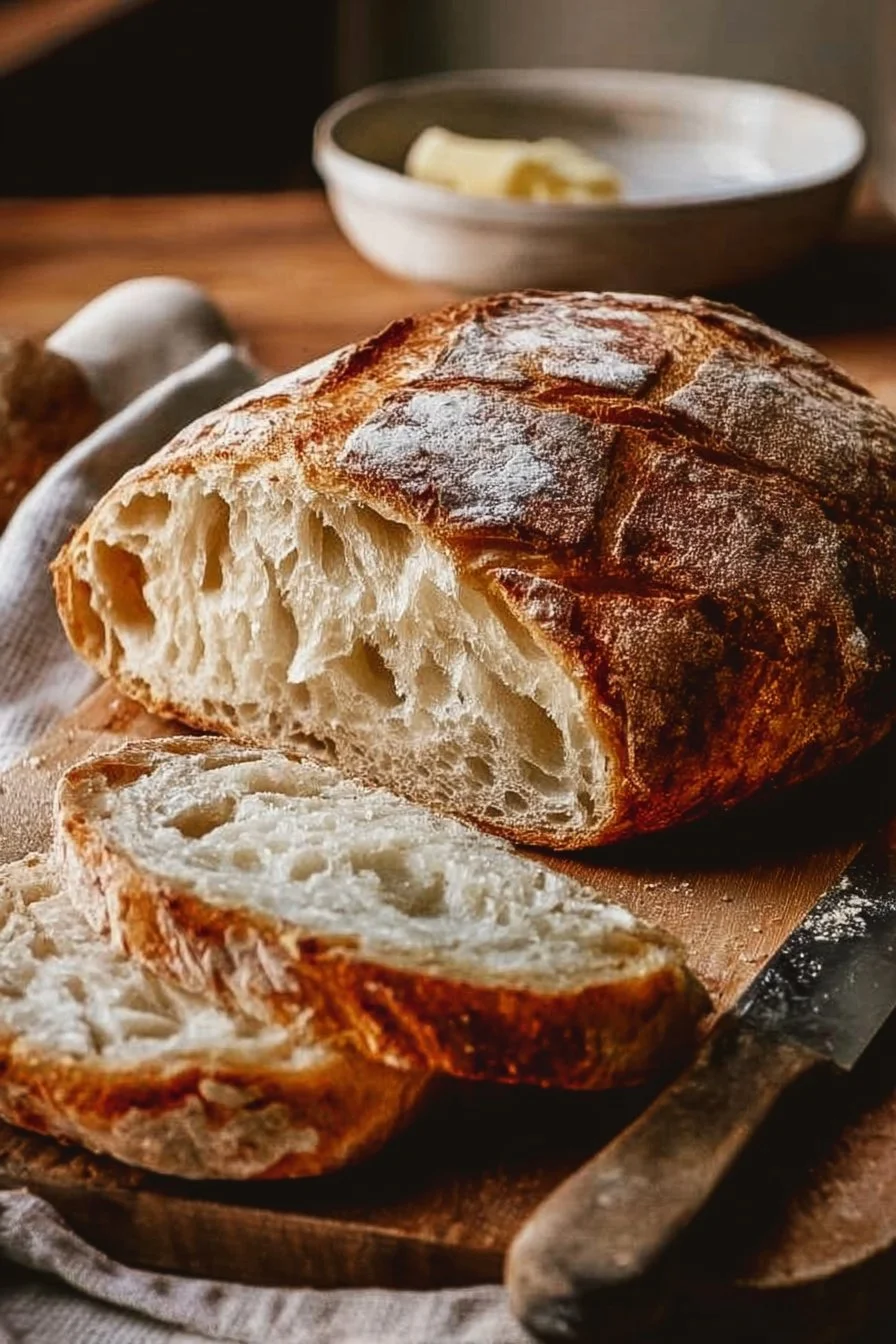
A warm, crackly sourdough loaf with an open crumb and tangy flavor — made from just four ingredients and a little patience. This recipe gives a 75% hydration loaf that bakes beautifully in a Dutch oven and rewards hands-on attention with a deeply flavored crust and soft, chewy interior. If you enjoy trying different traditional breads, you might also like the texture contrast in this Indian fry bread recipe as a faster, fried complement to your sourdough baking.
Why you’ll love this bread (and when to make it)
Sourdough is more than a loaf — it’s a ritual. You get:
- Real taste depth from natural fermentation rather than instant yeast.
- A crisp, dark crust and chewy crumb that make sandwiches, toast, and soups sing.
- Flexibility: the timeline fits busy schedules because you can retard in the fridge.
"The crust on this loaf is the reason I bake on Sundays — addictive crunch that holds up to butter." — a home baker’s quick review
Perfect occasions: weekend brunch, a bread-and-soup night, gifts for food-loving friends, or when you want a tactile project that rewards patience.
How this recipe comes together
Step-by-step overview before you start so you know what to expect:
- Mix flour and warm water, then rest for 30 minutes (autolyse) to hydrate the flour.
- Add active sourdough starter and salt, then incorporate.
- Strengthen the dough with four to five sets of gentle stretch-and-folds over two hours.
- Bulk ferment at room temperature until roughly doubled (6–8 hours).
- Shape, cold retard in the fridge 8–12 hours for flavor and structure.
- Bake in a preheated Dutch oven at 450°F (232°C) for 20 minutes covered, then 25 minutes uncovered.
This is a no-knead-feel loaf that relies on time and folding to build gluten instead of intensive kneading.
What you’ll need
- 4 cups (500 g) bread flour or all-purpose flour — bread flour gives slightly better structure; AP works fine.
- 1 2/3 cups (375 g) warm water (about 75–80°F / 24–27°C) — this yields ~75% hydration.
- 1 cup (200 g) active sourdough starter (fed and bubbly) — mature starter at peak rise.
- 2 teaspoons (10 g) fine salt.
Notes and substitutions:
- Whole wheat: replace up to 20–30% of the flour with whole wheat but add 5–10 minutes to autolyse and expect a denser crumb.
- For a lower hydration, reduce water by 25–50 g (2–4 tablespoons) if you’re new to handling wet dough.
- If you don’t have a scale, use flour measuring by weight is strongly recommended for consistent results.
Step-by-step instructions
- In a large bowl, whisk the flour briefly to aerate it. Pour in the warm water. Stir with a spatula until a rough, shaggy dough forms. Cover and rest 30 minutes.
- Add the active starter and the salt. Pinch and fold the dough until the starter and salt are fully incorporated and the dough looks cohesive.
- For the next 2 hours, perform gentle stretch-and-folds every 30 minutes (4–6 folds per set). Reach under the dough, lift one side up, fold it over the center, rotate the bowl, and repeat. Cover between sets.
- Let the dough bulk ferment at room temperature until it roughly doubles in size. This usually takes 6–8 hours depending on room temperature and starter strength. Look for visible expansion and a slightly domed surface.
- Turn the dough onto a lightly floured surface. Shape gently into a round (or bâtard) and place seam-side up in a well-floured proofing basket (banneton). Refrigerate 8–12 hours to cold retard and deepen flavor.
- Preheat the oven to 450°F (232°C) with your Dutch oven inside for at least 30 minutes before baking.
- When ready, invert the dough onto a piece of parchment. Score the top with a sharp blade to control the bloom. Lower the loaf (on the parchment) into the hot Dutch oven. Cover and bake 20 minutes. Remove the lid and bake an additional 25 minutes until the crust is deeply browned.
- Transfer the loaf to a wire rack and cool completely for at least 1 hour before slicing. This final rest lets the crumb set and prevents a gummy interior.
How to serve sourdough bread
Best ways to enjoy it: slice thick for toast, thin for sandwiches, or tear chunks to soak up stews and sauces. A warm slice with cultured butter and flaky salt is the simplest joy. For casual gatherings, serve slices with olive oil, balsamic, and a board of cheeses and charcuterie.
If you like exploring different bread styles, pairing a slow-baked loaf with a fried bread can be fun — try this Indian fry bread recipe for a crisp, golden contrast.
Storage and reheating tips
- Room temperature: keep whole loaves at room temp in a cotton or paper bag for up to 2–3 days. Avoid plastic at room temp; it softens the crust.
- Refrigeration: not recommended for fresh bread — the fridge accelerates staling. Use refrigeration only for shaped dough during extended retards.
- Freezing: slice and double-wrap in foil or freezer bags. Freeze up to 3 months. Toast or thaw at room temperature.
- Reheating: for crisp crust, reheat a sliced loaf in a 350°F (175°C) oven for 8–10 minutes or sprinkle water and bake 3–5 minutes at 400°F for a refreshed crust. A toaster works great for individual slices.
Helpful cooking tips from the pros
- Use a scale. Weighing flour and water guarantees consistent hydration and results.
- Starter strength matters. Use starter that doubles in 4–6 hours after feeding for best oven spring.
- Don’t skip the autolyse. The 30-minute rest hydrates the flour and improves gluten development with less folding.
- Keep folds gentle. Overworking can deflate the dough. Look for a slightly smoother surface and some windowpane strength after the final folds.
- Score with intent. A deep, confident cut (about ¼–½ inch) helps the loaf open predictably.
- Steam = crust. Baking in a covered Dutch oven traps steam for the first phase and creates a crisp, blistered crust.
Creative twists and variations
- Seeded sourdough: fold 2–3 tablespoons each of sesame, sunflower, and flax seeds into the dough during the first set of folds.
- Olive-rosemary: add chopped, pitted olives and fresh rosemary at shaping for a savory loaf.
- Whole-grain bake: swap 100–150 g of the bread flour for whole wheat or rye; add a touch more water if the dough feels tight.
- Cheesy boule: tuck grated hard cheese (Parmesan or aged cheddar) into the dough at the final shape for a savory crust.
- No-Dutch-oven method: use a baking stone and a large metal pan underneath filled with hot water to generate steam; bake covered with a large inverted metal bowl for the first 20 minutes.
Common questions
Q: How do I know my starter is active enough?
A: It should be bubbly and double in volume within 4–6 hours after feeding at room temperature. Float tests are less reliable than observing rise speed — rely on the visible volume change.
Q: Can I use all-purpose flour instead of bread flour?
A: Yes. All-purpose gives a slightly softer crumb and less structure than bread flour, but the recipe will still work. For best results, use bread flour if you want more oven spring.
Q: My crumb turned out dense. What went wrong?
A: Common causes are an underactive starter, underproofing (not enough bulk ferment), or shaping too aggressively. Also, not enough stretch-and-folds can leave the dough underdeveloped.
Q: Can I shorten the timeline by using less bulk-ferment time?
A: You can, but the flavor and texture will be different. Shorter fermentation reduces sour tang and open crumb. If pressed for time, try a warmer room (within reason) to speed fermentation, or bake a smaller loaf.
Q: Is it safe to eat refrigerated or room-temperature sourdough beyond 3 days?
A: Mold is the main safety concern. If you see any mold, discard the bread. At room temp, expect freshness for 2–3 days; freezing is best for longer storage.

Warm Sourdough Loaf
- Prep Time: 30 minutes
- Cook Time: 45 minutes
- Total Time: 75 minutes
- Yield: 1 loaf
- Category: Bread
- Method: Baking
- Cuisine: American
- Diet: Vegetarian
Description
A warm, crackly sourdough loaf with an open crumb and tangy flavor made from just four ingredients.
Ingredients
- 4 cups (500 g) bread flour or all-purpose flour
- 1 2/3 cups (375 g) warm water (about 75–80°F / 24–27°C)
- 1 cup (200 g) active sourdough starter
- 2 teaspoons (10 g) fine salt
Instructions
- In a large bowl, whisk the flour briefly to aerate it. Pour in the warm water. Stir with a spatula until a rough, shaggy dough forms. Cover and rest for 30 minutes.
- Add the active starter and salt. Pinch and fold the dough until the starter and salt are fully incorporated.
- For the next 2 hours, perform gentle stretch-and-folds every 30 minutes. Cover between sets.
- Let the dough bulk ferment at room temperature until roughly doubled (6–8 hours).
- Shape the dough and place seam-side up in a well-floured proofing basket. Refrigerate for 8–12 hours.
- Preheat the oven to 450°F (232°C) with your Dutch oven inside for at least 30 minutes.
- When ready, invert the dough onto parchment, score the top, and lower it into the hot Dutch oven. Bake covered for 20 minutes, then uncover and bake an additional 25 minutes until deeply browned.
- Transfer the loaf to a wire rack and cool completely for at least 1 hour before slicing.
Notes
For a lower hydration dough, reduce water by 25–50 g. Keep whole loaves at room temp in a cotton or paper bag.