
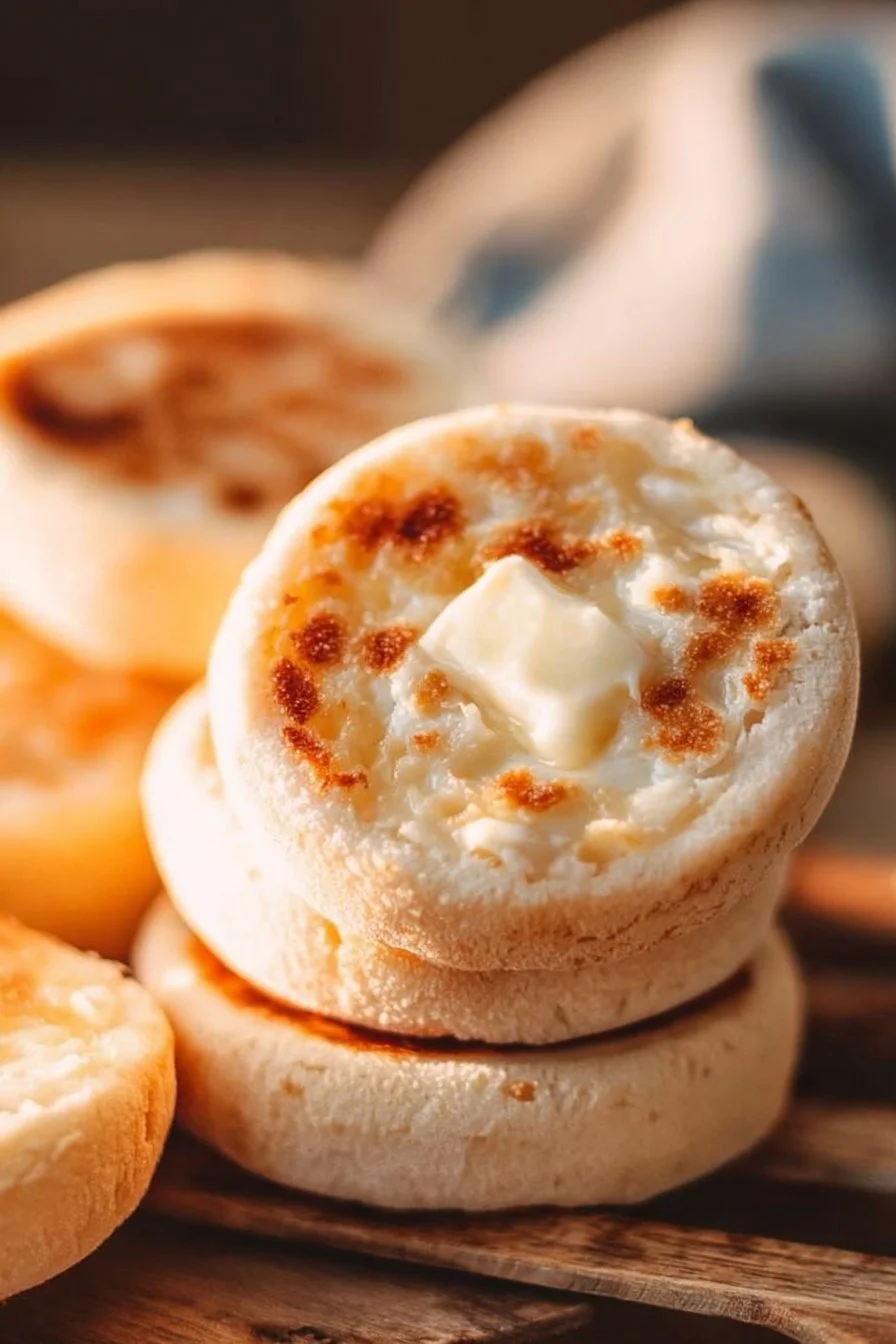
Homemade English muffins that rise to the occasion
Soft, nubby, griddled English muffins are one of those small pleasures worth making from scratch. These split-and-toasted rounds have a chewy interior full of the signature "nooks and crannies" that trap butter and jam. They’re perfect for weekend brunch, stovetop eggs Benedict, or an upgrade to weekday breakfast sandwiches. If you like homemade bread-for-breakfast ideas, you might also enjoy crispy baked chicken tenders for family meals because both are easy, crowd-pleasing comfort foods.
Why you’ll love this dish
Homemade English muffins give you texture and flavor you don’t get from store-bought — a tender crumb, slightly tangy flavor from a short ferment, and the coarse cornmeal crust that prevents sticking. They’re economical, surprisingly quick (no overnight ferment required), and kid-friendly: little hands love tearing them apart and piling on toppings.
“These muffins are my new weekend ritual — crunchy outside, chewy inside, and perfect for sandwiches.” — a regular home baker
They’re ideal for:
- Brunch with friends or family.
- Meal-prepping breakfast sandwiches.
- When you want control over ingredients, salt, and sweetness.
Step-by-step overview
This recipe is straightforward: proof yeast in warm milk, add butter and salt, fold in flour, knead briefly, then bulk-rise until doubled. After shaping into rounds and letting them rest, the muffins are cooked on a skillet (not baked) until golden on each side. Expect active hands-on time of about 30–40 minutes plus 1–1.5 hours for rises. The stovetop method produces the best crust-to-crumb ratio and those characteristic interior holes.
What you’ll need
- 2 cups (250 g) all-purpose flour — you can swap half with bread flour for chewier texture.
- 1 cup warm milk (105–115°F / 40–46°C) — warm, not hot, so yeast stays alive.
- 2 tablespoons sugar or honey — feeds the yeast and adds slight sweetness.
- 1 tablespoon active dry yeast (or 2 1/4 teaspoons instant yeast) — see FAQ for substitutions.
- 1/2 teaspoon salt.
- 1 tablespoon butter, melted and slightly cooled — flavor and tenderness.
- Cornmeal for dusting the baking sheet or griddle.
Notes: If using instant yeast, you can mix it directly with the flour and skip the bloom step; reduce proofing patience by a few minutes, but the dough still needs to rise.
Step-by-step instructions
- Warm the milk to about 105–115°F (40–46°C). It should feel warm, not hot. Stir in the sugar, then sprinkle the active dry yeast over the surface. Wait 4–6 minutes until foamy — that proves the yeast is active.
- Stir in the melted butter and salt until combined.
- Add the flour gradually, stirring with a wooden spoon until a shaggy dough forms. Turn the dough onto a lightly floured surface.
- Knead for 4–6 minutes until smooth and slightly elastic. The dough should be soft but not sticky; add a dusting of flour only if it’s unmanageably sticky.
- Lightly oil a bowl, place the dough inside, cover with plastic wrap or a clean towel, and let rise in a warm spot until doubled, about 1 hour.
- Gently deflate the dough and roll it out to 1/2 inch (about 1.3 cm) thickness. Use a 3-inch cutter (or a glass) to cut rounds. Place the rounds on a cornmeal-dusted baking sheet, leaving room between them. Cover and let rise another 30 minutes.
- Heat a heavy skillet or griddle over medium-low. You want steady heat so the muffins cook through without burning. Cook the muffins 7–10 minutes per side until golden brown. Transfer to a wire rack to cool slightly.
- Split each muffin with a fork (don’t use a knife — a fork preserves the nooks and crannies) and serve warm or toast as desired.
Best ways to enjoy it
English muffins live up to their name when split, toasted, and piled with toppings. Try these pairings:
- Classic: butter and orange marmalade.
- Savory breakfast sandwich: a fried egg, sharp cheddar, and crisp bacon.
- Brunch upgrade: split and top with smoked salmon, cream cheese, capers, and dill.
- Light lunch: open-faced avocado, lemon zest, and chili flakes.
For heartier meals, slice and use as a base for a small open-faced sandwich paired with a crisp salad. If you want a spicy-sweet balance, pair with a spicy chicken sandwich with creamy homemade sauce to mix textures and flavors.
Storage and reheating tips
- Room temperature: store in an airtight container for up to 2 days.
- Refrigerator: keep in a sealed bag or container for up to 5 days. Bring to room temp before toasting.
- Freezing: split and place muffins in a freezer bag for up to 3 months. Freeze flat to save space.
- Reheating: toast from thawed or reheat in a 350°F (175°C) oven for 5–8 minutes. For a quick fix, pop halves in a toaster or warm briefly in a skillet. Avoid microwaving from frozen; it makes muffins rubbery.
Food safety: cool completely before storing to prevent condensation. If muffins develop off smells, mold, or a slimy texture, discard.
Pro chef tips
- Proof test: if your yeast doesn’t foam in the warm milk, it’s dead — start over with fresh yeast.
- Temperature control: medium-low heat is crucial. Too hot and the outside browns while the center stays doughy. Adjust the burner down if the muffins brown too quickly.
- Cornmeal use: dust liberally under the rounds so they don’t stick and to add the classic crunchy bottom.
- Fork-split method: always split with a fork to maintain the crumb structure.
- Make-ahead shortcut: shape muffins, freeze them on the tray, then transfer to a bag. Reheat from frozen in a low oven until warmed through.
Creative twists
- Whole wheat swap: replace up to half the flour with whole wheat for nuttier flavor; expect a slightly denser crumb.
- Sweet cinnamon muffins: add 1 teaspoon cinnamon and swap 1 tablespoon sugar for brown sugar.
- Seeded tops: sprinkle sesame or poppy seeds on the rounds before the second rise.
- Dairy-free: replace milk with unsweetened almond or oat milk and use vegan butter. Keep the same temperatures for proofing.
Common questions
Q: Can I use instant yeast instead of active dry yeast?
A: Yes. Use 2 1/4 teaspoons instant yeast in place of 1 tablespoon active dry. With instant yeast, you can skip blooming in milk and mix it directly with the flour, but the dough still needs its rise times.
Q: Why don’t my muffins have the nooks and crannies?
A: Nooks form when gas bubbles are trapped during a moderate rise and then steamed inside during cooking. Avoid over-kneading (which tightens the crumb) and do not press out all the gas during shaping. Also, splitting with a fork preserves the holes.
Q: Can I bake these in the oven instead of using a skillet?
A: You can, but the skillet method gives the classic browned crust and chewy interior. If baking, preheat the oven to 375°F (190°C) and bake on a cornmeal-dusted sheet for about 12–16 minutes, flipping halfway for even color.
Q: How long can I freeze the muffins?
A: Up to 3 months. Thaw at room temperature or reheat from frozen in a 350°F (175°C) oven for 10–12 minutes.
Q: Is the milk temperature critical?
A: Yes. Milk hotter than 120°F (49°C) can kill yeast; cooler than about 90°F (32°C) slows proofing. Aim for 105–115°F (40–46°C) for reliable activation.
Q: Can I make the dough the night before?
A: Yes. After the first short rise, punch down, cover tightly, and refrigerate overnight. Let the dough come to room temperature and finish the shaping and second rise before cooking.
Enjoy making these little griddled rounds — once you taste fresh English muffins, you’ll understand why homemade is worth the few extra minutes.
Print
Homemade English Muffins
- Prep Time: 40 minutes
- Cook Time: 20 minutes
- Total Time: 60 minutes
- Yield: 8 servings
- Category: Breakfast
- Method: Griddling
- Cuisine: American
- Diet: Vegetarian
Description
Soft, nubby, griddled English muffins with a chewy interior, perfect for brunch or breakfast sandwiches.
Ingredients
- 2 cups (250 g) all-purpose flour
- 1 cup warm milk (105–115°F / 40–46°C)
- 2 tablespoons sugar or honey
- 1 tablespoon active dry yeast (or 2 1/4 teaspoons instant yeast)
- 1/2 teaspoon salt
- 1 tablespoon butter, melted and slightly cooled
- Cornmeal for dusting
Instructions
- Warm the milk to 105–115°F (40–46°C). Stir in the sugar and sprinkle the yeast over the surface. Wait 4–6 minutes until foamy.
- Stir in the melted butter and salt until combined.
- Add the flour gradually, stirring until a shaggy dough forms. Turn onto a lightly floured surface.
- Knead for 4–6 minutes until smooth and slightly elastic.
- Oil a bowl, place the dough inside, cover, and let rise until doubled, about 1 hour.
- Deflate the dough and roll out to 1/2 inch thickness. Cut rounds and place on a cornmeal-dusted baking sheet. Cover and let rise for another 30 minutes.
- Heat a skillet over medium-low. Cook the muffins 7–10 minutes per side until golden brown. Transfer to a wire rack to cool slightly.
- Split each muffin with a fork and serve warm or toast as desired.
Notes
Use instant yeast for a faster process by mixing it directly with the flour. Avoid microwaving frozen muffins to prevent rubbery texture.