
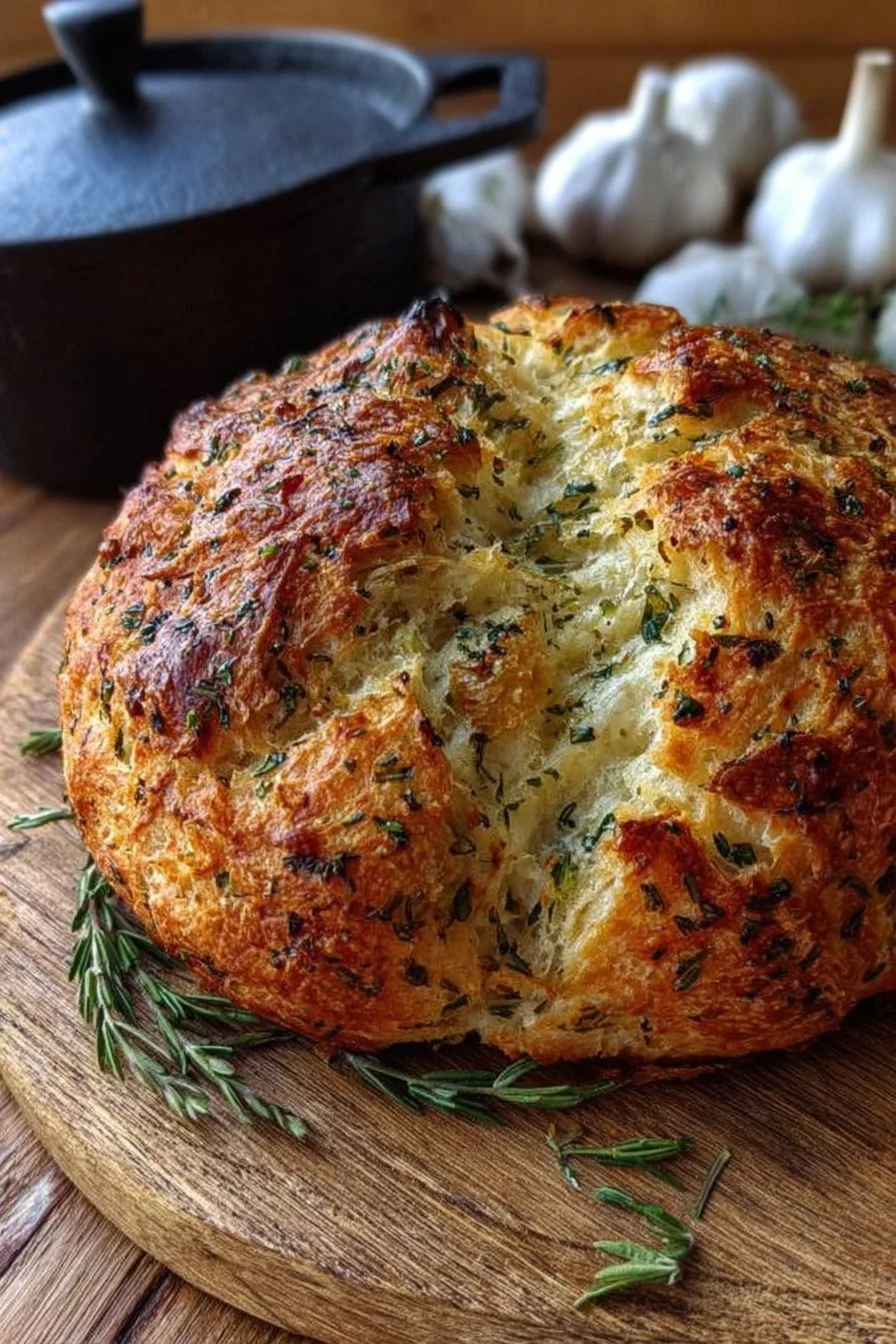
Garlic Herb Dutch Oven Bread is a hands-off, rustic loaf that fills the kitchen with garlic and rosemary while you sleep. It’s a no-knead style bread — a sticky, shaggy dough that ferments slowly for 12–18 hours, then goes straight into a preheated Dutch oven for a crisp, blistered crust and tender interior. The garlic and fresh herbs make it an especially good companion for weeknight meals or a cozy weekend brunch; for a complete dinner, try pairing it with pan-roasted fish like garlic-butter oven-baked tilapia for a matching garlic-forward plate.
Why you’ll love this dish
This recipe delivers bakery-style bread with minimal hands-on time. The long, cool-ish fermentation builds flavor without the need for kneading. The Dutch oven traps steam, which helps form a deep golden crust while keeping the crumb soft and slightly open.
“We made this for guests and they thought it was from a bakery — the garlic and herbs smelled irresistible.” — a home cook’s quick review
Perfect occasions:
- Weeknight dinners that need a fast prep and slow payoff.
- Brunch with soups, salads, or egg dishes.
- A festive side for holiday spreads where you want something homemade but not fussy.
How this recipe comes together
This is a simple three-step rhythm: mix, rest, bake. First you whisk the dry ingredients, then stir in warm water, minced garlic, and chopped herbs into a very wet dough. After an extended rest, you shape it gently, drop it into a hot, oiled Dutch oven, and bake covered to capture steam. Finish uncovered for color and crunch.
Expectations:
- Hands-on time: ~15–20 minutes total (mostly mixing and shaping).
- Passive time: 12–18 hours for fermentation.
- Bake time: 45–50 minutes total at 230°C / 450°F.
Key ingredients
- 375 g all-purpose flour (about 3 cups)
- 9 g salt (about 1 1/2 teaspoons)
- 1.5 g instant yeast (a scant 1/2 teaspoon)
- 360 ml warm water (about 1 1/2 cups)
- 4 cloves garlic, minced
- 2 tablespoons fresh rosemary and thyme, chopped (total)
- 15 ml olive oil (1 tablespoon), plus more to coat the Dutch oven
Ingredient notes and substitutions:
- Instant yeast: The recipe uses very little yeast because the long rest builds flavor; if using active dry yeast, proof briefly in the warm water and use ~1.5–2 g.
- Fresh herbs give the best aroma; use 1–2 tsp dried if needed (reduce quantity).
- For a garlic-milder loaf, roast the garlic first or cut to 2 cloves.
- For a crisper bottom, line the Dutch oven with a small parchment round to help transfer and prevent sticking.
Step-by-step instructions
- In a large bowl, whisk together the flour, salt, and instant yeast until evenly combined.
- Add the warm water, minced garlic, and chopped rosemary and thyme. Stir with a wooden spoon or spatula until there are no dry streaks and you have a sticky, shaggy dough. The dough will be wet and loose — that’s normal.
- Cover the bowl tightly with plastic wrap and let it rest at room temperature for 12 to 18 hours. Overnight fermentation works well.
- Preheat your oven to 230°C (450°F). Place the Dutch oven (lid on) in the oven as it preheats.
- Lightly coat the bottom of the hot Dutch oven with olive oil. Dust your work surface with a little flour. Turn the dough out gently onto the floured surface and fold the edges toward the center once or twice to form a loose round. Do not overwork it.
- Transfer the shaped loaf to the hot Dutch oven. If it’s difficult to move, use parchment under the dough for an easy lift. Cover with the lid.
- Bake covered for 30 minutes. Then remove the lid and bake an additional 15–20 minutes until the crust is deep golden brown and sounds hollow when tapped.
- Remove the bread and cool on a wire rack for at least 30 minutes before slicing to finish the crumb structure.
What you’ll need
- A large mixing bowl and spoon or spatula
- Measuring scale or measuring cups (for the flour and water)
- Sharp knife or bench scraper for shaping
- Dutch oven with lid (4–6 quart works well)
- Wire rack for cooling
Best ways to enjoy it
Serve this bread warm with softened butter to let the garlic and herb flavors shine. It pairs beautifully with soups, salads, and roasted proteins. Leftover slices make terrific sandwiches; warm them up and stuff with grilled chicken and cheese for a quick meal like these cheesy garlic chicken wraps inspiration. For a simple party spread, slice thick, drizzle with olive oil, and top with shaved Parmesan.
Storage and reheating tips
- Room temperature: Store cooled bread in a paper bag or wrapped in a clean kitchen towel for up to 2 days to retain crust texture. Plastic will soften the crust.
- Freezing: Cool completely, then slice and freeze in an airtight bag for up to 3 months. Toast or reheat slices straight from frozen.
- Reheating: Re-crisp the crust by warming in a 190°C (375°F) oven for 8–10 minutes, or toast slices. Avoid microwaving whole loaves — it makes crumb gummy.
Food safety note: Because this recipe uses a long fermentation, keep dough covered and at normal room temperatures (not above 27–29°C/80–85°F) if you’re fermenting toward the longer end. If your kitchen is very warm, shorten the bulk rest to avoid over-fermentation.
Pro chef tips
- Use a scale for accuracy — it makes hydration consistent.
- If you prefer an easier transfer, shape the dough on a sheet of parchment and carry it into the hot pot by the paper.
- For a shinier, slightly darker crust, brush the loaf with a little olive oil in the final 5 minutes.
- To test doneness, a finished loaf should register ~200–210°F (93–99°C) in the center.
- If your dough seems unusually runny (the recipe is intentionally wet), resist adding more flour; gentle folding and a hot, well-oiled Dutch oven will handle it.
Recipe variations
- Cheesy herb loaf: Fold 1/2–1 cup grated Parmesan or sharp cheddar into the dough after the first fold.
- Roasted garlic: Roast the garlic before mixing for a sweet, mellow garlic flavor.
- Whole-grain twist: Replace up to 100 g of the all-purpose flour with whole wheat; add 10–15 ml more water if needed.
- Garlic-free herbed bread: Omit garlic and double the herbs with a pinch of lemon zest for brightness.
- Gluten-free: This method doesn’t directly translate; use a tested gluten-free blend and binders like xanthan gum, and expect a different crumb.
Your questions answered
Q: The recipe uses only a scant 1/2 teaspoon of yeast — will that rise?
A: Yes. The long 12–18 hour rest allows the small amount of yeast to slowly ferment the dough, building flavor and structure without a big rise. The dough won’t double like enriched dough but will show bubbles and feel airy.
Q: Can I shorten the fermentation time?
A: You can shorten to 6–8 hours if your kitchen is warm, but flavor will be milder. Alternatively, refrigerate the dough for up to 24 hours for a slower, cooler ferment and even more complex flavor.
Q: Do I need a Dutch oven?
A: A lidded heavy pot is ideal because it traps steam. If you don’t have one, use a baking stone and a steaming pan or a large roaster with a lid; results will vary.
Q: Can I use active dry yeast instead of instant?
A: Yes. Dissolve active dry yeast briefly in the warm water first and allow 5–10 minutes until foamy; then proceed. Use about the same weight.
Q: How should I handle very wet dough?
A: Embrace it — wet dough gives an open crumb. Use a well-floured bench, or shape on parchment for an easier transfer. A wet dough responds better to gentle handling than aggressive kneading.
Q: Is this safe to leave out overnight?
A: Yes — the dough is designed for an overnight room-temperature ferment. Keep it covered to prevent drying. If your home is very hot (>27°C/80°F), reduce time or refrigerate.
If you’d like variations tailored to gluten-free diets or a step-by-step photo guide, tell me which you prefer and I’ll expand with visuals or specialized substitutions.
Print
Garlic Herb Dutch Oven Bread
- Prep Time: 15 minutes
- Cook Time: 50 minutes
- Total Time: 780 minutes
- Yield: 1 loaf
- Category: Bread
- Method: Baking
- Cuisine: American
- Diet: Vegetarian
Description
A hands-off, rustic loaf infused with garlic and fresh herbs, perfect for weeknight meals or weekend brunch.
Ingredients
- 375 g all-purpose flour (about 3 cups)
- 9 g salt (about 1 1/2 teaspoons)
- 1.5 g instant yeast (a scant 1/2 teaspoon)
- 360 ml warm water (about 1 1/2 cups)
- 4 cloves garlic, minced
- 2 tablespoons fresh rosemary and thyme, chopped (total)
- 15 ml olive oil (1 tablespoon), plus more to coat the Dutch oven
Instructions
- In a large bowl, whisk together the flour, salt, and instant yeast until evenly combined.
- Add the warm water, minced garlic, and chopped rosemary and thyme. Stir with a wooden spoon or spatula until there are no dry streaks and you have a sticky, shaggy dough.
- Cover the bowl tightly with plastic wrap and let it rest at room temperature for 12 to 18 hours.
- Preheat your oven to 230°C (450°F). Place the Dutch oven (lid on) in the oven as it preheats.
- Lightly coat the bottom of the hot Dutch oven with olive oil. Dust your work surface with a little flour. Turn the dough out gently onto the floured surface and fold the edges toward the center once or twice to form a loose round.
- Transfer the shaped loaf to the hot Dutch oven. Cover with the lid.
- Bake covered for 30 minutes. Then remove the lid and bake an additional 15–20 minutes until the crust is deep golden brown and sounds hollow when tapped.
- Remove the bread and cool on a wire rack for at least 30 minutes before slicing.
Notes
For crisper bottom, line the Dutch oven with a small parchment round. Use a scale for accuracy to maintain hydration consistency.