
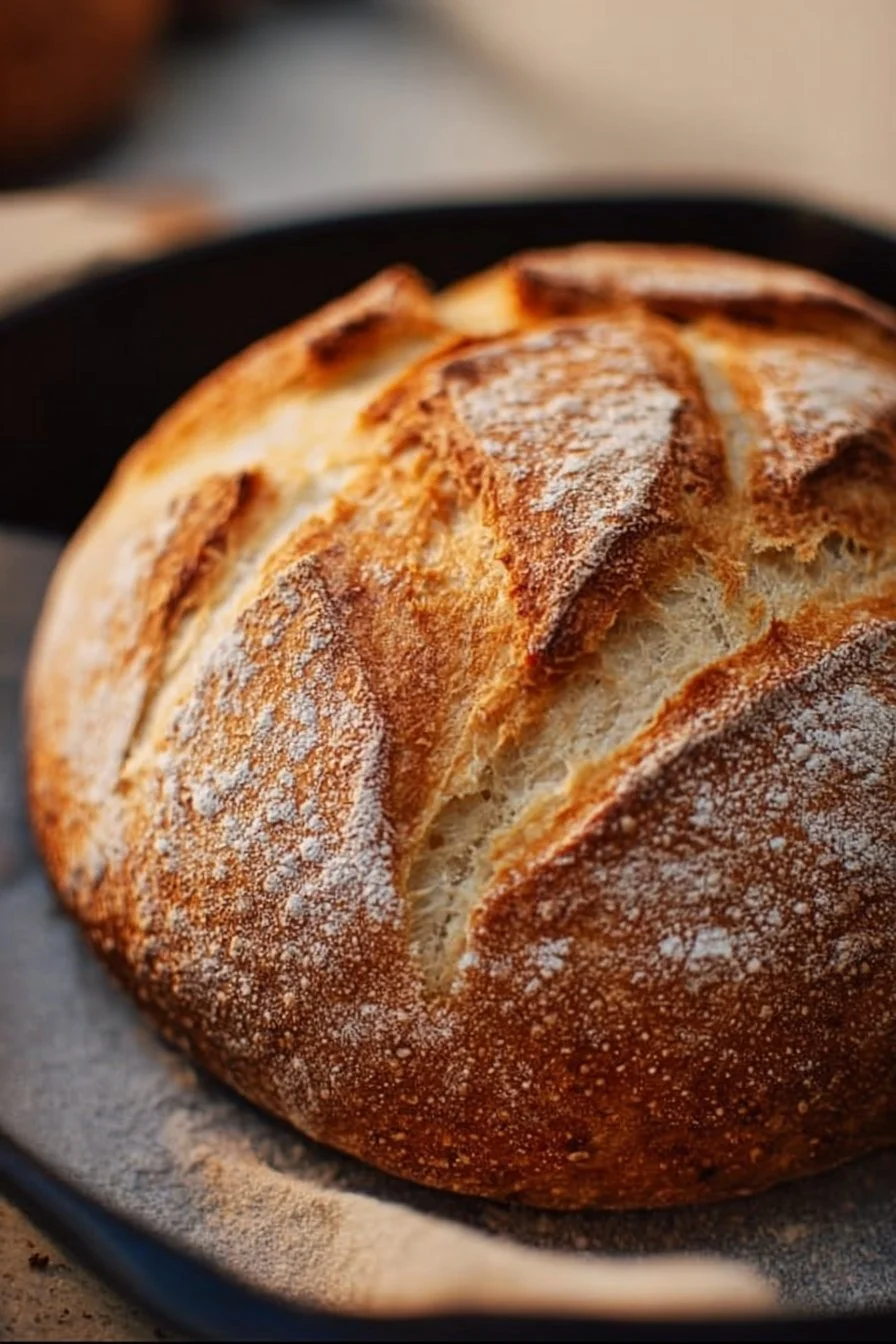
This no-knead Dutch oven loaf is the kind of bread that smells like home and looks like you spent hours fussing over it — but it’s mostly patience, not elbow grease. With just four everyday ingredients and a long, hands-off rise, you get a blistered, crackly crust and soft, open crumb that makes sandwiches, soups, and breakfasts taste better. Pair it with a simple weeknight protein like garlic butter oven-baked tilapia for an easy, impressive dinner.
Why you’ll love this dish
This recipe shines because it’s foolproof and low-effort. You mix once, wait, shape briefly, and then let the Dutch oven do the rest — its tight-fitting lid traps steam so the crust crisps up beautifully.
"Made this on a rainy afternoon — no kneading, no drama, perfect crackly crust and the house smelled incredible." — a regular home baker
Perfect occasions:
- Weekend baking when you want fresh bread without babysitting dough
- Brunch or sandwiches when you want homemade texture and flavor
- Holiday sides — it looks rustic and pairs well with stews and roasted meats
How this recipe comes together
Here’s the quick plan before you start: whisk dry ingredients, add warm water to form a shaggy dough, cover and ferment at room temperature 12–18 hours, preheat a Dutch oven very hot, gently shape the dough and bake covered, then finish uncovered to brown the crust. Expect active hands-on time of about 15–20 minutes spread over two days, and total elapsed time roughly 13–19 hours because of the long rise.
What you’ll need
- 3 cups (about 375 g) all-purpose flour — can swap up to 25% with bread flour for extra chew
- 1 1/2 teaspoons fine salt
- 1/2 teaspoon instant yeast — quick and reliable for a long, slow rise
- 1 1/2 cups (360 ml) warm water (about 95–105°F / 35–40°C)
Optional:
- Parchment paper to lift the loaf into the hot pot
- A very large Dutch oven (6–7 quart) with a lid — cast iron is ideal
- A bench scraper and kitchen scale for accuracy
Substitutions/notes:
- Instant yeast can be swapped for active dry (use 3/4 teaspoon and dissolve in the water first).
- Whole-wheat: replace up to half the flour with whole-wheat, expect denser crumb and slightly shorter rise.
Step-by-step instructions
- In a large bowl whisk together the flour, salt, and instant yeast until evenly mixed.
- Pour in the warm water and stir with a wooden spoon or spatula until a shaggy, sticky dough forms. Stop when it’s combined — don’t overmix.
- Cover the bowl tightly with plastic wrap (or a reusable cover) and let it sit at room temperature for 12–18 hours. You want bubbles on the surface and the dough to have grown and feel aerated.
- When the dough is ready, place your Dutch oven (lid on) in the oven and preheat to 450°F (232°C) for at least 30 minutes. The pot needs to be very hot for good oven spring.
- Turn the dough out onto a heavily floured surface. With floured hands, fold the edges into the center to form a round; don’t press the dough flat. Let it rest uncovered for 30 minutes so the surface dries slightly.
- Carefully remove the hot Dutch oven from the oven. If you like, set a sheet of parchment paper inside, then place the dough seam-side down into the pot. Use oven mitts — the pot is extremely hot.
- Cover and bake for 30 minutes. Remove the lid and bake an additional 15 minutes until the crust is deep golden brown. If you prefer an even darker crust, bake up to 5–10 minutes more, watching closely.
- Transfer the loaf to a wire rack and cool at least 30–60 minutes before slicing. Cutting too soon makes the crumb gummy.
Best ways to enjoy it
Serve slices thick with butter and jam for breakfast, or thinly sliced as a base for open-faced sandwiches. It’s excellent with soups, stews, and roasted vegetables. Toasted with garlic oil and herbs it becomes an instant appetizer. For a contrasting texture, try tearing a warm piece and serving alongside a fried or pan-seared bread like Indian fry bread at a casual brunch — they’re both simple doughs that shine with different cooking methods.
Storage and reheating tips
- At room temperature: Store in a paper bag or loosely wrapped in a tea towel for 1–2 days to preserve crust texture. Avoid plastic if you care about the crust — it softens quickly.
- Refrigeration: Not recommended for storing bread long-term; it accelerates staling. If you must, wrap well and expect a firmer crumb.
- Freezing: Cool completely, slice if desired, wrap tightly in plastic wrap and foil, and freeze up to 3 months. Toast or reheat frozen slices directly from the freezer.
- Reheating: For a fresh-baked taste, sprinkle the loaf with a little water, wrap in foil, and bake at 350°F (175°C) for 10–15 minutes. For slices, toast or use a hot skillet for a few minutes per side.
Helpful cooking tips
- Use a scale if you can; baker’s measurements are more consistent than cups.
- Warm water should feel slightly warm to the touch — not hot — to avoid killing the yeast.
- Don’t worry about perfect shaping: a taut surface matters more than a perfect ball. Lightly tucking edges under creates surface tension for good oven spring.
- If your kitchen is very warm (above 75°F/24°C), shorten the bulk rise to avoid overproofing; alternatively, refrigerate the dough overnight for better flavor control.
- Always preheat the Dutch oven long enough; a cold pot yields poor crust and less oven spring.
Creative twists
- Add-ins: Fold in 1/2 cup olives, 1/2 cup chopped roasted garlic, or 2 tablespoons chopped rosemary during shaping.
- Seeds and toppings: Brush with water and sprinkle sesame, poppy, or flaky sea salt before baking.
- Sweet version: Replace 1/4 cup water with honey and add 1/2 cup raisins and a teaspoon cinnamon.
- Method swap: If you don’t have a Dutch oven, bake on a preheated baking stone and add steam by placing a metal pan with hot water on the oven floor for the first 10 minutes.
Your questions answered
Q: How long does the whole process take?
A: Hands-on time is about 15–20 minutes. The dough needs 12–18 hours to ferment at room temperature, plus 45–60 minutes to shape, rest, and bake.
Q: Can I make this faster by increasing the yeast?
A: You can, but the long, slow ferment is what develops flavor and an open crumb. Increasing yeast will shorten time but produce less depth of flavor.
Q: Is it safe to leave the dough out for 12–18 hours?
A: Yes, with this small amount of yeast and in normal home temperatures it’s safe and standard practice. In very hot environments (above 80°F/27°C) shorten the rise or refrigerate to avoid overproofing.
Q: Why is my loaf dense?
A: Common causes: underproofing (not enough bubbles), overhandling the dough, using too much flour when shaping, or baking in a pot that wasn’t hot enough. Check that your dough shows visible bubbles before shaping.
Q: Can I use whole-wheat flour?
A: Yes — replace up to 50% of the all-purpose flour with whole-wheat, but expect a denser crumb and slightly shorter rise time.
Q: How do I know when the bread is done?
A: The crust should be deep golden brown and the internal temperature about 200–210°F (93–99°C). Tap the bottom — it should sound hollow.

No-Knead Dutch Oven Bread
- Prep Time: 15 minutes
- Cook Time: 45 minutes
- Total Time: 13-19 hours
- Yield: 1 loaf
- Category: Bread
- Method: Baking
- Cuisine: American
- Diet: Vegetarian
Description
A foolproof no-knead bread with a blistered crust and soft crumb, perfect for sandwiches or paired with soups.
Ingredients
- 3 cups (about 375 g) all-purpose flour
- 1 1/2 teaspoons fine salt
- 1/2 teaspoon instant yeast
- 1 1/2 cups (360 ml) warm water (about 95–105°F / 35–40°C)
Instructions
- In a large bowl, whisk together the flour, salt, and instant yeast until evenly mixed.
- Pour in the warm water and stir until a shaggy, sticky dough forms.
- Cover the bowl tightly with plastic wrap and let it sit at room temperature for 12–18 hours.
- Preheat a Dutch oven to 450°F (232°C) for at least 30 minutes.
- Turn the dough out onto a floured surface and shape it into a round.
- Let it rest uncovered for 30 minutes.
- Place the dough into the hot Dutch oven, cover, and bake for 30 minutes.
- Remove the lid and bake for an additional 15 minutes until golden brown.
- Cool for 30–60 minutes before slicing.
Notes
For a thicker crust, bake an extra 5–10 minutes. Store at room temperature in a paper bag for 1–2 days.