
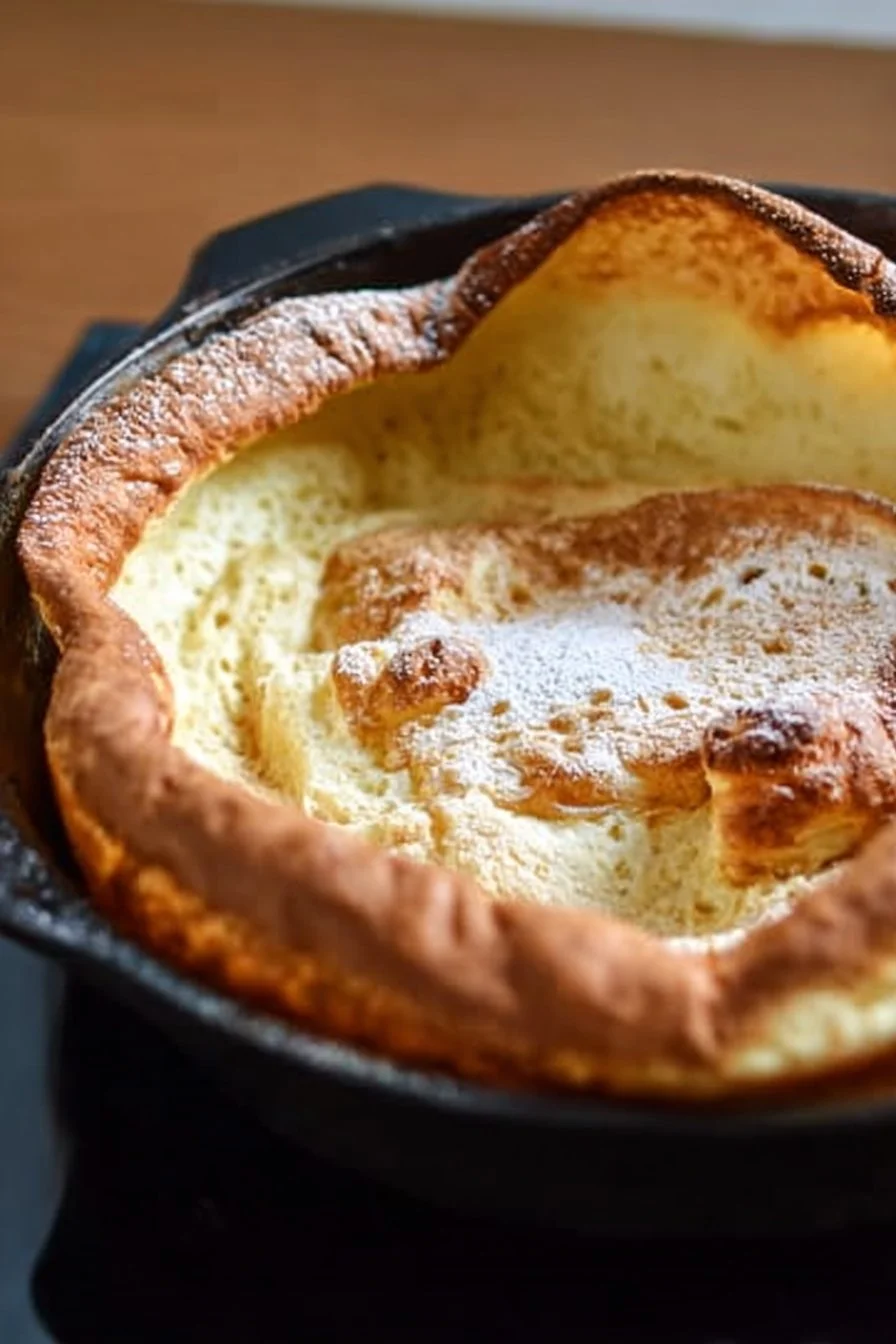
I’ll be honest: when we set out to test five methods for making sky-high Dutch baby pancakes, I expected small differences — a matter of degrees. What surprised me was how dramatic the rise, texture, and flavor shifts were depending on one or two tiny technique tweaks. A Dutch baby is essentially a baked, puffed pancake that arrives at the table like a golden soufflé — perfect for weekend brunches, celebratory breakfasts, or an easy dessert. If you want a reliably impressive puff every time, read on. If you need kid-friendly sides for a crowd, I also found handy inspiration like these kid-friendly dinners they’ll beg for that pair nicely with brunch-style meals.
Why you’ll love this dish
A Dutch baby is fast, dramatic, and versatile. It puffs up tall and then collapses into a custardy center that soaks up butter, lemon, fruit, or syrup. You can make it in a single skillet, it uses pantry staples, and you get a restaurant-worthy presentation with minimal fuss. It’s an impressive showstopper for brunch guests and an indulgent treat for a cozy weekend morning.
“We served it with lemon and powdered sugar and got the kind of surprised silence that means you nailed it.” — test kitchen note
Reasons to make it:
- Quick to prepare: batter mixes in minutes and bakes in about 20 minutes.
- Budget-friendly: flour, eggs, milk — no expensive ingredients.
- Crowd-pleasing: you can scale up by using multiple skillets or a large cast-iron.
- Flexible: serve sweet or savory.
How this recipe comes together
This section outlines the winning approach we landed on after testing five techniques (whisk vs blender, cold vs room-temp eggs, rest vs no rest, pan preheating, oven temperature finish). Key takeaways:
- Temperature matters: a screaming-hot pan plus a very hot oven jump-starts the expansion.
- Fat choice changes the brownness and flavor: butter gives classic flavor; oil yields a taller but less-browned pancake.
- Batter consistency should be thin — about the texture of heavy cream — to yield a feather-light rise.
- Resting batter briefly (10–20 minutes) helps trapped air and hydration, but over-resting flattens the rise.
Expect about 10 minutes active mixing, a short rest, and 20–25 minutes in the oven. You’ll preheat the skillet, blend the batter smoothly, then bake until puffed and bronzed.
What you’ll need
- 3 large eggs, room temperature (room-temp eggs trap air better; if you forget, warm in a bowl of warm water for 5 minutes)
- 3/4 cup whole milk (or 3/4 cup non-dairy milk for dairy-free)
- 3/4 cup all-purpose flour, sifted (for extra lift, replace 2 tbsp with cornstarch)
- 2 tbsp granulated sugar (optional for lightly sweet batter)
- 1/2 tsp fine sea salt
- 1 tsp vanilla extract (optional)
- 4 tbsp unsalted butter (for classic flavor) or 3 tbsp neutral oil (for a taller, drier puff)
- Confectioners’ sugar, lemon wedges, maple syrup, or fresh fruit for serving
Substitutions and notes:
- Gluten-free: use a 1:1 cup-for-cup gluten-free flour blend and let batter rest 20 minutes to hydrate.
- Lower-sugar: omit sugar; toppings will provide sweetness.
- Dairy-free: swap butter for coconut oil or use plant-based butter substitute.
Step-by-step instructions
- Preheat: Place a 10–12-inch cast-iron skillet or ovenproof pan in the oven and preheat to 450°F (232°C). Let the pan heat at least 15 minutes so it’s snappy-hot.
- Blend the batter: In a blender or a large bowl, combine eggs, milk, flour, sugar, salt, and vanilla. Blend 20–30 seconds until very smooth and slightly frothy. If whisking by hand, whisk vigorously to eliminate lumps.
- Rest briefly: Let the batter sit 10–15 minutes at room temperature. This short rest hydrates the flour and helps stability without losing lift.
- Melt the fat: Remove hot skillet from the oven with oven mitts. Add butter or oil and swirl to coat the bottom and sides; the fat should sizzle and brown lightly (if using butter, watch so it doesn’t burn).
- Add batter and bake: Pour batter into the hot, buttered skillet. Immediately return the skillet to the oven and bake 18–22 minutes until the edges are deeply browned and the center is puffed and set but slightly jiggly.
- Finish and serve: Remove from oven and serve immediately. Dust with confectioners’ sugar, squeeze lemon over, or top with syrup and fruit. The pancake will deflate after a few minutes — that’s expected — but it will still be delicious.
Key ingredients
- Eggs: The lift comes mainly from beaten eggs. Use fresh, room-temp eggs when possible.
- Milk: Contributes to the custardy interior; whole milk gives richer texture.
- Flour: All-purpose gives structure; cornstarch can lighten the crumb.
- Fat: Butter adds flavor and browning; oil can increase height but give less flavor.
- Flavorings: Vanilla is classic for sweet versions; grated Parmesan and fresh herbs work for savory versions.
Best ways to enjoy it
Serve the Dutch baby straight from the oven for maximum drama. Popular combos:
- Classic: powdered sugar + lemon wedge.
- Maple and fruit: warm maple syrup, sliced bananas, or macerated berries.
- Savory: top with smoked salmon, creme fraiche, and chives, or sautéed mushrooms, thyme, and grated Parmesan.
For a weekend spread, pair it with breakfast sausages, a simple fruit salad, and something creamy — a rich side like Dutch oven mac and cheese makes the brunch feel indulgent without extra work.
Storage and reheating tips
- Short-term: Store leftovers wrapped tightly in the fridge for up to 2 days. The puff will deflate but the custardy interior lasts.
- Reheating: Rewarm slices in a 350°F (175°C) oven for 6–8 minutes to crisp the edges. Avoid microwaving if you want to preserve texture; microwaves make it soggy.
- Freezing: You can freeze cooled slices in a single layer, wrapped, for up to 1 month. Reheat from frozen in a 350°F oven for 12–15 minutes.
- Safety: Because this is egg-based, refrigerate within two hours and discard after the 2-day refrigerator limit.
Pro chef tips
- Pan temperature: The single biggest variable. A hot pan triggers steam and rapid expansion. If your skillet isn’t hot enough, the pancake will rise slowly and not set as tall.
- Don’t open the oven: Keep the door closed during the first 15–18 minutes of baking to avoid collapsing the initial rise.
- Batter texture: Should be pourable and thin — about the thickness of heavy cream. Thinner batter gives a lighter, more dramatic puff.
- Use a blender for the smoothest batter: It eliminates lumps and incorporates air. But whisking vigorously by hand can work in a pinch.
- Timing: Serve immediately. The “wow” factor is at its peak right out of the oven.
Creative twists
- Citrus ricotta version: Fold 1/2 cup ricotta and a tablespoon of lemon zest into the batter for a richer, tangy custard.
- Savory herb: Omit sugar and vanilla, add 2 tbsp grated Parmesan and 1 tbsp chopped chives; finish with soft goat cheese.
- Spiced apple: Toss thin apple slices with cinnamon and brown sugar, lay them in the hot butter before pouring batter. The apples caramelize as it bakes.
- Vegan: Use a flax “egg” (1 tbsp ground flax + 3 tbsp water per egg), 1 cup full-fat coconut milk, and 1/4 cup chickpea flour to help set structure; expect a different texture but pleasant flavor.
FAQ
Q: How long does it take start-to-finish?
A: Plan for about 35–45 minutes total: 10 minutes to prep, 10–15 minutes to rest and preheat the pan, and 18–22 minutes baking.
Q: Can I make the batter ahead of time?
A: I don’t recommend making the batter more than a few hours ahead. The batter is at its best after a brief rest; multiple hours causes it to lose air and results in a flatter pancake.
Q: Can I double the recipe for a large crowd?
A: Yes — either make multiple pans in batches or use a larger pan. If using a much larger pan, keep an eye on bake time; extremely wide pans may bake faster at the edges.
Q: Why did some of your test methods fail to puff?
A: Common mistakes: a lukewarm pan, a batter that’s too thick, over-resting, or opening the oven too early. Each suppresses steam formation or trapped air.
Q: Is the center raw when it’s still jiggly?
A: The center should be set but slightly jiggly; this indicates a custardy interior. If it’s soupy, bake 2–4 minutes longer. The edges should be deeply browned.
Q: Can I make this gluten-free?
A: Yes. Use a 1:1 gluten-free flour blend and give the batter a 15–20 minute rest to hydrate the flour. The texture will be slightly different but still delicious.
If you want a printable version or to compare the five methods we tested side-by-side, tell me which methods you’re curious about and I’ll include a quick cheat sheet.
Print
Sky-High Dutch Baby Pancakes
- Prep Time: 10 minutes
- Cook Time: 22 minutes
- Total Time: 32 minutes
- Yield: 4 servings
- Category: Breakfast
- Method: Baking
- Cuisine: American
- Diet: Vegetarian
Description
An impressive baked pancake that puffs up tall, perfect for brunch or dessert.
Ingredients
- 3 large eggs, room temperature
- 3/4 cup whole milk (or non-dairy milk)
- 3/4 cup all-purpose flour, sifted
- 2 tbsp granulated sugar (optional)
- 1/2 tsp fine sea salt
- 1 tsp vanilla extract (optional)
- 4 tbsp unsalted butter or 3 tbsp neutral oil
- Confectioners’ sugar, lemon wedges, maple syrup, or fresh fruit for serving
Instructions
- Preheat a 10–12-inch cast-iron skillet in the oven at 450°F (232°C) for at least 15 minutes.
- In a blender, combine eggs, milk, flour, sugar, salt, and vanilla; blend until smooth and frothy.
- Let the batter rest for 10–15 minutes at room temperature.
- Remove the hot skillet from the oven and add butter or oil, swirling to coat.
- Pour the batter into the hot skillet and immediately return to the oven.
- Bake for 18–22 minutes until the edges are browned and the center is puffed.
- Serve immediately, topping with confectioners’ sugar, lemon, or syrup.
Notes
Serve straight from the oven for maximum impact. The pancake will deflate slightly after a few minutes.