
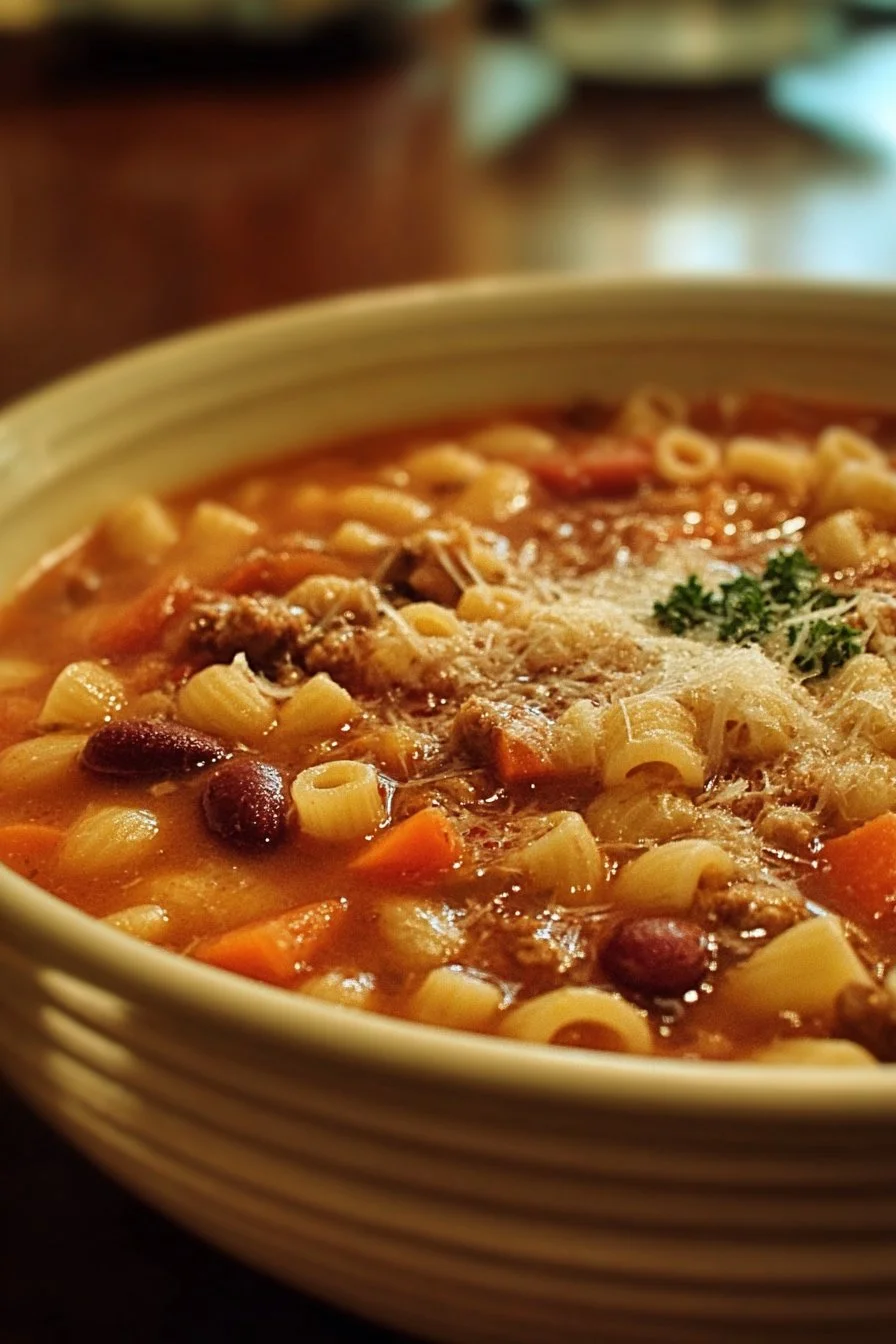
There’s something deeply comforting about a big pot of Olive Garden–style pasta and beans: a fragrant tomato-and-herb broth, tender little pasta shapes, and hearty beans and ground beef that make every spoonful satisfying. The tomatoes and beef create a rich, savory base while the cannellini and kidney beans add creamy texture and extra protein. Small pasta like ditalini soaks up the broth and keeps each bite perfectly balanced between saucy and chewy. This recipe is simple enough for a weeknight dinner but cozy enough to serve when friends pop over. If you love creamy restaurant-style pasta dishes, you might also enjoy Asiago Tortelloni Alfredo with grilled chicken for a different take on comfort-food pasta.
Why You’ll Love This Olive Garden Pasta and Beans
- Deep, homey flavor from browned ground beef and slow-simmered tomatoes.
- Satisfying, varied textures: tender pasta, creamy cannellini, firmer kidney beans.
- One-pot cooking keeps cleanup minimal—perfect for busy weeknights.
- Flexible: small pasta options and seasoning tweaks let you tailor the dish.
- Nutritious and filling—beans boost fiber and protein without extra meat.
- Budget-friendly ingredients that stretch into leftovers.
- Quick to get on the table: about 35–45 minutes from start to finish.
What Is Olive Garden Pasta and Beans?
This is a rustic, soup-like pasta dish that feels like a cross between minestrone and a hearty pasta e fagioli. It combines ground beef browned for depth, diced tomatoes with their juices, two kinds of canned beans for creaminess and heft, and small pasta that cooks directly in the broth. The flavors are tomato-forward with warm Italian herbs—oregano and basil—balanced by savory beef and a touch of garlic and onion. It’s commonly served as a cozy weeknight meal or a casual dinner where everyone ladles out their own bowl. The vibe is comforting and unfussy: wholesome enough for family dinners, yet flavorful enough to serve to guests.
Ingredients for Olive Garden Pasta and Beans
For the Base
- 1 tablespoon olive oil
- 1 pound ground beef
- 1 medium onion, diced
- 2 garlic cloves, minced
- 1 carrot, diced
- 1 celery stalk, diced
For the Broth & Beans
- 2 cans (14.5 ounces each) diced tomatoes, undrained
- 1 can (15 ounces) cannellini beans, rinsed and drained
- 1 can (15 ounces) kidney beans, rinsed and drained
- 4 cups beef broth
- 1 teaspoon dried oregano
- 1 teaspoon dried basil
- Salt and pepper, to taste
For the Pasta & Serving
- 1 cup small pasta (such as ditalini or elbows)
- Grated Parmesan cheese, for serving
- Fresh parsley, chopped (optional, for garnish)
Ingredient Notes (Substitutions, Healthy Swaps)
- Ground beef swaps: For a lighter option, use ground turkey or lean ground chicken (optional). Keep the same weight—1 pound—to maintain texture.
- Beans: If you prefer a single bean, you can double the cannellini or kidney beans, but the contrast between creamy and slightly firmer beans is part of the appeal.
- Pasta: Use gluten-free small pasta if needed; cooking time may vary—check package instructions and add to the pot when the texture is close to done.
- Broth: If you don’t have beef broth, low-sodium vegetable broth is an acceptable substitute, though it will make the dish slightly lighter in flavor.
- Dairy alternatives: Use a dairy-free grated cheese or omit Parmesan for a dairy-free bowl.
- Lower-sodium: Use low-sodium beef broth and hold back on added salt until the end; canned tomatoes and beans can add sodium.
- Budget tip: Swap one can of beans for an extra can of tomatoes to stretch the recipe in a pinch, but flavor and texture will change.
Step-by-Step Instructions
Step 1 – Brown the Beef
- Heat 1 tablespoon olive oil in a large pot over medium heat. Add 1 pound ground beef and cook until browned; drain excess fat.
Visual cue: The beef should be evenly browned with no large pink areas and slightly crumbly.
Pro cue: Don’t overcrowd the pot—break the beef into small pieces with a wooden spoon so it browns evenly and releases flavorful bits.
Step 2 – Soften the Aromatics
2. Add diced onion, minced garlic, diced carrot, and diced celery to the pot; cook until softened, about 5 minutes.
Visual cue: Vegetables should be translucent and tender, and garlic should be fragrant but not browned.
Pro cue: Stir frequently and lower heat slightly if garlic begins to brown; burned garlic tastes bitter.
Step 3 – Add Tomatoes and Beans
3. Stir in both cans of diced tomatoes (undrained) and the rinsed and drained cannellini and kidney beans; mix evenly.
Visual cue: The pot will look saucy and chunky with tomato pieces and beans distributed throughout.
Pro cue: Scrape the brown bits from the bottom of the pot into the sauce—those bits are flavor gold.
Step 4 – Build the Broth
4. Pour in 4 cups beef broth, add 1 teaspoon dried oregano, 1 teaspoon dried basil, and season with salt and pepper to taste; bring to a boil.
Visual cue: The mixture should bubble around the edges as it reaches a boil.
Pro cue: Taste the broth after it simmers a few minutes and adjust salt—canned ingredients can vary in saltiness.
Step 5 – Simmer to Blend Flavors
5. Reduce heat and simmer for 15–20 minutes to let flavors meld.
Visual cue: The broth should reduce slightly and deepen in color; vegetables will be tender.
Pro cue: Keep the pot partially covered so evaporation concentrates flavor without losing too much liquid.
Step 6 – Cook the Pasta
6. Add 1 cup small pasta (ditalini or elbows) and cook until tender, about 8–10 minutes.
Visual cue: Pasta should be al dente—soft but with a slight bite. The pot should be saucy, not dry.
Pro cue: Stir occasionally while pasta cooks to prevent sticking and ensure even cooking.
Step 7 – Serve
7. Serve hot, topped with grated Parmesan cheese and chopped fresh parsley if desired.
Visual cue: Each bowl will feature glossy broth, visible beans and pasta, and a sprinkling of cheese and green parsley.
Pro cue: Let the soup rest 2–3 minutes off heat before serving so pasta soaks up some broth and flavors settle.
Pro Tips for Success
- Heat control: Maintain medium heat for browning and lower to medium-low for simmering; too high and the liquid will reduce too fast.
- Texture control: Add the pasta toward the end and check early—small shapes cook quickly and can go from perfect to mushy.
- Seasoning balance: Always taste after simmering and again after the pasta cooks; canned ingredients often mask salt levels.
- Bean prep: Rinse and drain canned beans thoroughly to reduce sodium and improve the overall texture.
- Avoid overcrowding: When browning meat, give it space to brown rather than steam for deeper flavor.
- Timing: If making ahead, undercook the pasta slightly and finish it just before serving to avoid soggy leftovers.
- Skimming fat: If the beef releases much fat, drain it to keep the broth bright and not greasy.
Flavor Variations (Optional)
- Spicy version: Add crushed red pepper flakes (start with 1/4 teaspoon) when you add the herbs for a gentle kick.
- Cheesy boost: Stir a handful of grated Parmesan into the hot pot just before serving for a creamier, more cohesive broth.
- Lighter version: Swap the ground beef for ground turkey or chicken and use low-sodium broth to reduce fat and salt.
- Extra veg: Fold in a cup of chopped spinach or kale at the end of cooking for color and nutrition (optional).
- Bean-forward: Double the cannellini beans and omit the ground beef for a vegetarian-style, protein-rich version—adjust seasoning to taste (optional).
- Herb-forward: Finish with an extra pinch of dried basil or a tablespoon of fresh parsley for a bright pop (optional).
Serving Suggestions
- Side salads: A crisp green salad with vinaigrette cuts the richness and adds a fresh counterpoint.
- Bread: Serve with crusty Italian bread or garlic bread to sop up the broth.
- Cheese board: Offer extra grated Parmesan and a bowl of crushed red pepper for guests to customize.
- Occasions: Great for weeknight dinners, casual potlucks, or a laid-back Sunday supper.
- Plating idea: Ladle into shallow bowls, sprinkle cheese and parsley, and serve with a lemon wedge on the side for brightness.
- Meal pairing: Pair with a simple roasted vegetable or an antipasto plate for a fuller spread.
If you’re in the mood for another rich pasta option, this butter chicken pasta offers a creamy, spicy contrast worth trying on a separate night.
Make-Ahead, Storage & Reheating
- Make-ahead: You can complete the recipe through Step 5, cool, and refrigerate for up to 24 hours. Add pasta and finish cooking just before serving.
- Refrigerator: Store leftovers in an airtight container for 3–4 days. Pasta absorbs broth over time, so expect a thicker texture.
- Reheating on stovetop: Gently reheat in a saucepan over medium-low heat. Add a splash of beef broth or water to loosen the texture and stir frequently.
- Reheating in microwave: Use medium power, stirring every 60 seconds and adding a little liquid if the mixture seems dry.
- Texture notes: Pasta will soften with storage; you can refresh the dish by adding extra broth and bringing it briefly to a simmer.
Storage and Freezing Instructions
- Freezing: This dish can be frozen but pasta texture will change once thawed. For best results, freeze the base (meat, tomatoes, beans, and broth) without cooked pasta. Cool completely and freeze in airtight containers for up to 3 months.
- Thawing & finishing: Thaw overnight in the refrigerator, reheat on the stovetop, then add fresh-cooked pasta before serving.
- If you freeze the entire assembled dish with pasta, expect softer, sometimes mushy pasta upon reheating; it’s still tasty but texturally different.
- Alternative: Freeze individual portions of the base in meal-sized containers and keep a separate bag of dry pasta to cook fresh when reheating.
Nutrition Facts (Per Serving)
| Calories | Protein | Carbs | Fat | Fiber | Sodium |
|———|——–|——|—–|——|——-|
| 480 kcal | 28 g | 46 g | 18 g | 9 g | 820 mg |
Nutrition values are estimates and may vary depending on ingredients and portion sizes.
FAQ About Olive Garden Pasta and Beans
- Can I use different pasta shapes?
- Yes—small shapes like ditalini or small elbows work best because they cook evenly and fit in a spoonful. Adjust cooking time if needed.
- Why is my pasta mushy after reheating?
- Pasta absorbs liquid in the fridge and softens. To avoid mushiness, store the base separately and cook pasta fresh before serving.
- How do I fix a bland broth?
- Simmer a few more minutes to concentrate flavor or add salt and pepper gradually. A small splash of broth concentrated from bouillon can help, but adjust for sodium.
- Can I make this vegetarian?
- Optional: Omit the ground beef and increase the beans. Use vegetable broth instead of beef broth and add extra herbs for depth.
- How do I prevent the beans from falling apart?
- Rinse gently and fold them in toward the end of simmering. Over-stirring can break them down.
- Is this safe to freeze with pasta?
- Freezing with pasta is safe but changes texture. For best quality, freeze the cooked base separately and add freshly cooked pasta when reheating.
Notes
- Plating idea: Serve in wide shallow bowls so pasta and beans are visible and easy to garnish.
- Small flavor upgrade: Finish with a small drizzle of olive oil or an extra sprinkle of Parmesan for sheen and richness.
- Seasoning adjustments: Taste and adjust salt after simmering and after adding pasta—both steps concentrate different flavors.
- Presentation tip: Garnish with chopped parsley for a fresh color contrast and offer additional Parmesan at the table.
- Leftover tip: Turn leftovers into a baked casserole—place in a baking dish, top with extra cheese, and bake until bubbly (optional).
- Final reminder: This recipe is forgiving—cook with confidence, taste as you go, and make it your own with the optional tweaks listed above.
Olive Garden Pasta and Beans
- Total Time: 45 minutes
- Yield: 4 servings
- Diet: Carnivore
Description
A comforting one-pot pasta dish with ground beef, beans, and a savory tomato broth, perfect for weeknight dinners.
Ingredients
- 1 tablespoon olive oil
- 1 pound ground beef
- 1 medium onion, diced
- 2 garlic cloves, minced
- 1 carrot, diced
- 1 celery stalk, diced
- 2 cans (14.5 ounces each) diced tomatoes, undrained
- 1 can (15 ounces) cannellini beans, rinsed and drained
- 1 can (15 ounces) kidney beans, rinsed and drained
- 4 cups beef broth
- 1 teaspoon dried oregano
- 1 teaspoon dried basil
- Salt and pepper, to taste
- 1 cup small pasta (such as ditalini or elbows)
- Grated Parmesan cheese, for serving
- Fresh parsley, chopped (optional, for garnish)
Instructions
- Heat 1 tablespoon olive oil in a large pot over medium heat. Add 1 pound ground beef and cook until browned; drain excess fat.
- Add diced onion, minced garlic, diced carrot, and diced celery to the pot; cook until softened, about 5 minutes.
- Stir in both cans of diced tomatoes (undrained) and the rinsed and drained cannellini and kidney beans; mix evenly.
- Pour in 4 cups beef broth, add 1 teaspoon dried oregano, 1 teaspoon dried basil, and season with salt and pepper to taste; bring to a boil.
- Reduce heat and simmer for 15–20 minutes to let flavors meld.
- Add 1 cup small pasta (ditalini or elbows) and cook until tender, about 8–10 minutes.
- Serve hot, topped with grated Parmesan cheese and chopped fresh parsley if desired.
Notes
Rinse and drain canned beans thoroughly to reduce sodium. Adjust salt after simmering and again after cooking pasta.
- Prep Time: 15 minutes
- Cook Time: 30 minutes
- Category: Main Course
- Method: Braising
- Cuisine: Italian