
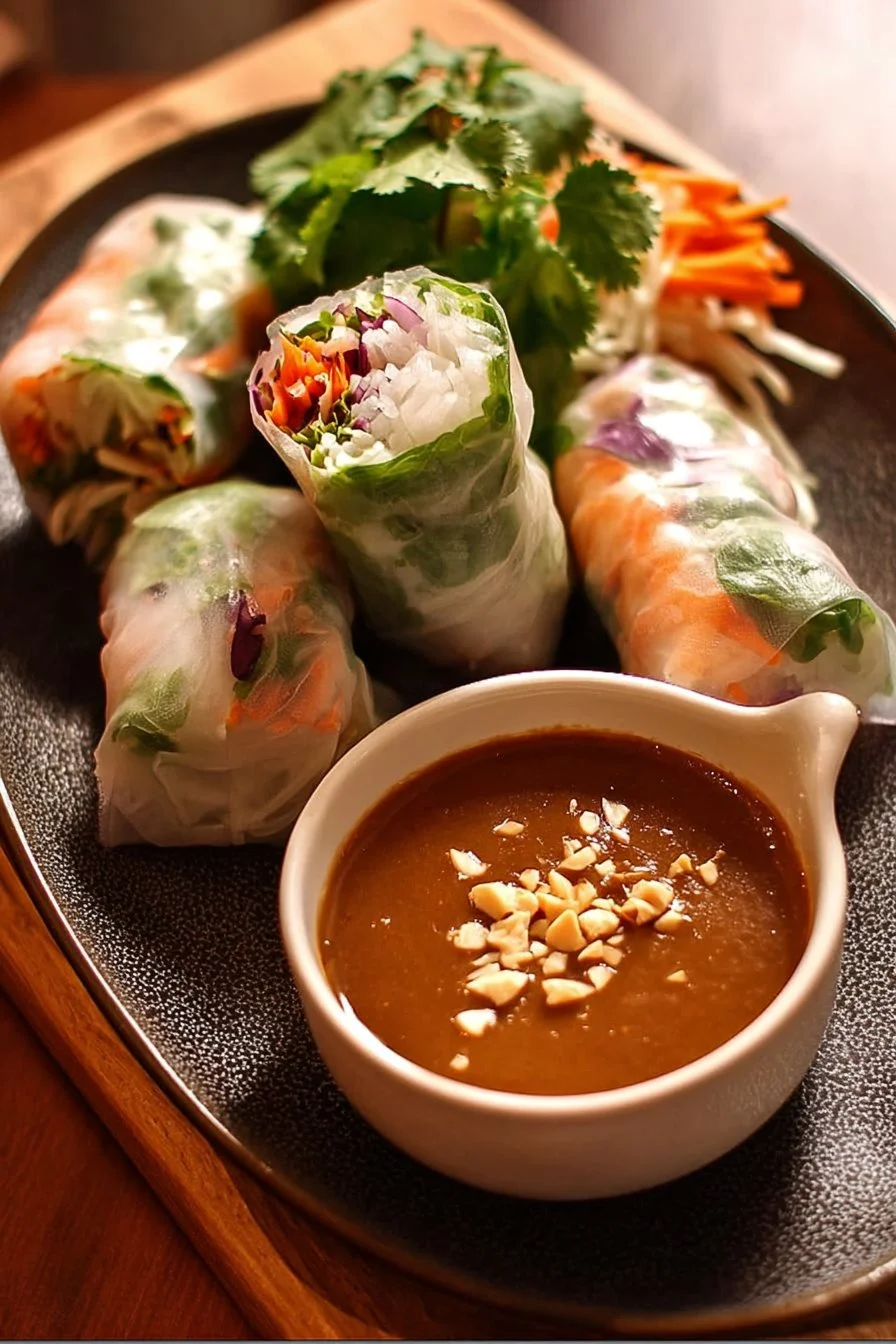
Bright, crisp, and bursting with fresh herbs and crunchy vegetables, these Spring Rolls with Peanut Sauce are the kind of light, satisfying bite that feels indulgent without being heavy. Each roll combines tender lettuce, sweet julienned carrots, cool cucumber, and bright red bell pepper wrapped in delicate rice paper for a contrast of textures — and the silky, tangy peanut sauce ties everything together with a touch of umami and citrus. They’re incredibly easy to assemble, perfect for a relaxed weeknight dinner, a colorful appetizer at a party, or packed for lunches. Serve them alongside extra peanut sauce for dipping and a bowl of steamed rice or a simple green salad for a complete, vibrant meal. For a variation on presentation and inspiration, check out this tidy guide to fresh spring rolls with peanut sauce to see different rolling styles and plating ideas.
Why You’ll Love This Spring Rolls with Peanut Sauce
- Bright, fresh flavors: crisp vegetables, cooling herbs, and tangy lime in the sauce keep every bite lively.
- Delightful texture contrast: soft rice paper, crunchy veggies, and silky peanut sauce.
- Quick and easy: no cooking required beyond whisking the sauce and softening wrappers.
- Crowd-pleasing appetizer or light main: great for parties, picnics, or a simple weeknight meal.
- Highly customizable: swap or add fillings without changing the essential recipe.
- Healthy and fresh: mostly raw veggies make this a light, nutrient-dense choice.
- Portable and fun to eat: ideal for bento boxes, lunches, or a build-your-own roll spread.
What Is Spring Rolls with Peanut Sauce?
This dish is a fresh roll assembled with rice paper wrappers filled with crisp vegetables and fragrant herbs, served with a creamy peanut dipping sauce. The taste is a balance of clean, vegetal notes from the lettuce and raw vegetables and rich, slightly sweet and savory flavors from the peanut sauce. No frying or long cooking times are needed — you simply soften the rice paper in warm water, layer the fillings, and roll. People often serve these as an appetizer, light lunch, or party finger food. The overall vibe is fresh and casual — perfect for sunny days, entertaining, or when you want something satisfying without turning on the stove. If you enjoy a more classic take, you can compare techniques and presentation in this overview of Vietnamese spring rolls with peanut sauce.
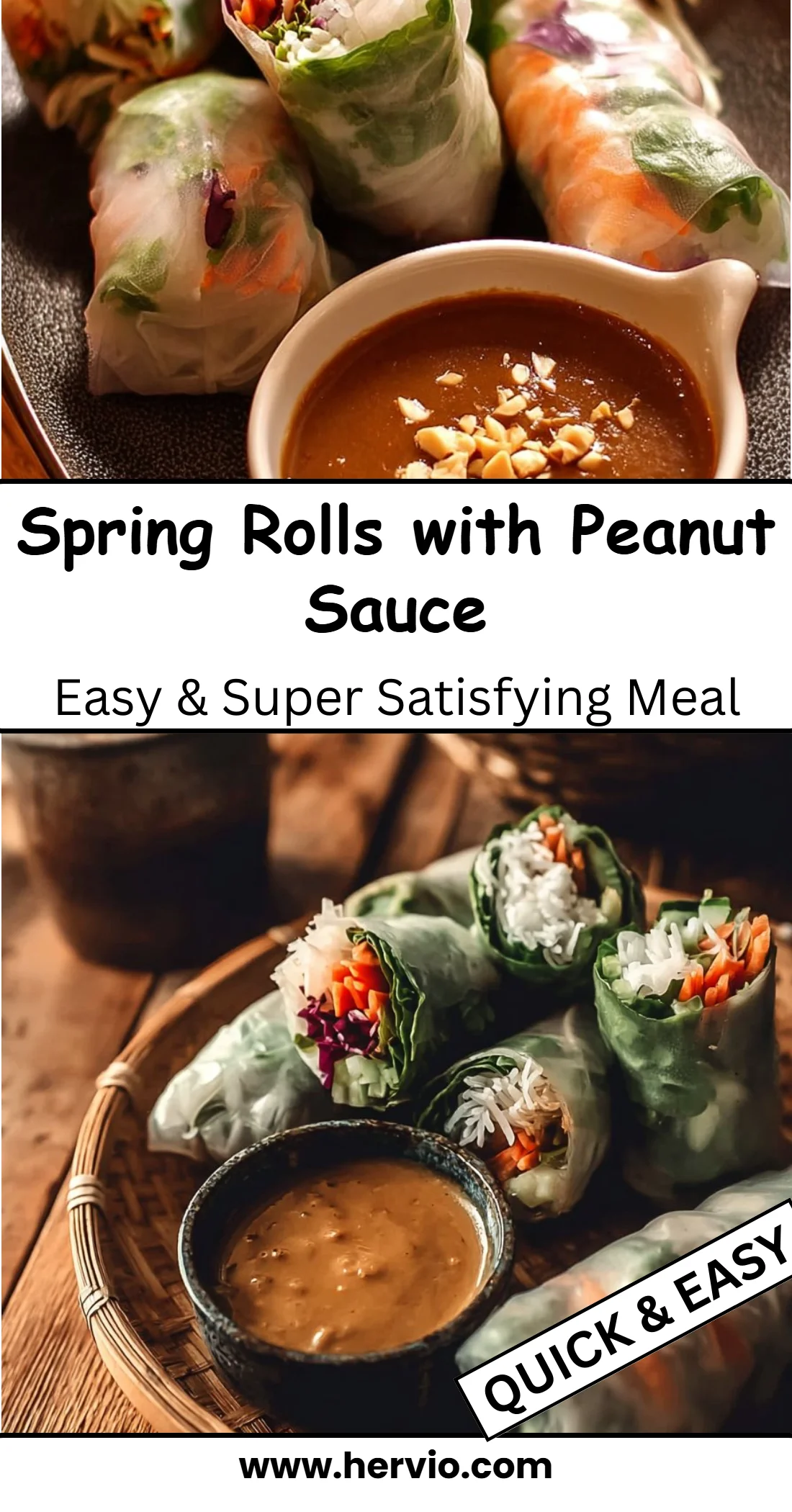
Ingredients for Spring Rolls with Peanut Sauce
For the Base
- Rice paper wrappers
- Lettuce
- Carrots, julienned
- Cucumbers, julienned
- Red bell peppers, sliced
- Mint leaves
- Cilantro leaves
For the Sauce
- Peanut butter
- Soy sauce
- Lime juice
- Honey or maple syrup
- Water
For Serving
- Additional peanut sauce for dipping
Ingredient Notes (Substitutions, Healthy Swaps)
- Peanut butter: For a nut-free option, use sunflower seed butter (optional). Texture will be slightly different but the flavor remains creamy.
- Soy sauce: Choose low-sodium soy sauce to control salt, or use tamari as a gluten-free option.
- Honey or maple syrup: Maple syrup keeps the sauce vegan; honey offers a slightly floral sweetness. Both work equally well.
- Rice paper wrappers: These are naturally gluten-free. Keep wrappers dry and covered while you work to prevent sticking.
- Herbs: If you don’t have both mint and cilantro, one is fine — mint gives bright freshness, while cilantro adds herbal depth.
- Lower-fat swap: Reduce peanut butter slightly and thin the sauce with more water or extra lime juice for a lighter dip.
Note: The substitutions above are optional and keep the base identity of the recipe intact.
Step-by-Step Instructions
Step 1 – Make the Peanut Sauce
- In a bowl, combine the peanut butter, soy sauce, lime juice, honey or maple syrup, and enough water to reach a smooth, dippable consistency.
Visual cue: The sauce should be glossy, pourable but not watery — it should coat the back of a spoon.
Pro cue: If your sauce is too thick, add water a teaspoon at a time; if it’s too thin, stir in a touch more peanut butter.
Step 2 – Soften the Rice Paper
- Pour warm water into a wide, shallow dish. Dip a rice paper wrapper into the water for a few seconds until it becomes pliable but still slightly firm — it will continue to soften on the work surface.
Visual cue: The wrapper should be translucent with no dry white patches and able to bend without tearing.
Pro cue: Work one wrapper at a time and keep the remaining stack covered with a damp towel to avoid drying out.
Step 3 – Layer the Filling
- Place a softened wrapper on a damp, clean surface. Lay a lettuce leaf across the lower third, then add a small handful of julienned carrots, cucumbers, red bell pepper slices, and a few mint and cilantro leaves.
Visual cue: Arrange the filling in a neat line across the lower third to ensure an even roll and clear cross-section when sliced.
Pro cue: Don’t overfill — thinner rolls are easier to seal and hold together.
Step 4 – Roll and Seal
- Fold the sides of the wrapper over the filling, then roll tightly from the bottom up, pressing gently as you go to remove air and create a snug roll. Seal the final edge with a little water.
Visual cue: The finished roll should be smooth, tight, and slightly glossy from the wrapper.
Pro cue: If the wrapper tears, discard that piece and start with a new one — small tears expand when rolling.
Step 5 – Repeat and Serve
- Continue assembling the remaining rolls. Arrange on a platter and serve with the peanut sauce on the side for dipping.
Visual cue: Alternating sliced rolls to show the colorful cross sections makes for the best presentation.
Pro cue: Serve immediately for maximum crispness; if you must wait, cover loosely with plastic wrap to prevent drying.
Pro Tips for Success
- Start with dry, crisp vegetables: well-drained, chilled veggies have the best crunch and texture.
- Keep wrappers moist: a damp towel over the wrappers and completed rolls will prevent them from drying out.
- Don’t overfill: too much filling makes sealing difficult and increases the chance of tearing.
- Taste the sauce: adjust lime for brightness, soy for salt, and honey/maple for sweetness before serving.
- Make neat rolls: place fillings across the lower third of the wrapper to build tension while rolling for tighter rolls.
- Prep station setup: have your veggies, herbs, sauce, and water dish within easy reach to streamline assembly.
- Timing tip: If serving for a party, lay out ingredients and invite guests to assemble their own rolls — it’s interactive and keeps rolls fresh.
Flavor Variations
(OPTIONAL — keep the base recipe intact)
- Spicy kick: Add a small drizzle of sriracha or finely sliced fresh chili to the peanut sauce before serving.
- Crunch boost: Include thinly sliced jicama or toasted crushed peanuts inside or sprinkled on top for extra texture.
- Citrus lift: Add extra lime zest to the sauce for a brighter finish.
- Herb-forward: Increase the amount of mint and cilantro for a more aromatic roll.
- Sweet-savory twist: Stir a little grated ginger into the peanut sauce for warmth and depth.
- Protein add-on (optional): For a heartier roll, serve with grilled tofu or shrimp on the side for diners to add themselves.
Serving Suggestions
- Serve as an appetizer on a large platter with extra peanut sauce in small bowls for dipping.
- Pair with steamed jasmine rice and a light soup for a fuller meal.
- Offer an assortment of dipping sauces (extra soy sauce, chili sauce) to complement the peanut dip.
- Plate sliced rolls with microgreens and a lime wedge for a restaurant-style presentation.
- Perfect for brunch, picnics, or potlucks — set up a DIY rolling station for guests.
- For a casual lunch, pack 2–3 rolls with a small container of sauce in a bento box.
Make-Ahead, Storage & Reheating
- What you can prep ahead: Julienne the vegetables, wash and dry herbs, and make the peanut sauce up to 2 days in advance (store sauce in an airtight container in the fridge).
- Assembly: Spring rolls are best assembled and eaten the same day for the best texture. If assembling ahead for a short period, wrap each roll tightly in plastic wrap and store in a single layer in the fridge for up to 6–8 hours.
- Reheating: These rolls are served cold or at room temperature. Do not microwave; reheating will make the rice paper chewy and the vegetables soggy. Instead, let chilled rolls sit at room temperature for 15–20 minutes before serving.
Storage and Freezing Instructions
- Freezing is not recommended: Rice paper becomes leathery and loses its delicate texture after freezing and thawing. Vegetables also turn soggy upon thawing.
- Short-term refrigeration: Store assembled rolls in the refrigerator for up to 1 day, tightly wrapped to prevent drying. Keep the peanut sauce in a separate airtight container for up to 5 days.
- Alternative for longer storage: If you need to prep ahead of time, store the vegetables and herbs separately in airtight containers and assemble the rolls just before serving to maintain peak texture.
Nutrition Facts (Per Serving)
| Calories | Protein | Carbs | Fat | Fiber | Sodium |
|———|——–|——|—–|——|——-|
| 320 kcal | 9 g | 22 g | 22 g | 4 g | 480 mg |
Nutrition values are estimates and may vary depending on ingredients and portion sizes.
FAQ About Spring Rolls with Peanut Sauce
Q: Why did my rice paper tear when rolling?
A: Tearing usually happens when the wrapper is over-softened or you overfill. Use warm (not hot) water and soften just until pliable; don’t add too much filling.
Q: My rolls are soggy after storing overnight — what went wrong?
A: Moisture from the filling or sauce can soften the rice paper. Store components separately and assemble just before serving when possible.
Q: How thick should the peanut sauce be?
A: It should be pourable but thick enough to cling to the roll — like a thick dressing. Thin with water or lime juice if too dense.
Q: Can I make these gluten-free?
A: Yes — use tamari instead of soy sauce to keep the sauce gluten-free; rice paper and most veggies are naturally gluten-free.
Q: Can I reheat leftover rolls?
A: These are intended to be eaten cold or at room temperature. Reheating will change the texture and is not recommended.
Q: How long will the peanut sauce keep in the fridge?
A: Stored in an airtight container, the sauce will keep 4–5 days refrigerated. Stir before serving if it separates slightly.
Notes
- Presentation tip: Slice each roll in half on the bias for attractive, shareable pieces.
- Small flavor upgrade: A tiny pinch of crushed red pepper in the sauce adds warmth without overpowering the fresh flavors.
- Seasoning adjustment: Taste the peanut sauce and tweak lime, soy, or sweetener to suit your palate before serving.
- Plating idea: Alternate rolls with herb sprigs on a long platter for a colorful display.
- Serving size: Plan on 3–4 rolls per person as an appetizer or 6–8 rolls as a light main, depending on appetite.
Spring Rolls with Peanut Sauce
- Total Time: 15 minutes
- Yield: 4 servings
- Diet: Vegan
Description
Bright, crisp spring rolls packed with fresh vegetables and served with a tangy peanut dipping sauce.
Ingredients
- Rice paper wrappers
- Lettuce
- Carrots, julienned
- Cucumbers, julienned
- Red bell peppers, sliced
- Mint leaves
- Cilantro leaves
- Peanut butter
- Soy sauce
- Lime juice
- Honey or maple syrup
- Water
- Additional peanut sauce for dipping
Instructions
- Make the Peanut Sauce: In a bowl, combine the peanut butter, soy sauce, lime juice, honey or maple syrup, and enough water to reach a smooth, dippable consistency.
- Soften the Rice Paper: Pour warm water into a wide, shallow dish. Dip a rice paper wrapper into the water for a few seconds until pliable.
- Layer the Filling: Place a softened wrapper on a clean surface. Lay a lettuce leaf across the lower third, then add julienned carrots, cucumbers, red bell pepper slices, and mint and cilantro leaves.
- Roll and Seal: Fold the sides of the wrapper over the filling, then roll tightly from the bottom, sealing with a little water.
- Repeat and Serve: Continue assembling remaining rolls. Arrange on a platter and serve with peanut sauce on the side.
Notes
For a nut-free option, replace peanut butter with sunflower seed butter. Store assembled rolls in the fridge for up to 1 day.
- Prep Time: 15 minutes
- Cook Time: 0 minutes
- Category: Appetizer
- Method: No Cooking
- Cuisine: Asian