
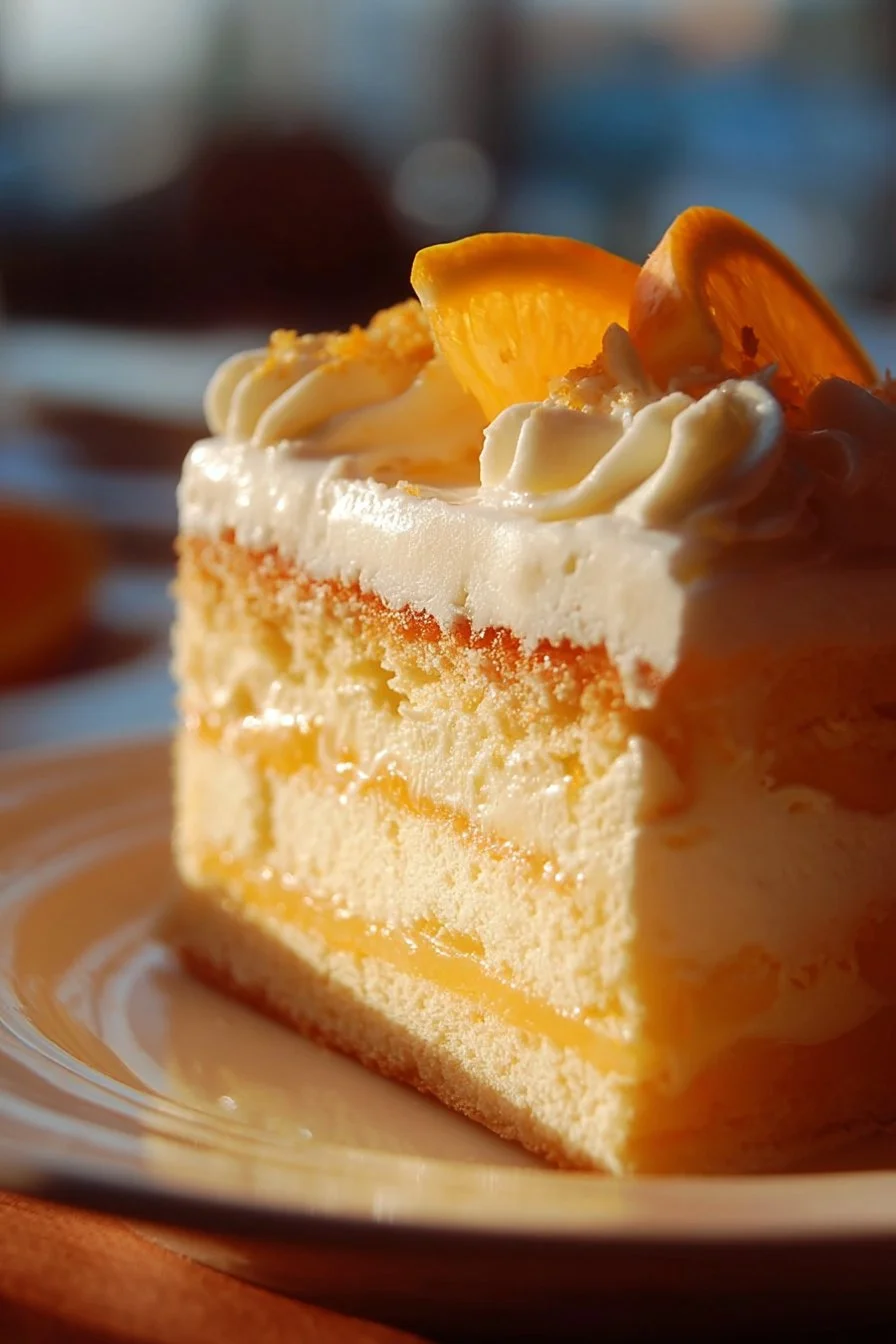
Bright, creamy, and a little bit nostalgic—this Orange Creamsicle Cake tastes exactly like the frozen pop you loved as a kid, only in soft, sliceable cake form. The crumb is tender and moist thanks to orange juice in the batter, and the silky buttercream is kissed with orange for that unmistakable creamsicle flavor. It’s a surprisingly easy cake to pull together on a weeknight, yet elegant enough for birthdays, showers, or whenever you need a bright dessert. If you want the full recipe format and photos, check out this orange creamsicle cake and then come back here for tips, variations, and troubleshooting.
Why You’ll Love This Orange Creamsicle Cake
- Bursting citrus flavor from orange gelatin, juice, and zest—bright without being tart.
- Ultra-moist texture thanks to orange juice and the convenience of a box cake mix.
- Classic creamsicle profile: soft vanilla cake with a rich orange buttercream.
- Quick and approachable — uses pantry staples and takes less time than a from-scratch layer cake.
- Versatile for celebrations, potlucks, or an easy weekend bake.
- Easy to adapt with optional orange extract or zest intensity to suit personal taste.
- Great make-ahead dessert: it improves after a few hours in the fridge as flavors meld.
What Is Orange Creamsicle Cake?
Orange Creamsicle Cake is a layered vanilla cake brightened with orange gelatin and orange juice, then finished with a buttery orange-flavored frosting that mimics the creamy, citrusy profile of the classic creamsicle treat. The baking method is simple: you’ll prepare a batter, divide it between two round pans, bake, cool, and frost. It’s typically served as a dessert at gatherings—think spring and summer parties, birthdays, or brunches—but its comforting vanilla-orange combo works year-round. The overall vibe is nostalgic comfort with an elevated, bakery-style finish that looks impressive but is forgiving to make.
Ingredients for Orange Creamsicle Cake
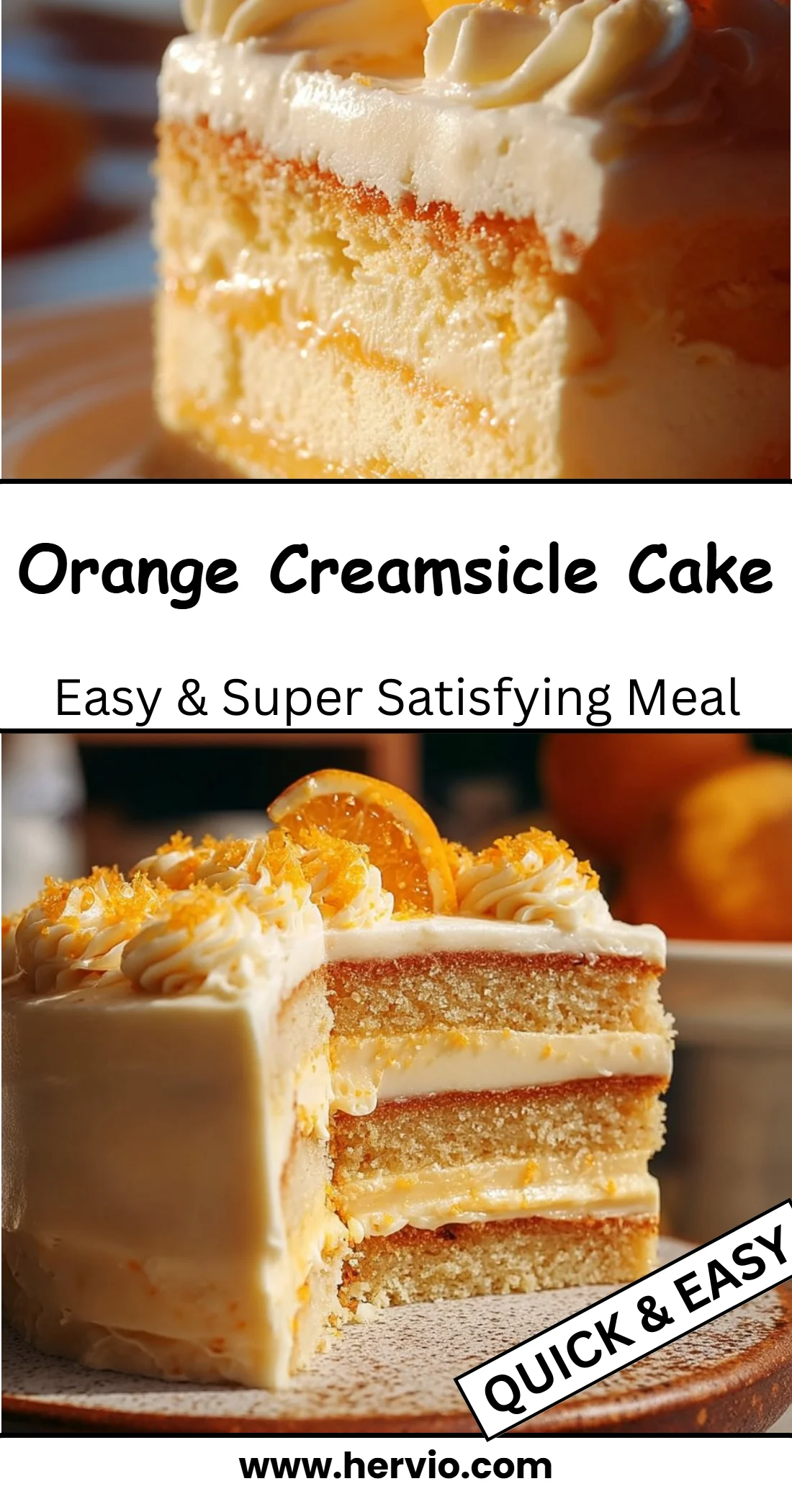
For the Cake
- 1 box vanilla cake mix
- 1 box (3 oz) orange gelatin mix
- 1 cup orange juice (240 ml)
- 1/2 cup vegetable oil (120 ml)
- 3 large eggs
- 1 tsp vanilla extract
- 1 tsp orange zest
For the Frosting
- 1 cup butter, softened (2 sticks / 226 g)
- 4 cups powdered sugar (confectioners’ sugar)
- 2 tbsp heavy cream (30 ml)
- 2 tbsp orange extract (optional)
Ingredient Notes (Substitutions, Healthy Swaps)
- Orange juice: Freshly squeezed orange juice gives the brightest flavor, but store-bought 100% orange juice works fine.
- Butter: For a lighter buttercream, use 3/4 cup butter and add 1/4 cup light cream cheese (not in the base recipe—optional swap). If you need dairy-free, use a stick of vegan butter and swap heavy cream for a non-dairy creamer.
- Powdered sugar: If you live in a humid climate, sift the powdered sugar before adding to avoid lumps and an overly soft frosting.
- Orange extract (optional): If you don’t have orange extract, add a little more orange zest (up to 1 tsp) to the frosting for flavor. Do not substitute the gelatin mix—its orange flavor and color are part of the cake’s identity.
- Gluten-free option: Use a gluten-free vanilla cake mix in place of the regular cake mix. Baking time may vary—watch for doneness.
- Lower-fat option: To reduce fat, you can experiment with replacing half the butter with a firm light margarine designed for baking or use 3/4 cup butter plus 1/4 cup powdered sugar to slightly reduce fat; texture will be a bit different.
Step-by-Step Instructions
Step 1 – Prep the Pans and Oven
Preheat the oven to 350°F (177°C). Grease and flour two 8-inch round cake pans, or line them with parchment rounds for easier removal.
Visual cue: Pans should be evenly greased and the oven fully preheated before the batter goes in.
Step 2 – Mix the Dry Ingredients
In a large bowl, combine the vanilla cake mix and the orange gelatin mix until evenly blended. This is the foundation of your creamsicle flavor.
Pro cue: Sifting the mixes together helps keep the batter lump-free and ensures uniform color.
Step 3 – Add Wet Ingredients and Combine
Add the orange juice, vegetable oil, eggs, vanilla extract, and orange zest to the dry mix. Beat until the batter is smooth and streak-free. Don’t overmix—stop once it’s well combined.
Visual cue: Batter should be velvety and pourable, with bright specks of orange zest visible.
Step 4 – Bake the Layers
Divide the batter evenly between the two prepared pans. Bake for 25–30 minutes, or until a toothpick inserted into the center comes out clean. Rotate the pans halfway through baking if your oven has hot spots.
Pro cue: If the tops are browning too quickly, tent with foil for the last 5–10 minutes.
Step 5 – Cool the Cakes
Let the cakes cool in the pans for 10 minutes, then gently turn them out onto wire racks to cool completely before frosting. Cooling ensures the frosting won’t melt.
Visual cue: Cakes should be slightly warm to the touch, not steaming—completely cool is best for frosting.
Step 6 – Make the Orange Buttercream
Beat the softened butter until fluffy. Gradually add the powdered sugar, alternating with the heavy cream until you reach a spreadable consistency. Stir in the optional orange extract if using, and taste—add a touch more extract or zest if you want a stronger orange note.
Pro cue: Start the mixer on low to avoid a powdered sugar cloud, then increase speed for fluff.
Step 7 – Assemble and Frost
Place the first cake layer on your serving plate and frost the top. Stack the second layer and frost the top and sides. Smooth with a spatula or create swirls for a decorative finish. Slice and serve.
Visual cue: Frosting will be glossy and hold soft peaks; a thin crumb coat can help with a cleaner finish if you prefer.
Pro Tips for Success
- Measure mindfully: Use level cups and spoons for accurate baking results.
- Room temperature eggs and butter mix more evenly—take items out about 30 minutes before starting.
- Don’t skip the 10-minute cooling in the pans; cakes are fragile when hot.
- If your frosting is too stiff, add 1 tsp heavy cream at a time until spreadable. If too loose, add a little more powdered sugar.
- To get a perfectly flat cake layer, trim the domed top with a serrated knife once cooled.
- Chill the cake briefly (15–20 minutes) after a crumb coat to make final smoothing easier.
- Avoid overbaking: start checking at 22 minutes if your oven runs hot.
Flavor Variations
All of these are optional and keep the base recipe intact.
- Zesty boost: Add up to 1 tsp extra orange zest to the batter for more fresh citrus notes.
- Creamsicle swirl: Fold 1/2 cup of whipped cream into some of the buttercream and dollop it on parts of the cake for a lighter texture (serve soon).
- Chocolate twist: Add a thin layer of chocolate ganache between layers for a creamsicle-and-chocolate effect.
- Sparkling citrus: Stir in 1–2 tsp finely chopped candied orange peel into the frosting for chewy bursts of flavor.
- Less sweet: Reduce powdered sugar in the frosting by up to 1/2 cup and add a touch more cream for balance—but texture will be softer.
Serving Suggestions
- Garnish each slice with a thin strip of orange zest for a pretty finish.
- Pair with a simple fresh fruit salad—berries and sliced kiwi complement the orange.
- Serve alongside a scoop of vanilla ice cream for extra creaminess.
- Bring to potlucks, baby showers, or brunches—this cake slices well for a crowd.
- For a party, pipe rosettes around the top edge and add a few edible flowers for a festive look.
- Serve slightly chilled for a firmer frosting and bright, refreshing flavor.
Make-Ahead, Storage & Reheating
- Make-ahead: You can bake the cake layers a day ahead, wrap them tightly in plastic wrap, and store at room temperature in a cool spot. Frost the day you plan to serve for the freshest look.
- Frosted cake: Once frosted, store the cake in the refrigerator, covered loosely with a cake dome or tented foil.
- Reheating: This cake is best served at room temperature. Remove from the fridge 30–60 minutes before serving to soften the buttercream. Do not microwave the whole cake; reheat single slices briefly (8–12 seconds) if you prefer warm cake, but be careful—the frosting may soften.
Storage and Freezing Instructions
- Refrigerator: Store the frosted cake in the fridge for up to 4 days. Bring to room temperature before serving for best texture.
- Freezing: You can freeze unfrosted cake layers. Wrap each cooled layer tightly in plastic wrap, then in foil, and freeze for up to 2 months. Thaw in the refrigerator overnight before frosting.
- Not recommended: Freezing a fully frosted cake is possible but can change the frosting’s texture and appearance; for best results, freeze layers separately and frost after thawing.
Nutrition Facts (Per Serving)
| Calories | Protein | Carbs | Fat | Fiber | Sodium |
|———|——–|——|—–|——|——-|
| 460 kcal | 4 g | 65 g | 20 g | 1 g | 370 mg |
Nutrition values are estimates and may vary depending on ingredients and portion sizes.
FAQ About Orange Creamsicle Cake
Q: My cake came out dense—what went wrong?
A: Dense cake often means overmixing or too much liquid. Mix until just combined and measure liquids accurately.
Q: How can I tell when the cake is done?
A: A toothpick inserted into the center should come out clean or with a few moist crumbs, not wet batter.
Q: Can I use fresh-squeezed orange juice instead of store-bought?
A: Yes—fresh juice often gives brighter flavor and is recommended when available.
Q: Will the orange gelatin make the cake too sweet?
A: No—the gelatin adds flavor and color more than sweetness; the balance with vanilla cake and buttercream is typically well-rounded.
Q: How should I store leftovers?
A: Keep leftovers covered in the refrigerator for up to 4 days. Bring to room temperature before serving.
Q: Can I make this in a sheet pan instead of two 8-inch rounds?
A: Yes—bake time will change; check for doneness earlier and adjust frosting amounts accordingly.
In a different but related note, if you like building layered, bakery-style cakes at home, you might also enjoy learning how to adapt boxed mixes into sheet cakes like a copycat Costco vanilla sheet cake technique for larger gatherings.
Notes
- For the cleanest slices, chill the cake for 20–30 minutes and use a hot, dry knife when cutting between slices. Wipe the knife between cuts.
- Small flavor upgrade: stir 1/2 tsp orange zest into the final frosting for extra citrus brightness.
- If you want a lighter frosting color, omit the orange extract; it adds both flavor and a slight tint.
- Presentation tip: pipe a decorative border around the top edge and sprinkle with a few thin orange slices or zest curls just before serving.
- If you prefer a less sweet frosting, reduce the powdered sugar by up to 1/2 cup and add a dash more cream to maintain spreadability.
Orange Creamsicle Cake
- Total Time: 45 minutes
- Yield: 8 servings
- Diet: Vegetarian
Description
A bright and creamy cake that captures the nostalgic flavors of orange creamsicles in a tender, moist layer cake topped with rich orange buttercream.
Ingredients
- 1 box vanilla cake mix
- 1 box (3 oz) orange gelatin mix
- 1 cup orange juice (240 ml)
- 1/2 cup vegetable oil (120 ml)
- 3 large eggs
- 1 tsp vanilla extract
- 1 tsp orange zest
- 1 cup butter, softened (2 sticks / 226 g)
- 4 cups powdered sugar (confectioners’ sugar)
- 2 tbsp heavy cream (30 ml)
- 2 tbsp orange extract (optional)
Instructions
- Preheat the oven to 350°F (177°C). Grease and flour two 8-inch round cake pans, or line them with parchment.
- Combine the vanilla cake mix and orange gelatin mix in a large bowl until evenly blended.
- Add the orange juice, vegetable oil, eggs, vanilla extract, and orange zest to the dry mix. Beat until the batter is smooth.
- Divide the batter evenly between the prepared pans. Bake for 25–30 minutes, or until a toothpick comes out clean.
- Let the cakes cool in the pans for 10 minutes, then turn them out onto wire racks to cool completely.
- Beat the softened butter until fluffy. Gradually add the powdered sugar, alternating with the heavy cream until spreadable.
- Frost the first layer of cake on your serving plate, stack the second layer, and frost the top and sides. Smooth with a spatula.
Notes
For best results, use room temperature ingredients and avoid overmixing to prevent a dense cake. Optional ingredient substitutions can enhance flavor and texture.
- Prep Time: 15 minutes
- Cook Time: 30 minutes
- Category: Dessert
- Method: Baking
- Cuisine: American