
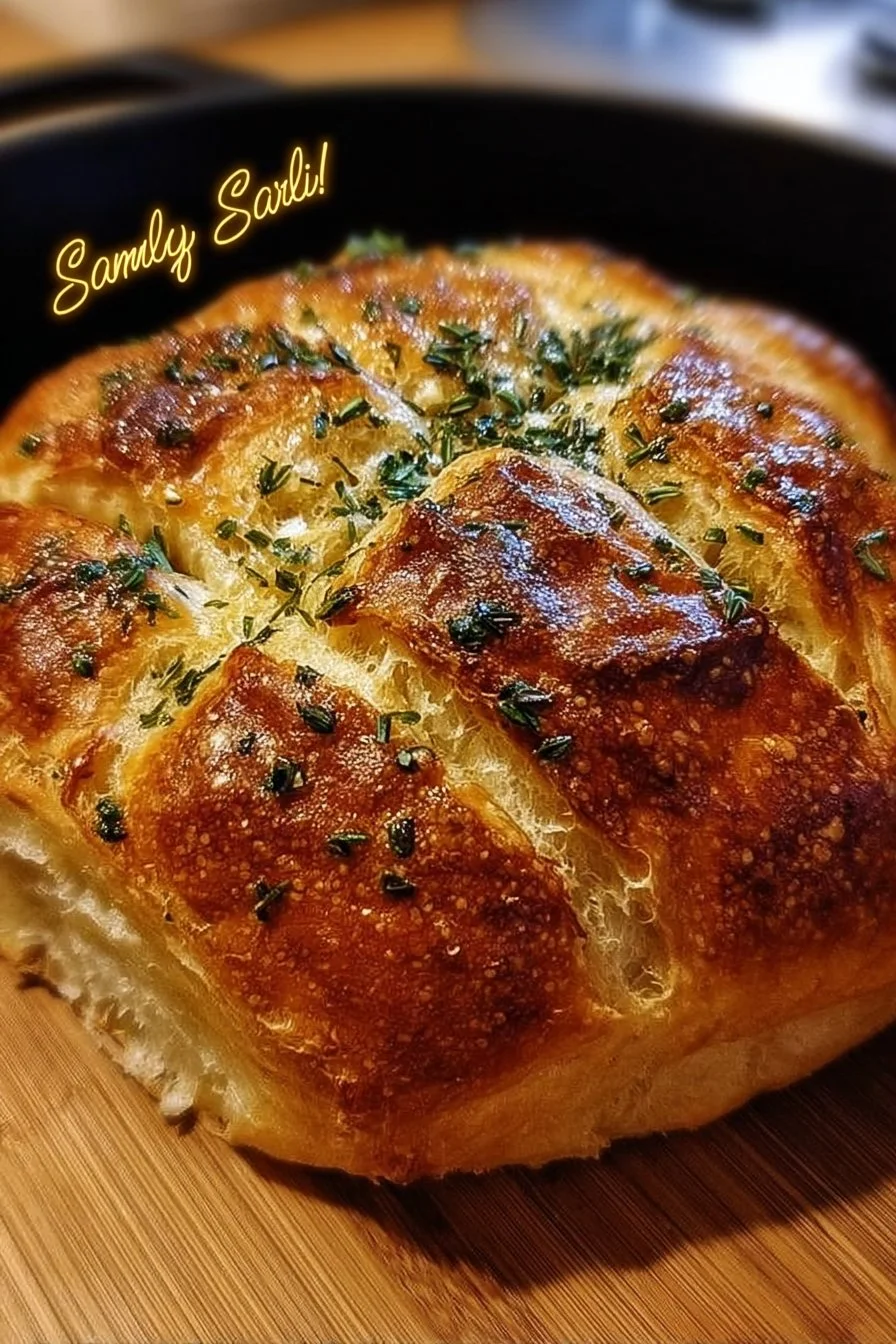
I still remember the first time I pulled a glossy, herb-speckled boule from a sizzling Dutch oven — the crust cracked like autumn leaves and the garlic perfumed the whole kitchen. This no-knead Garlic Herb Dutch Oven Bread is one of those recipes that feels fancy but is genuinely forgiving: a simple mix, a long overnight rise, and a hot pot turn ordinary pantry staples into restaurant-level bread. If you’re curious about variations or want a visual step reference, check this detailed garlic herb Dutch oven bread guide for inspiration.
Why you’ll love this dish
This loaf gives you artisan texture without hours of active work. The long, low-effort fermentation develops flavor and an open crumb while the Dutch oven traps steam so the crust crisps to a glossy, deep-browned finish. It’s perfect for weeknight soups, weekend brunch, or bringing to a potluck where a rustic loaf makes a statement.
"A simple dough, a hot pot, and patience — the result is a fragrant boule that tastes far more complicated than it is to make."
Reasons to make it now:
- Minimal hands-on time: just mix, cover, and forget for 12–18 hours.
- Budget-friendly: basic pantry staples + fresh herbs.
- Crowd-pleasing: crunchy crust, soft interior, and garlic-herb aroma.
- Flexible: easy to adapt with other herbs, cheeses, or toppings.
Step-by-step overview
This recipe is intentionally straightforward. You’ll whisk dry ingredients, add warm water, garlic, and herbs, and stir until a shaggy dough forms. After an overnight rise at room temperature, you shape the dough gently, heat a Dutch oven, and bake the loaf covered to build steam, then uncovered to finish the crust. Expect about 12–18 hours inactive fermentation and 45–50 minutes of baking.
What you’ll need
- 3 cups (about 375 g) all-purpose flour
- 1 1/2 teaspoons salt
- 1/2 teaspoon instant yeast (no proofing required)
- 1 1/2 cups (360 ml) warm water (about 95–105°F / 35–40°C)
- 2 tablespoons olive oil (plus a little to oil the pot)
- 3 cloves garlic, minced (or 2 teaspoons roasted garlic for milder flavor)
- 2 tablespoons fresh herbs (rosemary, thyme, parsley — chopped)
Notes and substitutions:
- Instant yeast can be swapped 1:1 with active dry yeast if you dissolve it in the warm water first and wait 5–10 minutes for bubbling.
- Use bread flour for a slightly chewier crumb; whole wheat can replace up to half the AP flour (expect denser loaf).
- For extra convenience, you can gently fold in 1/2 cup grated Parmesan or 1/2 cup chopped olives at shaping.
- If you want a different herb profile, see a rosemary-forward take in this Dutch oven garlic rosemary bread recipe for inspiration.
Step-by-step instructions
- In a large bowl, whisk together the flour, salt, and instant yeast until evenly combined.
- Add the warm water, minced garlic, chopped herbs, and olive oil. Stir with a wooden spoon or rubber spatula until a shaggy, sticky dough forms — it should be loose and slightly tacky.
- Cover the bowl tightly with plastic wrap or a reusable lid and leave it at room temperature (around 68–75°F / 20–24°C) for 12–18 hours. The dough should rise, develop bubbles, and feel airy.
- Preheat your oven to 450°F (230°C) with a clean Dutch oven (lid on) inside for at least 30 minutes so the pot is smoking hot.
- Generously flour a work surface and turn the dough out. Using floured hands, fold the dough onto itself a couple of times to form a loose round — don’t overwork it.
- Carefully remove the hot Dutch oven from the oven (use oven mitts). Brush the bottom with a little olive oil or place a square of parchment in the pot to prevent sticking.
- Transfer the shaped dough into the hot pot (parchment makes this much easier). Optionally, sprinkle with a few herb sprigs or flaky salt. Cover and bake for 30 minutes.
- Remove the lid and bake for an additional 15–20 minutes until the crust is deeply golden and crisp. If you like an extra-dark crust, rotate the pot midway through the uncovered bake.
- Transfer the loaf to a cooling rack and let it rest at least 30 minutes before slicing — cutting too soon leaves a gummy crumb.
Safety note: always handle the hot Dutch oven with thick oven mitts, and keep children and pets away while transferring the dough.
Best ways to enjoy it
This bread is an ideal companion for:
- Olive oil and balsamic for dipping.
- Thick slices with softened butter and flaky sea salt.
- Alongside tomato soup, gratins, or a charcuterie board.
- Split and used for paninis or garlic bread (brush halves with butter, grill).
For plating: slice on a wooden board and tuck in small ramekins of compound herb butter, olive tapenade, and a sharp cheese. Toast thin slices to make croutons or bruschetta bases.
Storage and reheating tips
- Room temperature: keep the loaf in a paper bag or wrapped in a clean kitchen towel for up to 2 days. Paper helps the crust stay crisp; plastic will soften the crust but keep the crumb moist.
- Freezing: slice the cooled loaf, flash-freeze on a tray, then store in a freezer bag up to 3 months. Reheat directly from frozen in a 350°F (175°C) oven for 10–12 minutes.
- Avoid the refrigerator: it accelerates staling.
- Recrisping: to refresh a stale or softened crust, sprinkle the loaf lightly with water and heat in a 375°F (190°C) oven for 5–8 minutes.
Pro chef tips
- Hydration matters: the dough should be loose and tacky. If your dough feels overly dry, add a tablespoon of water at a time; if it’s too wet to handle, dust with a bit of flour when shaping.
- Warmth and timing: a cooler kitchen slows fermentation—allow up to 20 hours; a warmer kitchen may shorten the rise to 10–12 hours. Look for bubbles and a slightly domed surface rather than relying strictly on time.
- Parchment shortcut: place the dough on a floured piece of parchment and lift that into the pot — no hot-hand juggling required.
- Garlic flavor control: raw minced garlic gives a bright punch; roast the garlic first for a mellow, sweet note.
- Don’t skip the rest: cooling the loaf is essential to finish gelatinizing the interior crumb — slicing too early ruins texture.
Recipe variations
- Cheesy herb: fold in 1/2–3/4 cup grated sharp cheddar or Parmesan at shaping.
- Seeded crust: brush the dough with olive oil and press a mix of sesame, poppy, and sunflower seeds onto the surface before baking.
- Roasted garlic and caramelized onion: swap minced raw garlic for 2–3 tablespoons roasted garlic and fold in 1/2 cup soft-caramelized onions.
- Whole wheat: replace up to half the all-purpose flour with whole-wheat flour and increase hydration by 1–2 tablespoons.
- Gluten-free: this specific method relies on gluten structure; for gluten-free, use a tested GF flour blend and a recipe formulated for a Dutch oven or free-form loaf.
Common questions
Q: How long does this bread take from start to finish?
A: Active work is about 15–20 minutes. Expect 12–18 hours for the overnight rise, plus roughly 45–50 minutes of baking and 30 minutes of cooling. Total elapsed time ~13–19 hours.
Q: Can I shorten the rise time?
A: Yes — increase the yeast slightly (to about 1 teaspoon) and proof in a warmer spot, but flavor develops best with the long, slow fermentation. Shortening will reduce complexity in taste and crumb openness.
Q: Can I use active dry yeast instead of instant?
A: Yes. Dissolve it in the warm water first and wait ~5–10 minutes until foamy, then mix as directed.
Q: Is it safe to let the dough rise 18 hours at room temperature?
A: Generally yes, if your kitchen is at typical room temperatures (68–75°F / 20–24°C). If it’s much warmer, shorten the time. If you want extra safety/mildness, refrigerate for a cold ferment (8–24 hours) and bake straight from the fridge — add 20–30 minutes extra to reach room-temperature dough before baking.
Q: Can I add cheese or olives?
A: Absolutely. Fold them in gently during shaping; large add-ins can deflate delicate bubbles if mixed too aggressively.
Q: How do I make the loaf more crusty?
A: Bake in a very hot preheated Dutch oven with the lid on to trap steam, then remove the lid for the final bake. A quick spray of water on the oven walls (avoid direct water on the hot pot) also increases steam and crust development.

Garlic Herb Dutch Oven Bread
- Total Time: 13–19 hours
- Yield: 1 loaf
- Diet: Vegetarian
Description
An easy no-knead garlic herb bread that rises overnight and bakes in a Dutch oven for a crunchy crust and soft interior.
Ingredients
- 3 cups (about 375 g) all-purpose flour
- 1 1/2 teaspoons salt
- 1/2 teaspoon instant yeast
- 1 1/2 cups (360 ml) warm water (about 95–105°F / 35–40°C)
- 2 tablespoons olive oil (plus a little to oil the pot)
- 3 cloves garlic, minced (or 2 teaspoons roasted garlic)
- 2 tablespoons fresh herbs (rosemary, thyme, parsley — chopped)
Instructions
- Whisk together the flour, salt, and instant yeast in a large bowl until evenly combined.
- Add the warm water, minced garlic, chopped herbs, and olive oil. Stir until a shaggy, sticky dough forms.
- Cover the bowl tightly and leave it at room temperature for 12–18 hours.
- Preheat your oven to 450°F (230°C) with a clean Dutch oven inside for at least 30 minutes.
- Flour a work surface and turn the dough out. Fold the dough onto itself a couple of times to form a loose round.
- Remove the hot Dutch oven, brush the bottom with olive oil, and transfer the shaped dough into the pot.
- Cover and bake for 30 minutes.
- Remove the lid and bake for an additional 15–20 minutes until the crust is deeply golden.
- Transfer the loaf to a cooling rack and let it rest for at least 30 minutes before slicing.
Notes
Storage: keep the loaf in a paper bag for up to 2 days. Flash-freeze for up to 3 months.
- Prep Time: 15 minutes
- Cook Time: 50 minutes
- Category: Bread
- Method: Baking
- Cuisine: American