
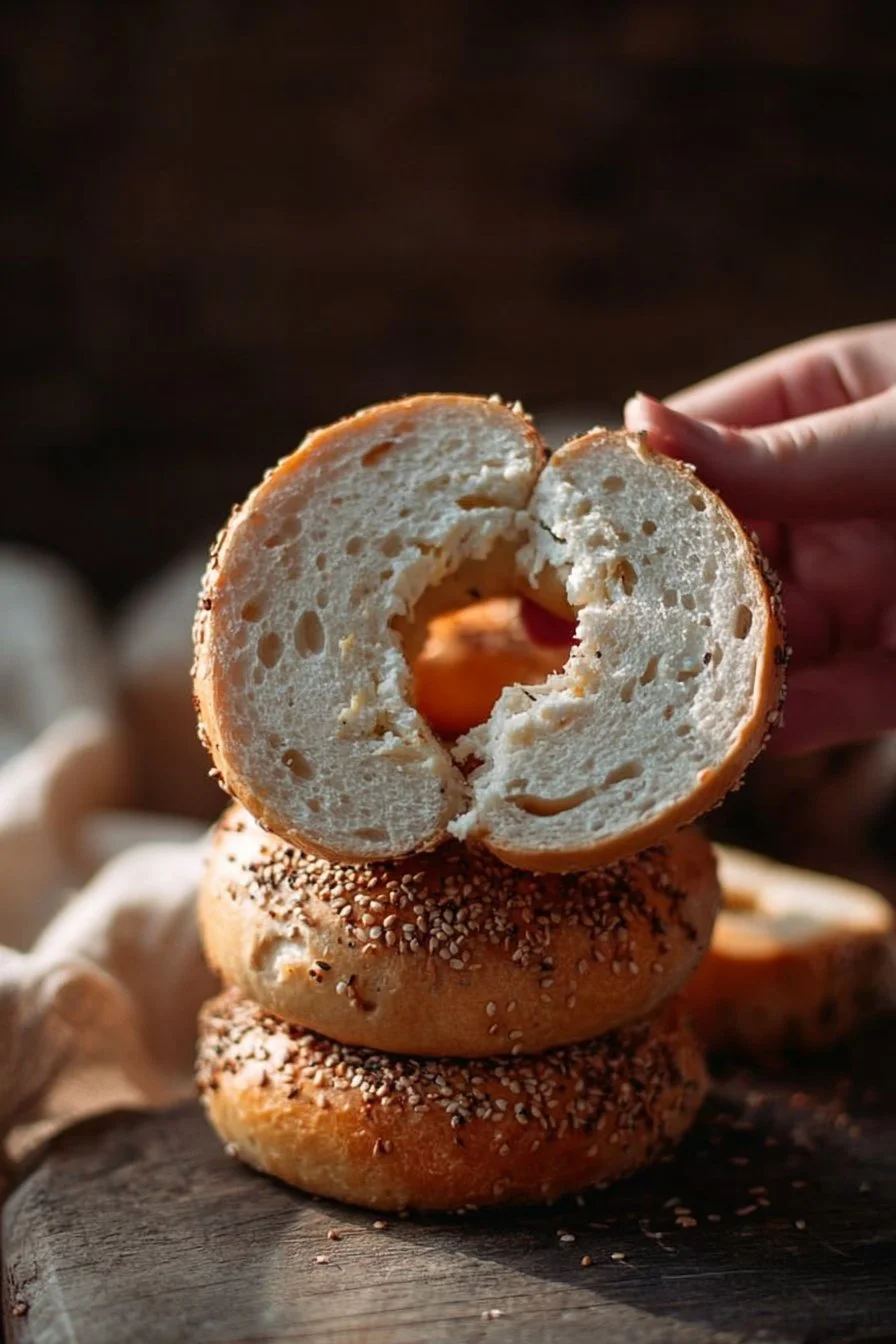
I fell in love with these dense, chewy sourdough cottage cheese bagels the first time I pulled a tray from the oven—golden crust, a tender interior, and a surprising boost of protein in every bite. If you want the full recipe source and measurements I used, check the original sourdough cottage cheese bagels recipe before you start so you can read the proofing notes. This version balances a sourdough discard with a touch of instant yeast, and the cottage cheese adds moisture, protein, and a subtle tang.
Why you’ll love this dish
These bagels are worth the extra love because they combine classic texture with better nutrition. They’re:
- Chewy on the outside and soft inside thanks to the sourdough discard plus a short yeast boost.
- Higher in protein than a typical bagel (about 13.4 g per bagel in this batch).
- Great for weekends, brunch spreads, or a protein-packed breakfast sandwich.
“Perfect balance of chew and tenderness—plus the cottage cheese gives them a creamier crumb than any bagel I’ve baked at home.” — home baker review
Step-by-step overview
This recipe is straightforward: mix starter, flour, cottage cheese, salt, a little instant yeast and water into a shaggy dough. After an initial warm proof you’ll do a couple of stretch-and-folds, shape into balls, cold-proof overnight, boil briefly in a baking soda + honey bath, top, and bake at 450°F until golden. Expect hands-on time spread over two days because of the cold final proof; the overnight rest is what gives the bagels great flavor and structure.
What you’ll need
- 720 g bread flour (about 6 cups)
- 120 g sourdough starter discard (about 1 cup)
- 1/2 teaspoon active or instant yeast*
- 200 g water (about 3/4 cup)
- 455 g cottage cheese (about 2 cups)
- 10 g sea salt (about 2 teaspoons)
- 1 tablespoon baking soda (for the water bath)
- 1 tablespoon honey or sugar (for the water bath)
- Egg white for brushing (optional) and toppings of choice (sesame, poppy, everything seasoning, etc.)
Ingredient notes:
- If your cottage cheese is very wet, you can drain it briefly in a fine sieve; some moisture is fine because it helps the crumb.
- The 1/2 teaspoon yeast gives a more reliable rise than relying on discard alone while keeping the sourdough flavor.
- Read the proofing time notes before you start; the final 12-hour cold proof is important for texture.
Step-by-step instructions
- In a large bowl combine the sourdough discard, 1/2 tsp yeast, bread flour, salt, cottage cheese, and water. Mix until a uniform, shaggy dough ball forms.
- Cover the bowl with a plate or damp towel and proof in a warm spot for 1 hour.
- Perform a stretch-and-fold: wet your hands, lift the dough from the bowl and fold it in on itself a few times until the dough smooths and gains tension. Shape into a smooth ball by scooping around the sides with your hands. Cover and proof for 30 minutes in a warm spot.
- Lightly flour your work surface. Gently stretch the dough into a rectangle about the size of a sheet of paper; avoid flattening it—just tease it outward.
- Divide into 10 equal pieces (≈160 g each). Line a baking sheet with parchment and dust with flour.
- Shape each piece into a tight round: fold edges to the center, pinch, then roll between your hands to form a smooth ball. Place on the floured parchment. Lightly dust tops with flour, cover with a towel, and let rise 30 minutes until noticeably puffed.
- To shape bagels: flour hands. Put a dough ball in your right hand. Push your thumb through the center to create a hole, then slide your fingers through and rotate the dough around your palm to widen the hole and even the ring. Place shaped bagels back on parchment and rest 15 minutes briefly—don’t overproof.
- Transfer shaped bagels to the refrigerator for a final cold proof of about 12 hours. This step deepens flavor and improves texture.
- Preheat oven to 450°F about 30 minutes before baking. Prepare toppings in small bowls.
- Bring a large pot of water to a rolling boil. Add 1 tablespoon baking soda and 1 tablespoon honey or sugar. Using a slotted spoon, boil each bagel 1 minute total—flip at 30 seconds. Briefly return to the parchment.
- Brush with egg white (for shine) and sprinkle toppings. Repeat boiling and topping for each batch. Place all bagels on a parchment-lined baking sheet.
- Bake ~20 minutes, rotating the tray at 10 minutes for even browning, until deep golden. Remove and cool for 30 minutes before slicing.
Ingredient tips and substitutions
- For a tangier crumb use a more active or slightly larger quantity of discard, or extend the cold proof.
- Greek yogurt (full-fat) can replace cottage cheese 1:1 if you want a smoother texture. Drain Greek yogurt in a cheesecloth for a firmer crumb.
- For a whole-grain twist, replace up to 25% of the bread flour with whole wheat; expect a denser bagel and possibly a touch more water.
Best ways to enjoy it
These bagels are ideal toasted and layered. Try:
- Classic: cream cheese, smoked salmon, capers, red onion.
- Breakfast sandwich: fried egg, cheddar, arugula, hot honey.
- Light open-face: cottage cheese, sliced heirloom tomatoes, cracked black pepper—if you like that combo, see this tomato cottage cheese open bagels for inspiration.
- Cut and freeze halves for quick toasts; they reheat beautifully under a broiler or in a toaster oven.
Storage and reheating tips
- At room temperature: keep in a paper bag or loosely covered for up to 24 hours to preserve crust.
- Refrigeration: place in an airtight container for up to 3 days. Refrigeration can dry the crumb, so toast before eating.
- Freezing: cool completely, slice if desired, then freeze in an airtight bag for up to 3 months. Reheat from frozen in a toaster oven or oven at 350°F until warmed through.
- Reheating: split and toast or bake at 350°F for 6–10 minutes; use a splash of water in the oven for added steam if crumb is dry.
Pro chef tips
- Temperature matters: aim for a warm but not hot proofing spot (75–80°F) for the initial proofs. Too hot will over-accelerate fermentation.
- Handle gently: the dough is enriched by cottage cheese and can be sticky—use lightly floured hands and avoid over-kneading.
- The boil: baking soda in the water raises pH and speeds crust coloration and chew. Adding sweetener (honey or sugar) gives a subtle sheen and color.
- Egg white vs whole egg: egg white gives a glossy sheen without darkening as much; whole egg adds color and richer flavor.
- Toppings: press seeds lightly into the surface after egg wash so they adhere during baking.
Creative twists
- Everything-else: add shredded cheddar or grated gruyère into the dough for cheese bagels.
- Seed blend: mix sesame, poppy, and baker’s millet for texture.
- Sweet bagels: add 2 tbsp sugar to the dough and top with cinnamon-sugar after boiling for a breakfast twist.
- Vegan option: use non-dairy yogurt instead of cottage cheese and brush with a plant-based milk + maple syrup wash before topping.
Common questions
Q: How long does the whole process take?
A: Hands-on time is about 1.5–2 hours spread across mixing, shaping, and boiling/baking. Total elapsed time includes a 12-hour cold proof, so plan for two days (day 1 mix and shape, day 2 boil and bake).
Q: Can I skip the instant yeast and only use sourdough discard?
A: You can, but expect a much longer proof (several hours to overnight at warm temperature) and more pronounced sour flavor. The 1/2 tsp instant yeast gives a more predictable, shorter rise and consistent texture.
Q: Do I need to drain the cottage cheese?
A: Not strictly. If it’s very wet, a brief drain improves dough handling. Some moisture contributes to a softer crumb—don’t remove all liquid.
Q: Are these safe to make with raw egg wash?
A: Brush using separated egg white; if you’re concerned about raw eggs, use pasteurized egg whites or a plant-based milk + syrup wash. Remember to cool baked bagels fully before storing.
Q: What if my bagels are dense?
A: Common causes: underproofing, too much flour while shaping, or not enough stretch-and-fold to develop gluten. Slightly warmer proofs and gentle handling help create better oven spring.
If you want a printable checklist or variations tailored to dietary needs, tell me which preference — gluten-free, vegan, or high-protein — and I’ll adapt the method.
Print
Sourdough Cottage Cheese Bagels
- Total Time: 1440 minutes
- Yield: 10 bagels
- Diet: Vegetarian
Description
Chewy and protein-packed bagels made with sourdough discard and cottage cheese for a unique texture and flavor.
Ingredients
- 720 g bread flour (about 6 cups)
- 120 g sourdough starter discard (about 1 cup)
- 1/2 teaspoon active or instant yeast
- 200 g water (about 3/4 cup)
- 455 g cottage cheese (about 2 cups)
- 10 g sea salt (about 2 teaspoons)
- 1 tablespoon baking soda (for the water bath)
- 1 tablespoon honey or sugar (for the water bath)
- Egg white for brushing (optional)
- Toppings of choice (sesame, poppy, everything seasoning, etc.)
Instructions
- Combine the sourdough discard, 1/2 tsp yeast, bread flour, salt, cottage cheese, and water in a large bowl.
- Proof in a warm spot for 1 hour, covered.
- Perform a stretch-and-fold, then shape into a ball and proof for 30 minutes.
- Stretch the dough into a rectangle, then divide into 10 equal pieces.
- Shape each piece into a round, let rise for 30 minutes.
- Shape the bagels by pushing a thumb through the center and widening the hole.
- Chill the bagels in the refrigerator for 12 hours.
- Preheat the oven to 450°F and prepare the boiling bath.
- Boil each bagel for 1 minute, then brush with egg white and top.
- Bake for ~20 minutes until deep golden, then cool for 30 minutes before slicing.
Notes
For best results, ensure the initial proofing temperature is warm, and handle the dough gently to preserve the moisture from the cottage cheese.
- Prep Time: 120 minutes
- Cook Time: 20 minutes
- Category: Breakfast
- Method: Boiling and Baking
- Cuisine: American