
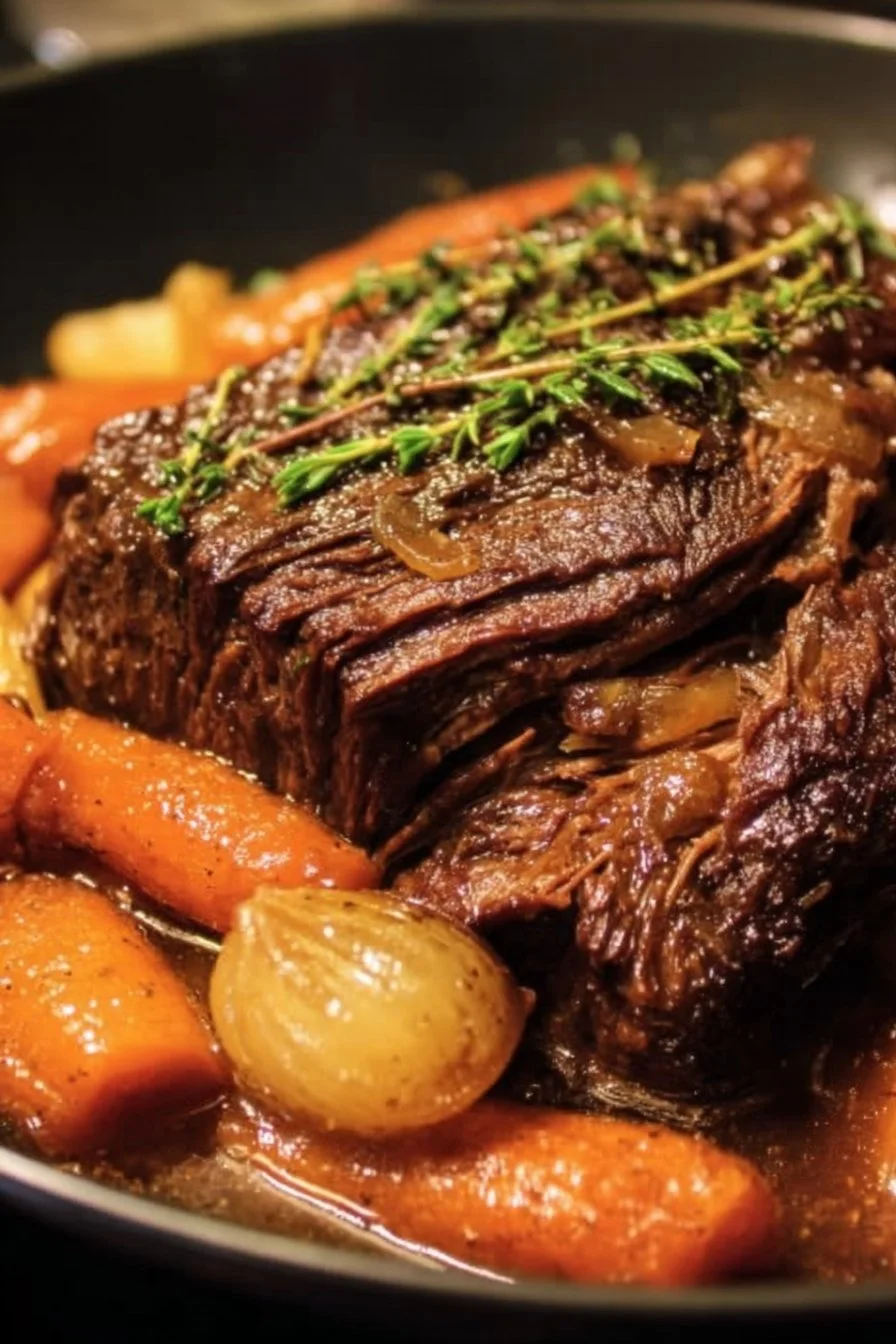
Warm, slow-braised pot roast is the kind of meal that makes a home feel like home: a fork-tender chuck roast bathing in a rich red-wine sauce with carrots, potatoes, and aromatic herbs. This Ina Garten–style pot roast keeps things simple — a good-sized chuck roast, a splash of red wine, beef broth, tomato paste, garlic, and fresh thyme and rosemary — then low-and-slow oven time does the rest. If you like classic Dutch oven techniques and want more context on the method, this classic Dutch oven pot roast guide is a helpful companion with similar tips and timing.
Why you’ll love this dish
This pot roast is satisfying in every sense: economical (chuck roast is affordable), forgiving (slow braise makes even cheaper cuts melt-in-your-mouth tender), and great for feeding a family or prepping a make-ahead dinner. The mix of red wine and tomato paste gives a deeper savory backbone than a plain broth braise, while rosemary and thyme keep the flavor bright without overpowering the beef.
“I made this pot roast on a rainy Sunday — the house smelled like comfort and the meat fell apart after three hours. Plenty of sauce left over for mashed potatoes.” — a happy home cook
Serve it for a hearty weeknight dinner, a cozy weekend meal, or bring it to a potluck. The leftovers are also excellent for sandwiches, shepherd’s pie, or a quick pasta sauce.
Step-by-step overview
Before you start: preheat the oven to 325°F (160°C) and have a heavy Dutch oven ready. The overall flow is straightforward:
- Season and sear the 4–5 pound chuck roast to build flavor.
- Deglaze the pot with red wine, then add beef broth and vegetables.
- Simmer briefly, cover, and transfer to the oven for 3–4 hours until the roast is shred-ready.
- Rest, slice or shred, and serve with the braising vegetables and sauce.
This recipe is hands-off while it braises, but the initial sear and a final check of seasoning make a big difference.
What you’ll need
- 1 (4–5 pound) chuck roast — well-marbled for best tenderness (substitute brisket or shoulder if needed).
- Salt and freshly ground black pepper
- 2 tablespoons olive oil
- 2 cups dry red wine (Cabernet, Merlot, or a blend) — replaces some broth, adds acidity and depth
- 2 cups beef broth (low-sodium preferred)
- 4 carrots, chopped into large chunks
- 4 potatoes, peeled and diced into bite-sized pieces (Yukon Gold or Russet)
- 1 onion, chopped (yellow or sweet)
- 3 garlic cloves, minced
- 2 tablespoons tomato paste
- 1 tablespoon fresh thyme leaves (or 1 teaspoon dried)
- 1 tablespoon fresh rosemary, chopped (or 1/2 teaspoon dried)
Ingredient notes: If you prefer a non-alcohol option, replace the wine with an equal amount of additional beef broth plus 1 tablespoon balsamic vinegar for acidity. For a thicker sauce later, reduce the braising liquid on the stovetop after removing the meat.
Step-by-step instructions
- Preheat the oven to 325°F (160°C). Pat the roast dry with paper towels — dryness equals better sear. Generously season all sides with salt and black pepper.
- Place a large Dutch oven over medium-high heat and add the olive oil. When the oil shimmers, sear the roast on all sides until deeply browned, about 3–5 minutes per side. Remove the roast and set aside.
- With the heat still medium-high, pour in the red wine to deglaze the pot, scraping up browned bits from the bottom with a wooden spoon — those bits carry a lot of flavor. Let the wine reduce by a minute or two.
- Stir in the beef broth and tomato paste until the paste dissolves. Nestle the roast back into the pot. Add the chopped carrots, diced potatoes, onion, minced garlic, thyme, and rosemary around the roast.
- Bring the liquid to a gentle simmer on the stovetop. Cover the Dutch oven with its lid and transfer it to the preheated oven.
- Cook for 3–4 hours, checking at about 3 hours. The roast is done when a fork slides into the meat and it easily shreds (internal temperature for fully braised, pull-apart beef often reaches 190–205°F for collagen breakdown).
- Remove the pot from the oven and let the roast rest for 10–15 minutes before shredding or slicing. Serve warm with the vegetables and spoon the sauce over the top. If you want a glossy, thicker sauce, transfer the braising liquid to a saucepan and simmer until reduced, or whisk in a beurre manié (equal parts butter and flour) to thicken.
Best ways to enjoy it
This pot roast is a meal on its own, but small touches elevate it:
- Serve over mashed potatoes, buttered egg noodles, or creamy polenta to soak up the sauce.
- Top shredded beef with a sprinkle of chopped parsley or a few lemon zest flecks to brighten the plate.
- Leftover ideas: make beef sandwiches with horseradish mayo and pickles, or fold shredded roast into enchiladas.
For other Dutch oven pairing ideas and timing tips, consult this Dutch oven pot roast resource for complementary methods and serving suggestions.
Storage and reheating tips
- Refrigerate: Cool the roast to room temperature (no more than two hours at room temp), then store in airtight containers. Keeps 3–4 days in the fridge.
- Freeze: Portion the meat and sauce into freezer-safe containers or bags. Label and freeze for up to 2–3 months. Thaw overnight in the refrigerator before reheating.
- Reheating: Gently reheat on the stovetop over low heat with a splash of broth until warmed through, or bake covered at 300°F (150°C) until heated. Reheated foods should reach 165°F (74°C) internally for food safety. Avoid microwaving large pieces; cut into smaller portions for even reheating.
Pro chef tips
- Sear properly: Dry the roast and get the pan very hot. A good crust creates flavor through the Maillard reaction. Don’t overcrowd the pot; brown in batches if needed.
- Use fresh herbs: Fresh thyme and rosemary release essential oils better during the long braise. Dried herbs work but add them earlier.
- Check doneness by feel: When the meat gives and pulls apart with very little resistance, it’s ready. Rely less on a single temperature and more on texture for braised meats.
- Reduce the sauce: After removing meat and vegetables, skim fat from the surface, then reduce the liquid on the stovetop until it thickens and concentrates — taste and adjust salt.
- Cut against the grain: When slicing rather than shredding, cut across the muscle fibers for tender bites.
Creative twists
- Mediterranean: Swap rosemary/thyme for oregano and add olives and a splash of tomato sauce.
- Slow-cooker version: Sear the roast, then transfer everything to a slow cooker and cook on low for 8–9 hours. Add potatoes in the last 2–3 hours so they don’t turn to mush.
- Wine swaps: Use a full-bodied red for deeper flavor or a lighter red for a gentler finish. For alcohol-free, use extra beef broth + a tablespoon of red wine vinegar or balsamic.
- Vegetarian stretch: Braise large portobello mushrooms with the same sauce and vegetables for a plant-forward take.
Common questions
Q: Can I use a different cut of beef?
A: Yes. Chuck roast is ideal because of its marbling and connective tissue that breaks down during braising. Brisket or beef shoulder also work. Lean roasts like eye of round may become dry and are less forgiving.
Q: How long should I cook the roast for shreddable meat?
A: Plan for 3–4 hours at 325°F (160°C). Start checking at 3 hours — when the meat pulls apart easily with a fork it’s done. Tougher or larger roasts might need a bit longer.
Q: Is it safe to cook with wine? Will the alcohol remain?
A: Cooking reduces alcohol content, but traces can remain depending on methodology. If avoiding alcohol entirely, substitute with broth plus a tablespoon of vinegar for acidity.
Q: Can I prepare this ahead of time?
A: Yes. Make the roast a day ahead — flavors often improve overnight. Reheat gently and add a splash of broth to refresh the sauce. Store refrigerated and reheat to 165°F (74°C) before serving.
Q: How do I fix a watery sauce?
A: Remove the meat and vegetables, skim any excess fat, then simmer the braising liquid to reduce and concentrate flavors. For faster thickening, whisk in a slurry of cornstarch and cold water or a small beurre manié.
If you want more techniques for Dutch-oven braises or alternate pot roast recipes, reread the earlier linked guides for timing and method comparisons.
Print
Classic Dutch Oven Pot Roast
- Total Time: 255 minutes
- Yield: 6 servings
- Diet: None
Description
A comforting slow-braised pot roast featuring fork-tender chuck roast in a rich red-wine sauce with hearty vegetables.
Ingredients
- 1 (4–5 pound) chuck roast, well-marbled
- Salt and freshly ground black pepper
- 2 tablespoons olive oil
- 2 cups dry red wine (Cabernet, Merlot, or a blend)
- 2 cups beef broth (low-sodium preferred)
- 4 carrots, chopped into large chunks
- 4 potatoes, peeled and diced into bite-sized pieces (Yukon Gold or Russet)
- 1 onion, chopped
- 3 garlic cloves, minced
- 2 tablespoons tomato paste
- 1 tablespoon fresh thyme leaves
- 1 tablespoon fresh rosemary, chopped
Instructions
- Preheat the oven to 325°F (160°C). Pat the roast dry with paper towels and season with salt and black pepper.
- Heat olive oil in a large Dutch oven over medium-high heat and sear the roast on all sides until browned, about 3–5 minutes per side. Remove the roast and set aside.
- Deglaze the pot with red wine, scraping up browned bits from the bottom, then let it reduce for a minute or two.
- Add beef broth and tomato paste, cooking until the paste dissolves. Nestle the roast back in the pot along with carrots, potatoes, onion, garlic, thyme, and rosemary.
- Bring the liquid to a gentle simmer, cover, and transfer to the oven.
- Cook for 3–4 hours, checking at 3 hours for doneness. The roast should easily shred with a fork.
- Let the roast rest for 10–15 minutes before shredding or slicing. Serve with braising vegetables and sauce.
Notes
For non-alcohol option, substitute wine with extra beef broth plus a tablespoon of balsamic vinegar.
- Prep Time: 15 minutes
- Cook Time: 240 minutes
- Category: Main Course
- Method: Braising
- Cuisine: American