
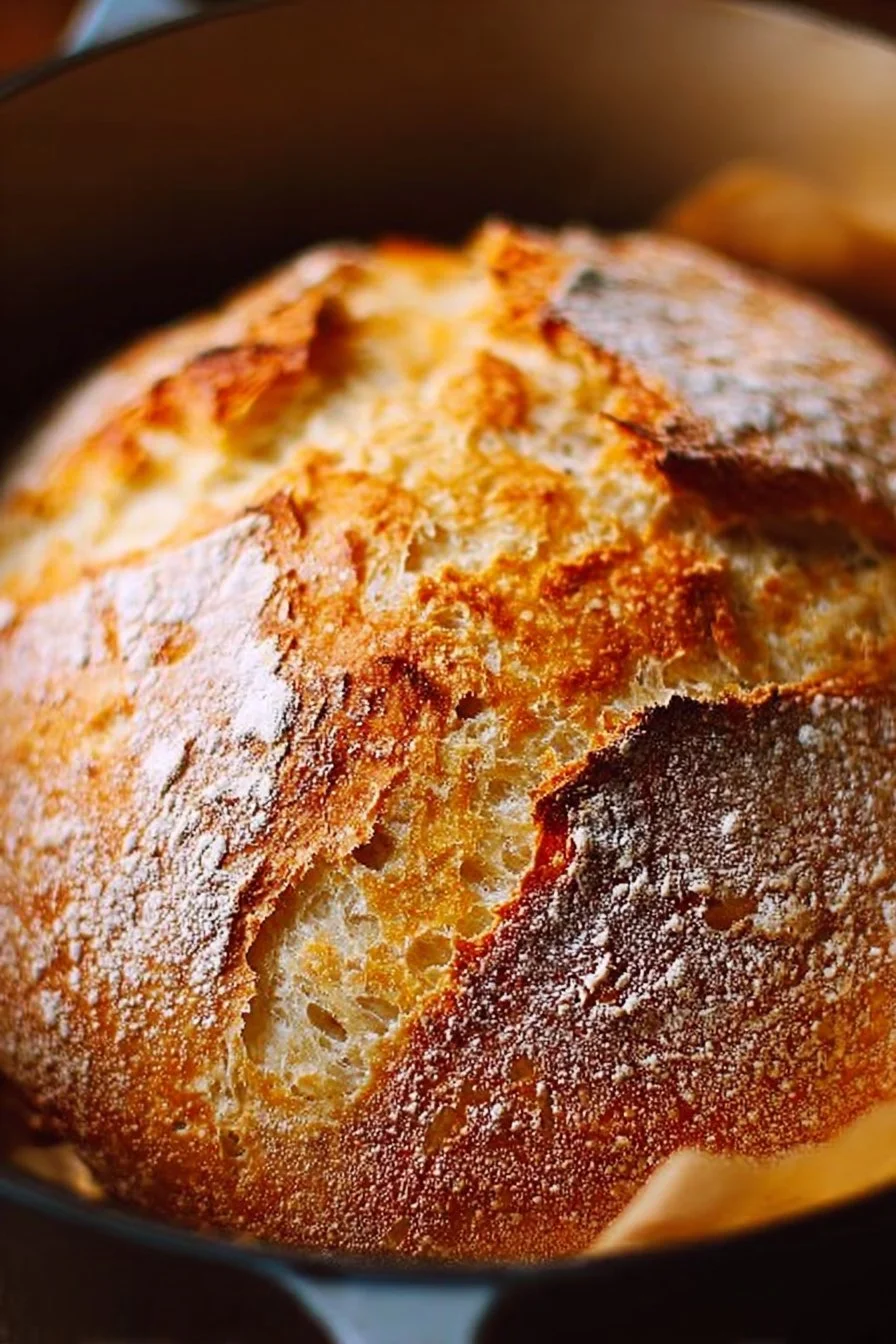
I still remember the first loaf I pulled from a screaming-hot Dutch oven — the crust shattered like a baked river crust and the crumb was soft and airy. This Dutch Oven No Knead Crusty Bread is exactly that kind of loaf: simple, satisfying, and foolproof once you know the small details. It’s the kind of bread you make for a weeknight dinner, a weekend brunch, or whenever you want fresh bakery-level bread without hours of hands-on work. For a practical walkthrough and technique notes, see this Dutch oven no-knead bread guide that complements the steps below.
Why you’ll love this dish
No-knead bread feels almost magical — just mix, wait, and bake — yet it produces a crusty, rustic loaf that competes with artisan bakeries. It’s great for:
- Busy cooks who want high-reward baking with minimal active time.
- Budget-friendly meals: pantry staples make a beautiful centerpiece.
- Entertaining: impressive, aromatic, and pairs well with soups, stews, and cheeses.
“Effort: low. Result: bakery-level crust and complex flavor — every guest asked for the recipe.” — a satisfied home baker
This method uses high oven heat and a lidded pot to trap steam during the first part of baking, producing the characteristic crisp, blistered crust and an open crumb.
How this recipe comes together
This recipe follows a simple, forgiving flow: hydrate the flour, let time do the work, then bake inside a preheated Dutch oven so the loaf steams and springs dramatically.
- Mix warm water, yeast, and salt until dissolved.
- Add flour all at once and stir to a shaggy, sticky dough.
- Bulk rise 2–3 hours at room temperature until doubled.
- Shape on floured parchment and transfer to a preheated Dutch oven.
- Bake covered (steamy environment) then finish uncovered to brown and crisp the crust.
Expect about 2.5–3 hours total including rising, and roughly 45–50 minutes of baking time.
What you’ll need
- 1 1/2 cups warm water (about 100°F / 38°C) — too hot will kill the yeast; too cool slows it.
- 1 packet active dry yeast (2.25 teaspoons)
- 1 ½ teaspoons fine grain salt
- 3 1/4 cups all-purpose flour (measure by weight if possible; about 400–420 g)
- A large mixing bowl, wooden spoon or spatula, floured parchment paper, and a 4–6 quart Dutch oven with lid.
If you prefer a slightly heartier loaf, substitute up to 1 cup of whole-wheat flour (reduce water by a tablespoon or two). For more techniques on working with a hot pot, check these Dutch oven bread tips.
Step-by-step instructions
- In a large bowl, pour 1 1/2 cups warm water (about 100°F). Sprinkle in 1 packet active dry yeast and 1 1/2 teaspoons salt. Stir until dissolved.
- Add 3 1/4 cups all-purpose flour to the bowl all at once. Use a wooden spoon to mix until a shaggy, sticky dough forms. Don’t worry about lumps — this dough is meant to be sticky.
- Cover the bowl with a kitchen towel and set in a warm, draft-free place. Let it rise for about 2–3 hours or until doubled in volume. The dough should look puffy and have air bubbles on the surface.
- Thirty minutes before baking, position a rack in the middle of the oven and preheat to 450°F (230°C) with the Dutch oven (lid on) inside. Preheating the pot is crucial for oven spring and crust.
- Lightly flour a sheet of parchment paper. Turn the dough out onto the parchment and, using floured hands, shape it into a round by folding the edges toward the center. Tuck the seam underneath.
- Carefully remove the hot Dutch oven from the oven. Lift the parchment with the shaped dough and lower it into the pot. Cover with the lid and return to the oven.
- Bake covered for 35–40 minutes. Remove the lid and bake an additional 5–10 minutes until the crust is deep golden-brown and crisp. Rotate once for even browning if your oven has hot spots.
- Transfer the loaf (parchment and all) to a cooling rack and let cool for at least 10 minutes before slicing. Cooling helps the crumb set; slicing too soon yields a gummy interior.
Best ways to enjoy it
Tear into this bread warm with salted butter for breakfast, or slice and serve alongside a bowl of tomato soup for a cozy dinner. It also shines as:
- Sandwich bread for rustic grilled cheese.
- A base for bruschetta or crostini topped with olive tapenade and ricotta.
- Accompaniment for charcuterie and soft cheeses (brie, camembert).
For presentation, slice on a diagonal and arrange pieces in a bread basket, or serve a halved loaf with olive oil and flaky sea salt for dipping.
Storage and reheating tips
- Room temperature: Keep the loaf in a paper bag or wrapped loosely in a clean kitchen towel for up to 2 days. Plastic bags will soften the crust.
- Freezing: Cool completely, wrap tightly in plastic wrap and aluminum foil, and freeze up to 3 months. Thaw at room temperature.
- Reheating: For fresh-crispy crust, heat the oven to 350°F (175°C) and warm a whole loaf (covered loosely with foil) for 10–15 minutes. For slices from frozen, toast or warm in the oven for 8–12 minutes. Avoid refrigeration — it accelerates staling.
Pro chef tips
- Water temperature: Aim for about 100°F (38°C). If you don’t have a thermometer, water should feel warm but not hot to the wrist.
- Flour weight: Weighing flour prevents dense loaves; spoon flour into the cup and level if you don’t have a scale.
- No knead doesn’t mean no technique: Gentle folding during the first hour can strengthen the dough and improve structure.
- Parchment paper is your friend: It makes transferring to the hot pot safe and easy.
- Crust color: If your loaf isn’t dark enough, remove the lid earlier or finish under the broiler for 30 seconds — watch closely to prevent burning.
- Internal doneness: A fully baked loaf should read 200–210°F (93–99°C) in the center.
Creative twists
- Herb and garlic: Mix 1–2 teaspoons dried herbs (rosemary, thyme) and 1 minced garlic clove into the dough for fragrant flavor.
- Seeded top: Brush shaped dough with water and press sesame, poppy, or sunflower seeds onto the surface.
- Cheesy pull-apart: Fold 1 cup grated cheddar or parmesan into the dough for a savory twist.
- Overnight cold fermentation: After mixing, cover and refrigerate the dough for 12–18 hours for deeper flavor; bring to room temperature before shaping.
- Gluten-free option: Use a tested gluten-free all-purpose blend and add xanthan gum per the blend instructions; baking times and hydration may need adjustment.
Common questions
Q: Can I use instant yeast instead of active dry yeast?
A: Yes. Use about 2 teaspoons instant yeast and mix it directly with the flour. You may see a slightly quicker rise.
Q: What if my dough is too sticky to handle?
A: That’s normal. Use well-floured hands and a floured bench or parchment to shape. Avoid adding too much extra flour — the dough should remain tacky to yield an open crumb.
Q: How do I know the bread is fully baked?
A: The loaf should be deeply golden and sound hollow when tapped on the bottom. An internal temperature of 200–210°F (93–99°C) is a reliable indicator.
Q: Can I slow-rise the dough in the refrigerator overnight?
A: Absolutely. Refrigerate for up to 18 hours after mixing, then remove to warm for 30–60 minutes before shaping and baking. Cold fermentation enhances flavor.
Q: Is a Dutch oven necessary?
A: A heavy, lidded pot works best because it traps steam for crust development. A large cast-iron pot or other oven-safe lidded cookware will do in a pinch.
If you’d like, I can also turn this into a printable recipe card or give exact metric conversions and a shopping list. Which would you prefer?
Print
Dutch Oven No Knead Crusty Bread
- Total Time: 180 minutes
- Yield: 1 loaf (about 8 servings)
- Diet: Vegetarian
Description
Simple and satisfying no-knead bread with a crusty exterior and soft, airy crumb, perfect for any meal.
Ingredients
- 1 1/2 cups warm water (about 100°F / 38°C)
- 1 packet active dry yeast (2.25 teaspoons)
- 1 ½ teaspoons fine grain salt
- 3 1/4 cups all-purpose flour (about 400–420 g)
Instructions
- In a large bowl, mix warm water, yeast, and salt until dissolved.
- Add flour all at once and stir to form a shaggy, sticky dough.
- Cover the bowl and let it rise for 2–3 hours until doubled in volume.
- Preheat the oven to 450°F (230°C) with the Dutch oven inside for 30 minutes.
- Once risen, turn the dough out onto floured parchment, shape it, and transfer to the hot Dutch oven.
- Bake covered for 35–40 minutes, then uncover and bake for an additional 5–10 minutes until golden brown.
- Let cool on a rack for at least 10 minutes before slicing.
Notes
For a heartier loaf, substitute up to 1 cup whole-wheat flour and adjust water. Store in a paper bag for 2 days or freeze for up to 3 months.
- Prep Time: 15 minutes
- Cook Time: 45 minutes
- Category: Bread
- Method: Baking
- Cuisine: American