
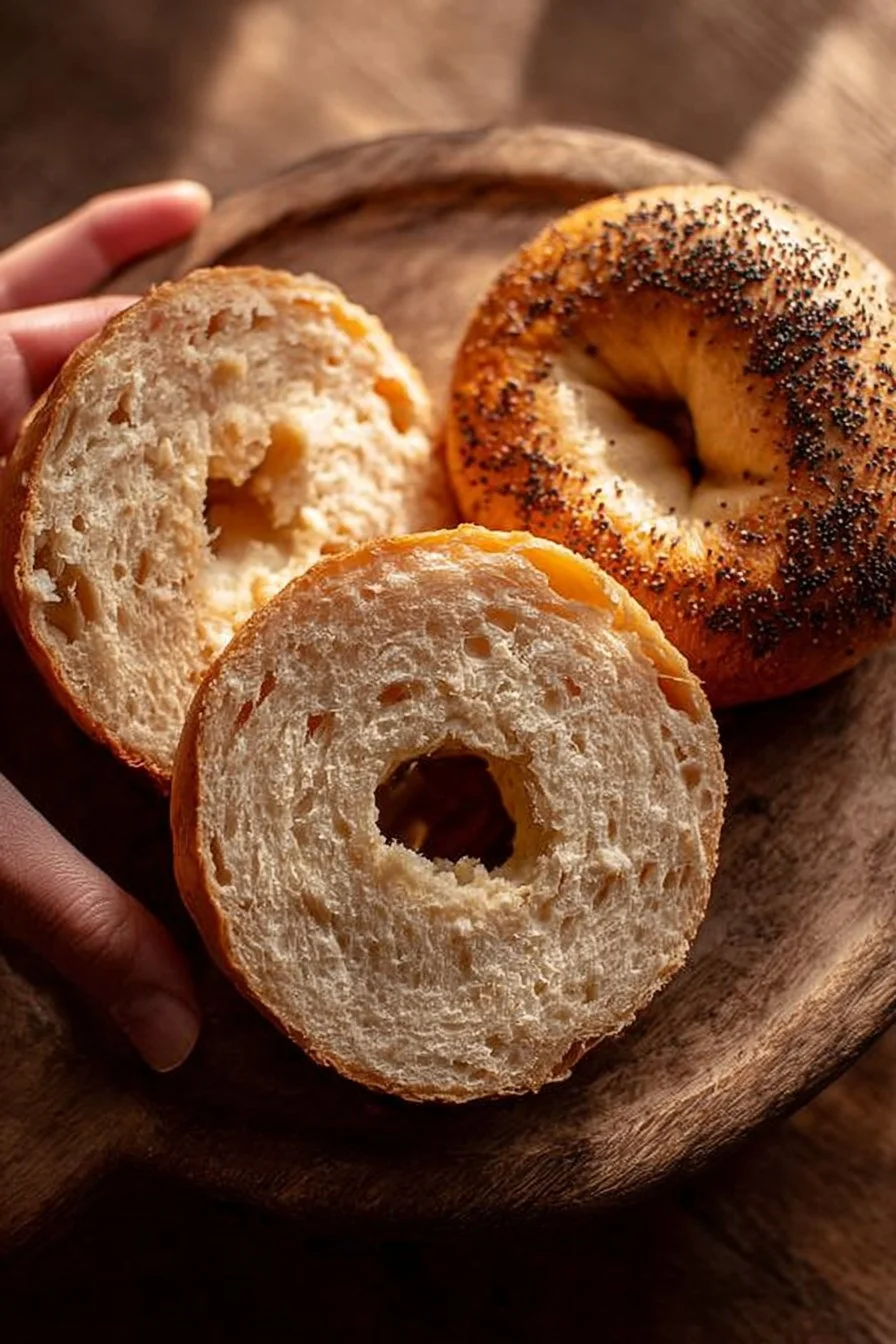
Warm, chewy bagels with a tender crumb and a boost of protein—these sourdough cottage cheese bagels are the kind of bake that turns a lazy morning into a bakery-level brunch. They combine tangy discard starter with creamy cottage cheese for extra moisture and protein (about 13.4 g per bagel), and the dough is forgiving enough for home bakers who want great texture without hours of fuss. If you love hearty comfort foods as much as a perfectly toasted bagel, try this alongside a rich casserole like the cheeseburger French fry casserole for a weekend spread.
Why you’ll love this dish
This recipe hits several sweet spots: it uses sourdough starter discard so you’re reducing waste, cottage cheese adds protein and tenderness, and the method blends a short warm proof with a long cold retard so you get flavor development without an all-day bake. It’s excellent for weekend brunches, meal-prep breakfasts, or sandwich-making for lunches.
“Chewy crust, soft interior, and a tangy cottage-cheese lift—these bagels are addictive and make every morning feel special.”
What makes it special:
- High-protein breakfast option (13.4 g protein per bagel).
- Uses starter discard—eco-friendly and flavorful.
- Make-ahead friendly: shape and refrigerate for up to 12 hours for convenience.
- Versatile: everything, plain, sesame, poppy, or sweet cinnamon raisin versions work great.
How this recipe comes together (13.4 g Protein)
This is the short roadmap so you know what to expect:
- Mix starter discard, instant yeast, flour, salt, cottage cheese, and water into a shaggy dough.
- Warm first proof to develop gluten (about 1 hour).
- Stretch-and-fold and a short second warm rise to build strength (30 minutes).
- Divide into ten 160 g pieces, pre-shape, then final bench rest (30 minutes), shape into bagels, and cold-proof in the refrigerator for 12 hours.
- Boil briefly in water with baking soda + honey (1 minute per bagel), egg-white brush, top, and bake at 450°F for ~20 minutes.
This method balances speed and depth of flavor: short warm fermentation gives initial lift and gluten structure, long cold retard in the fridge deepens sourdough flavor and makes scheduling easy.
What you’ll need
- 720 g bread flour (about 6 cups) — higher-protein flour gives better chew.
- 120 g active sourdough starter discard (about 1 cup).
- 1/2 teaspoon active or instant yeast* (boosts rise and consistency).
- 200 g water (about 3/4 cup), adjust slightly for humidity.
- 455 g cottage cheese (about 2 cups) — whole-milk cottage cheese gives the best texture.
- 10 g sea salt (about 2 teaspoons).
- 1 tablespoon baking soda (for the water bath).
- 1 tablespoon honey or sugar (for the water bath).
- 1 egg white (for brushing) and desired toppings (sesame, everything spice, poppy seeds, coarse salt).
Notes and substitutions:
- If your cottage cheese is very wet, you can drain it briefly in a fine sieve; some moisture improves crumb, but excess will change dough hydration.
- You can omit the extra 1/2 tsp yeast if you prefer a purely sourdough rise—expect longer room-temp proofing.
- Egg white wash gives brilliant shine; substitute milk for a softer sheen or skip if avoiding eggs.
Step-by-step instructions
- In a large bowl combine starter discard, instant yeast, flour, salt, cottage cheese, and water. Mix until a uniform, shaggy dough forms.
- Cover the bowl with a plate or damp towel and proof in a warm spot for 1 hour. (Warm = ~75–80°F / 24–27°C.)
- Stretch and fold: wet your hands, lift the dough up out of the bowl and fold it over onto itself several times until it smooths and shows tension. Form into a smooth ball by scooping around the sides. Cover and proof 30 minutes in a warm spot.
- Lightly flour your work surface. Turn the dough out and gently stretch it into a rectangle a little larger than a sheet of paper—be gentle so you don’t deflate it.
- Divide into 10 equal pieces (about 160 g each). Line a baking sheet with parchment and lightly flour the paper. Pre-shape each piece into a small round and place them on the tray.
- Lightly flour tops, cover with a towel, and let rise about 30 minutes until noticeably puffed.
- Shape into bagels: flour your hands, put a dough ball in your right hand, push your thumb through the center, and widen to form a 2–3 inch hole. Slide the ring through your palm to smooth and tighten the outside ring. Place shaped bagels back on the floured parchment. Rest 15 minutes—don’t overproof.
- Refrigerate the tray of shaped bagels for a final proof of 12 hours (overnight). This cold retard develops flavor and firms the dough for poaching.
- Preheat oven to 450°F. Prepare small bowls of toppings. Bring a large pot of water to a boil and add the baking soda and honey (or sugar).
- Using a slotted spoon, poach each bagel for about 1 minute total, flipping at 30 seconds. Remove to parchment.
- Brush each boiled bagel with egg white, sprinkle toppings, and arrange on the baking sheet. Repeat until all bagels are ready.
- Bake ~20 minutes at 450°F, rotating the pan halfway (at ~10 minutes) until golden brown.
- Cool on a rack at least 30 minutes before slicing—this helps set the crumb.
*Timing tips: If your starter is weak or your kitchen is cool, extend warm proofs or add up to 1 hour total to the warm proof stages; the cold retard will still give flavor.
Best ways to enjoy it
- Classic: toasted with butter and a smear of cream cheese and scallions.
- Sandwich: deli turkey, avocado, and a fried egg for a protein-packed lunch.
- Sweet option: toast and top with ricotta, honey, and fresh berries.
- Brunch platter: serve halves with smoked salmon, capers, and lemon wedges. If you’re putting together a bold weekend menu, these bagels also stand up well on a brunch buffet with heartier dishes like beef and cheese chimichangas.
Presentation ideas:
- Slice in half and toast on a cast-iron skillet for extra crunch.
- For sandwich catering, pre-slice and store halves in single layers to keep them from absorbing moisture.
Storage and reheating tips
- Room temperature: keep in an airtight bag for up to 2 days.
- Refrigerator: can extend life to 4–5 days but may firm the crumb—toast before eating.
- Freezing: wrap individually in plastic wrap and place in a freezer bag for up to 3 months. Thaw at room temperature or toast from frozen.
- Reheating: best in a toaster oven or 350°F oven for 5–10 minutes; toaster works well for sliced halves.
Food safety: once sliced and topped with perishable fillings (eggs, dairy, meats), consume within 2 hours at room temperature or refrigerate immediately.
Pro chef tips
- Weigh everything for consistent results; the dough is designed by weight.
- Use bread flour for chew; all-purpose will work but yields a softer bagel.
- Wet hands for stretch-and-folds to prevent sticking and tearing.
- Cold retard (12 hours) is essential for flavor and handling—don’t skip it unless you need same-day bagels.
- Boil time controls crust: 60 seconds makes a classic chewy bagel; longer gives a thicker crust.
- If toppings slide off after boiling, blot excess water with a paper towel before egg wash.
Creative twists
- Everything Bagel: top with sesame, poppy, garlic, onion, and coarse salt.
- Cinnamon-raisin: fold 1 cup raisins and 2 tsp cinnamon into the dough; use a sugar bath instead of honey so it caramelizes slightly.
- Whole-grain: replace up to 25% of bread flour with whole wheat and add 1–2% extra water.
- Vegan: swap cottage cheese with blended silken tofu + 1–2 tbsp olive oil, and use a cornstarch wash instead of egg white (texture will vary).
- Herb & Cheddar: fold in 1 cup grated cheddar and 2 tbsp minced chives.
Common questions
Q: Can I skip the instant yeast and rely only on starter discard?
A: Yes. You can omit the 1/2 tsp instant yeast, but expect longer warm proofs—possibly several hours—and a more pronounced sourdough tang. The yeast speeds and stabilizes the rise for consistent results.
Q: Why boil bagels before baking?
A: Boiling gelatinizes the surface starches, which sets the crust and creates the characteristic shiny, chewy exterior. Adding baking soda raises the pH for better browning and flavor. Honey or sugar in the bath helps with color and a touch of sweetness.
Q: Can I use ricotta instead of cottage cheese?
A: Ricotta is drier and will change hydration and texture. If you substitute, use whole-milk ricotta and check dough consistency—add a tablespoon or two of water if the dough seems dry. Cottage cheese gives more protein and a slightly tangy, moist crumb.
Q: How long will these bagels keep their chew?
A: Freshness peaks on day one. Refrigeration prolongs shelf life but often reduces chew due to starch retrogradation. Toasting revives texture.
Q: Are these bagels safe to eat with cream cheese and smoked salmon stored on them?
A: If prepared and served immediately, yes. Once topped, refrigerate leftovers and consume within 24–48 hours. Any perishable toppings left at room temperature for over 2 hours should be discarded.
Q: I don’t have a warm proofing spot—what to do?
A: Use your oven with the light on (no heat otherwise) or place the bowl near a warm appliance. Alternatively, use a proofing box if you have one.
If you want more savory crowd-pleasers to round out a brunch or dinner table, try exploring different mains and sides to pair with these bagels.
Print
Sourdough Cottage Cheese Bagels
- Total Time: 750 minutes
- Yield: 10 servings
- Diet: Vegetarian
Description
Warm, chewy bagels with a tender crumb, made with sourdough starter discard and creamy cottage cheese for added protein and moisture.
Ingredients
- 720 g bread flour (about 6 cups)
- 120 g active sourdough starter discard (about 1 cup)
- 1/2 teaspoon active or instant yeast
- 200 g water (about 3/4 cup)
- 455 g cottage cheese (about 2 cups)
- 10 g sea salt (about 2 teaspoons)
- 1 tablespoon baking soda (for the water bath)
- 1 tablespoon honey or sugar (for the water bath)
- 1 egg white (for brushing)
- Desired toppings (sesame, everything spice, poppy seeds, coarse salt)
Instructions
- In a large bowl combine starter discard, instant yeast, flour, salt, cottage cheese, and water. Mix until a uniform, shaggy dough forms.
- Cover the bowl with a plate or damp towel and proof in a warm spot for 1 hour.
- Stretch and fold the dough, then let it proof for 30 minutes in a warm spot.
- Turn the dough out, stretch it into a rectangle, and divide into 10 equal pieces (about 160 g each).
- Pre-shape each piece into a small round and place on a lined baking sheet.
- Let the bagels rise for about 30 minutes until noticeably puffed.
- Shape the bagels and let them rest for 15 minutes.
- Refrigerate the bagels for a final proof of 12 hours (overnight).
- Preheat oven to 450°F. Boil water with baking soda and honey, then poach each bagel for about 1 minute.
- Brush boiled bagels with egg white, sprinkle toppings, and bake for about 20 minutes until golden brown.
- Cool on a rack for at least 30 minutes before slicing.
Notes
If cottage cheese is very wet, drain it briefly before mixing. Egg wash gives shine; skip or substitute milk if avoiding eggs.
- Prep Time: 90 minutes
- Cook Time: 20 minutes
- Category: Breakfast
- Method: Baking
- Cuisine: American