
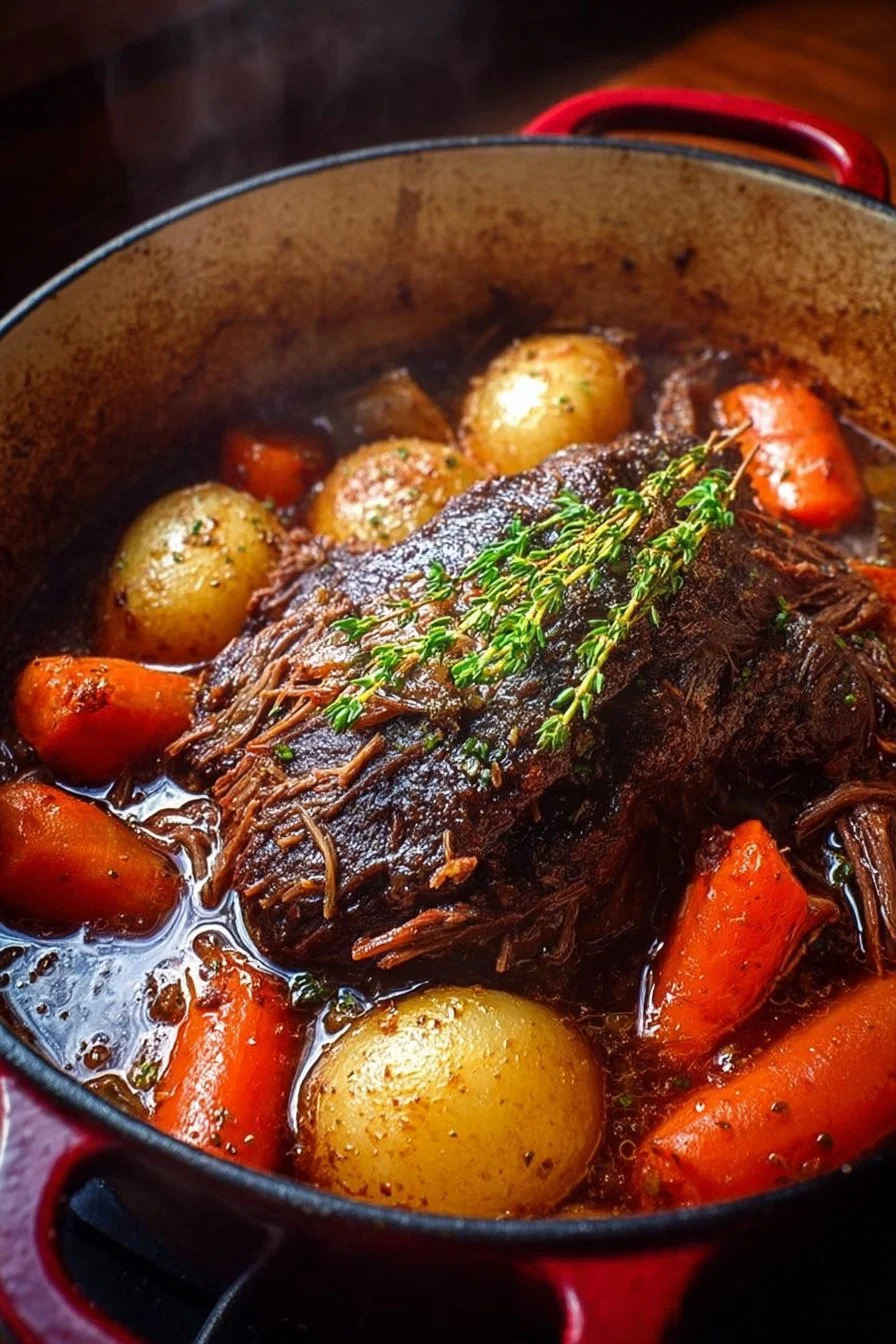
A slow-braised Dutch oven pot roast is the kind of dinner that smells like comfort and tastes like a family memory. This recipe turns a 3–4 pound beef chuck into fork-tender slices surrounded by caramelized vegetables and a savory pan jus — perfect for cozy weeknights, Sunday suppers, or when you want something low-effort but impressive. For a tested, classic version with similar technique and timing, see this classic Dutch oven pot roast.
Why you’ll love this dish
This pot roast is satisfying in every way: economical beef that becomes melt-in-your-mouth soft, one-pot cleanup, and built-in vegetables that soak up the juices. It’s a dinner that feeds a crowd without a long list of ingredients or complicated steps.
“I made this for a family dinner — it filled the house with the best aroma and the meat just fell apart. Kids asked for seconds.” — a reader-style review
Perfect occasions: chilly evenings, meal-prep for the week, and holiday sides when you need something reliable. It’s also forgiving: low, slow cooking hides minor seasoning mistakes and turns inexpensive chuck roast into something restaurant-worthy.
How this recipe comes together
Before you start, here’s the quick process: season and sear the roast to lock in flavor, sauté the vegetables briefly, add liquid and aromatics, then braise low and slow in a covered Dutch oven until the beef is fork-tender. Expect about 3–4 hours in the oven at 275°F (135°C). This gentle temperature gives even cooking and a silky jus.
What you’ll need
Ingredients (for about 4–6 servings):
- 3–4 pounds beef chuck roast, trimmed of excess fat
- Salt and freshly ground black pepper
- 2 tablespoons olive oil (or neutral oil)
- 1 large onion, chopped
- 3 carrots, peeled and sliced on the bias
- 3 medium potatoes, diced into bite-sized pieces (Yukon Gold or russet)
- 4 garlic cloves, minced
- 2 cups beef broth (low-sodium if preferred)
- 1 tablespoon Worcestershire sauce
- 2–3 sprigs fresh thyme
- 2–3 sprigs fresh rosemary
- 1 bay leaf
Substitution notes: use bone-in chuck for richer flavor; swap potatoes for parsnips or turnips for a different root-vegetable profile. If you only have dried herbs, use 1 teaspoon dried thyme and 1 teaspoon dried rosemary instead of fresh.
Step-by-step instructions
- Preheat the oven to 275°F (135°C). Position a rack in the center.
- Pat the chuck roast dry with paper towels and season generously with salt and pepper on all sides — this gives a better sear.
- Heat a large Dutch oven over medium-high heat and add the olive oil until shimmering.
- Sear the roast for 3–4 minutes per side, including the edges, until a deep brown crust forms. Browning builds rich flavor; don’t rush it.
- Remove the roast and set it on a plate. Pour off any excess fat if there’s a lot, but leave the fond (browned bits) in the pot.
- Add the chopped onion, carrots, and potatoes to the same pot. Sauté 4–5 minutes until vegetables begin to soften and pick up the fond.
- Stir in the minced garlic and cook for about 30–60 seconds until fragrant.
- Pour in the beef broth and Worcestershire sauce, scraping the bottom of the pot to loosen browned bits.
- Nestle the roast back into the pot, spoon some liquid over the top, and tuck in the thyme, rosemary, and bay leaf.
- Cover the Dutch oven with a tight-fitting lid and transfer to the oven.
- Bake for 3–4 hours, or until the meat is fork-tender and pulls apart easily. Check once at about 2.5 hours to ensure there’s still enough liquid — add a splash of hot broth if it’s running low.
- Remove the pot from the oven and let the roast rest for 10 minutes before slicing against the grain. Skim the surface fat from the jus if desired.
Best ways to enjoy it
Serve thick slices of roast with the braised carrots and potatoes spooned around and a ladle of pan jus on top. For a heartier meal, pile the sliced roast on mashed potatoes or buttery egg noodles and drizzle with reduced braising liquid. Add a simple green like steamed broccoli or a crisp salad to brighten the plate. For a weeknight shortcut, shred leftover roast and toss with barbecue sauce for sandwiches.
Also useful: this version pairs beautifully with a full-bodied red wine or a dark-brewed ale; for non-alcoholic pairings, try a robust iced tea or sparkling apple cider. If you want a slightly different take on timing and vegetables, check out this alternate Dutch oven pot roast approach for inspiration.
Storage and reheating tips
- Refrigeration: Cool leftovers to room temperature (no more than 2 hours), transfer to an airtight container, and store in the refrigerator for up to 4 days.
- Freezing: Place cooled roast and vegetables in a freezer-safe container or heavy-duty zip-top bag, removing excess air. Freeze up to 3 months. Thaw overnight in the refrigerator before reheating.
- Reheating: Warm gently to preserve texture. Reheat slices in a covered pan over low heat with a splash of broth, or reheat in a 325°F (160°C) oven, covered, until heated through. Avoid microwave reheating at full power for large portions — it can dry out meat.
- Food safety: Always reheat leftovers to an internal temperature of 165°F (74°C).
Pro chef tips
- Dry the roast thoroughly before searing — moisture prevents a good crust.
- Season in layers: salt the roast before searing and taste the braising liquid near the end to adjust seasoning.
- Don’t overfill the pot with liquid; you want vegetables and meat partly submerged so you get both moist meat and a concentrated sauce.
- If the sauce is thin at the end, remove the roast and simmer the liquid uncovered to reduce, or thicken with a beurre manié (equal parts butter and flour kneaded together) whisked in a little at a time.
- Use a meat thermometer if unsure: the roast is done when it’s easily shreddable/fork-tender, but for sliceable results aim for about 195–205°F for pull-apart texture.
Creative twists
- Mediterranean: swap rosemary and thyme for oregano and add a splash of red wine and a can of diced tomatoes for acidity.
- Slow-cooker version: brown the roast, then transfer everything to a slow cooker and cook on low 8–9 hours.
- Gluten-free: ensure Worcestershire sauce is labeled gluten-free or use tamari plus a splash of balsamic vinegar.
- Herby gremolata: top slices with chopped parsley, lemon zest, and minced garlic for brightness.
FAQ
Q: Can I use a different cut of beef?
A: Yes. Chuck is ideal because of its marbling and connective tissue that break down with slow cooking. Brisket and bottom round also work but have slightly different textures.
Q: Can I brown the roast the night before?
A: Absolutely. Sear the roast, cool, and refrigerate overnight in the pot (uncovered to keep the crust). Add vegetables and braise the next day. Bring to room temperature before putting the Dutch oven into a hot oven.
Q: How do I make a thicker gravy from the braising liquid?
A: Remove the roast and vegetables, simmer the liquid to concentrate flavor, then whisk in a slurry of 1 tablespoon cornstarch mixed with 2 tablespoons cold water over medium heat until thickened. Alternatively, stir in a beurre manié (butter + flour) for a richer finish.
Q: Is 275°F too low — will it take longer?
A: 275°F is intentionally low to maximize tenderness with minimal drying. Expect 3–4 hours; ovens vary, so check for fork-tender doneness rather than strict timing.
Q: Can I skip the potatoes and add them later?
A: Yes. Potatoes can be added for the last 60–90 minutes if you want them less broken down. Root vegetables like carrots hold up better to longer braising.
If you have a specific dietary swap or timing question, tell me what equipment and ingredients you have and I’ll tailor the method.
Print
Slow-Braised Dutch Oven Pot Roast
- Total Time: 195 minutes
- Yield: 4–6 servings
- Diet: None
Description
A comforting and economical slow-braised pot roast that becomes fork-tender, surrounded by caramelized vegetables and savory sauce.
Ingredients
- 3–4 pounds beef chuck roast, trimmed of excess fat
- Salt and freshly ground black pepper
- 2 tablespoons olive oil (or neutral oil)
- 1 large onion, chopped
- 3 carrots, peeled and sliced on the bias
- 3 medium potatoes, diced into bite-sized pieces (Yukon Gold or russet)
- 4 garlic cloves, minced
- 2 cups beef broth (low-sodium if preferred)
- 1 tablespoon Worcestershire sauce
- 2–3 sprigs fresh thyme
- 2–3 sprigs fresh rosemary
- 1 bay leaf
Instructions
- Preheat the oven to 275°F (135°C). Position a rack in the center.
- Pat the chuck roast dry with paper towels and season generously with salt and pepper on all sides.
- Heat a large Dutch oven over medium-high heat and add the olive oil until shimmering.
- Sear the roast for 3–4 minutes per side, including the edges, until a deep brown crust forms.
- Remove the roast and set it on a plate. Pour off any excess fat but leave the fond in the pot.
- Add the chopped onion, carrots, and potatoes to the pot. Sauté for 4–5 minutes until vegetables begin to soften.
- Stir in the minced garlic and cook for about 30–60 seconds until fragrant.
- Pour in the beef broth and Worcestershire sauce, scraping the bottom of the pot to loosen browned bits.
- Nestle the roast back into the pot, spoon some liquid over it, and tuck in the thyme, rosemary, and bay leaf.
- Cover the Dutch oven with a tight-fitting lid and transfer to the oven.
- Bake for 3–4 hours, or until the meat is fork-tender and pulls apart easily.
- Remove the pot from the oven and let the roast rest for 10 minutes before slicing against the grain.
- Skim the surface fat from the jus if desired.
Notes
Serve with mashed potatoes or egg noodles; pairs well with full-bodied red wine or iced tea.
- Prep Time: 15 minutes
- Cook Time: 180 minutes
- Category: Main Course
- Method: Braising
- Cuisine: American