
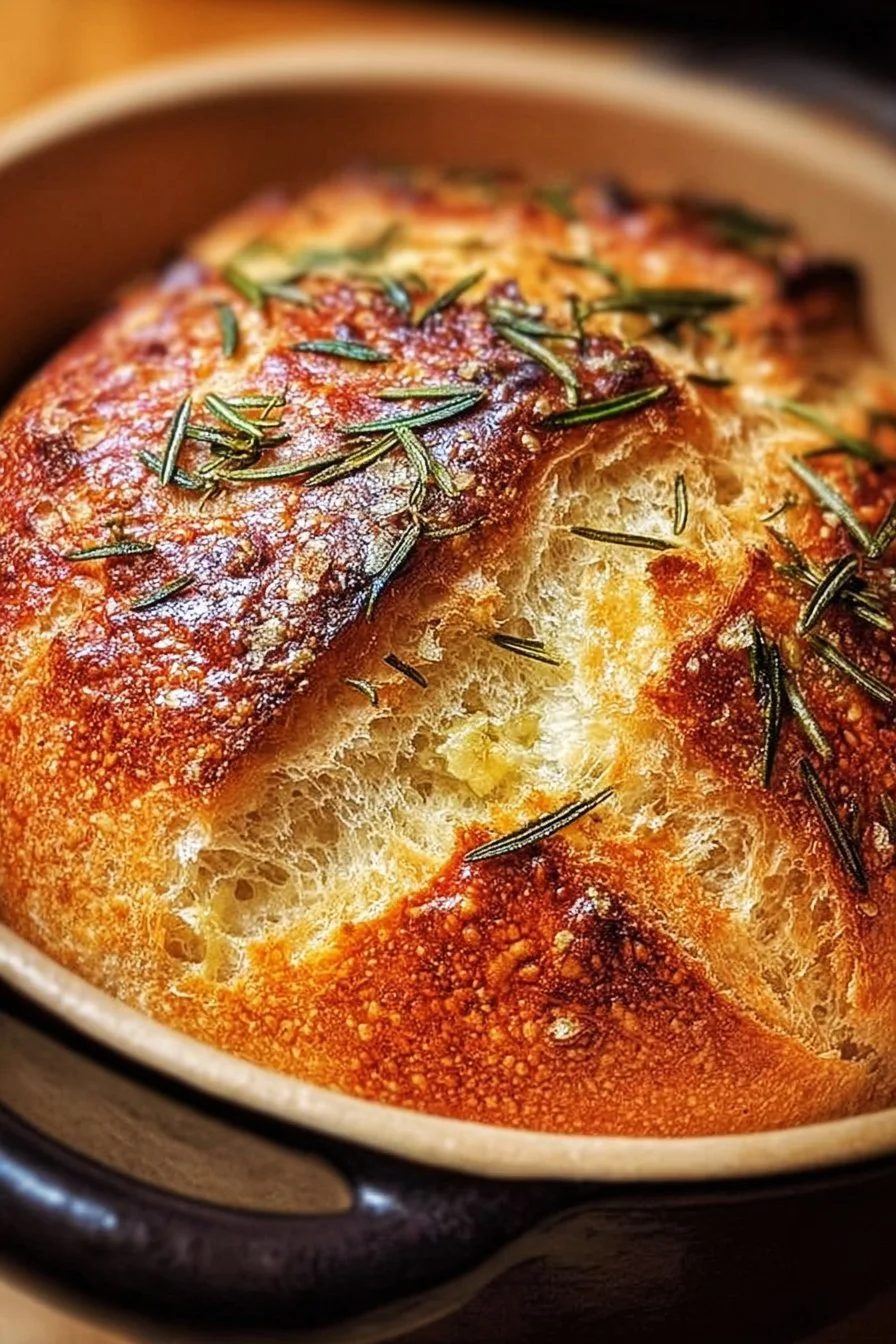
A warm, crackling loaf studded with garlic and rosemary feels like a small celebration any night of the week. This Dutch oven garlic rosemary bread uses one bowl, a hot pot, and minimal hands-on time to deliver deep flavor, a blistered crust, and a soft, aromatic crumb — perfect for dipping in olive oil or serving alongside soup. If you want a close variation that leans more herb-forward, try this take on garlic herb Dutch oven bread for another reliable oven-to-table recipe.
Why you’ll love this dish
This loaf hits the sweet spot between fuss-free and bakery-worthy. It requires no kneading, just a simple stir and two short rises, yet the high-heat Dutch oven gives a professional crust and oven spring. It’s budget-friendly, forgiving for bakers new to yeast, and flexible enough for weeknight dinners, brunch spreads, or a holiday bread basket.
"We pulled this out for a casual Sunday dinner—crusty, garlicky, and vanished in minutes." — a quick reader review that sums up why this loaf gets requested again and again.
The cooking process explained
You’ll mix a sticky, shaggy dough in one bowl, let it rise once for about an hour, then shape it gently on floured parchment. While it rests a second short time, the Dutch oven preheats to 450°F so the loaf can get an immediate blast of heat. Baking 30 minutes covered traps steam and forms the crust; removing the lid for the final 10 minutes deepens color and crunch.
What you’ll need
- 3 cups all-purpose flour (about 360 g)
- 1 1/2 tsp sugar
- 2 tsps salt
- 2 1/2 tsp quick (instant/rapid) yeast — one standard package
- 1 1/3 cups warm water (about 105–115°F / 40–46°C)
- 2 large rosemary sprigs, diced (about 1–2 tbsp fresh)
- 3 garlic cloves, finely diced or grated
Notes and substitutions:
- Quick (instant) yeast is used here so no proofing is required. If using active dry yeast, see FAQ below.
- For a nuttier flavor, substitute up to 1 cup whole-wheat flour (expect a slightly denser crumb).
- Use 1 tbsp dried rosemary if fresh isn’t available. Add garlic powder only for flavor, but fresh garlic gives the best bite.
Step-by-step instructions
- In a large mixing bowl, combine the flour, sugar, salt, and quick yeast. Stir to distribute evenly.
- Add the warm water, diced rosemary, and garlic. Mix with a sturdy spoon or spatula until a sticky, shaggy dough forms. It should be wet and uneven — that’s correct.
- Cover the bowl with a clean towel and let it rise in a warm place for 60 minutes. The dough should puff and show bubbles.
- After rising, lay a sheet of parchment on the counter and dust it lightly with flour. Turn the dough out onto the parchment.
- Shape by folding the edges toward the center a few times to build surface tension. Flip the dough so the smooth side is up. Cover with a towel and let rest for 20 minutes while the Dutch oven preheats.
- Place your Dutch oven (without the lid) in the oven and preheat to 450°F. Heat the pot at least 20–30 minutes so it’s smoking hot. Use a heavy oven mitt when handling.
- When the pot is ready, use the parchment to transfer the dough into the hot Dutch oven. Score the top once or twice with a sharp knife or lame to control where the bread opens.
- Cover and bake for 30 minutes. Then remove the lid and bake an additional 10 minutes until the crust is deep golden-brown.
- Remove the bread on the parchment and cool at least 30 minutes before slicing. Cooling lets the crumb set and prevents a gummy interior.
Best ways to enjoy it
Serve slices warm with good olive oil and flaky salt, alongside a bowl of tomato soup, or as the base for a rustic bruschetta. This loaf also shines with herbed butter or a smear of ricotta and lemon zest. Thick slices toasted and topped with roasted mushrooms make an easy dinner.
Storage and reheating tips
- Room temperature: Keep the cooled loaf in a paper bag or wrapped in a clean kitchen towel for up to 2 days. Plastic will soften the crust.
- Freezing: Slice the bread and freeze in an airtight bag for up to 3 months. Toast or reheat frozen slices directly from the freezer.
- Reheating: Refresh the crust by reheating whole or slices at 350°F for 8–12 minutes (wrap whole loaf in foil for the first 5 minutes if worried about over-browning). For single slices, a skillet or toaster works well.
Helpful cooking tips
- Temperature matters: Warm water should feel warm but not hot to the touch. If it’s too hot you risk killing the yeast.
- Resist over-flouring: The dough will be sticky. Adding too much flour at shaping makes a tight, heavy loaf. Use just enough to handle it.
- Parchment is your friend: It makes transferring the bread in and out of the hot pot much safer.
- Scoring controls expansion: A single long slash or a cross lets the loaf rise where you want it and looks artisan.
- If you want a deeper primer on technique and equipment, check this resource about working with a Dutch oven bread setup for more tips.
- Safety: Always use heavy oven mitts and place the pot on heatproof trivets — cast iron holds heat a long time.
Creative twists
- Garlic-parmesan: Stir 1/2 cup grated Parmesan into the dough and sprinkle more on top before baking.
- Olive-rosemary: Fold in 1/2 cup chopped kalamata olives.
- Seeded crust: Brush the loaf with olive oil after baking and press sesame or poppy seeds into the hot crust.
- Cheesy-herb: Add 3/4 cup shredded sharp cheddar and 1 tbsp chopped fresh thyme.
- Vegan/dairy-free: The recipe is already dairy-free; use vegan cheese or omit any cheese additions.
Common questions
Q: Can I use active dry yeast instead of quick yeast?
A: Yes. If using active dry yeast, proof it first: dissolve 2 1/2 tsp active dry yeast and 1 1/2 tsp sugar into the warm water and let sit 5–10 minutes until foamy. Then mix with the dry ingredients. The rest of the method stays the same.
Q: How can I tell when the bread is fully baked?
A: The crust should be deeply golden-brown and the loaf should sound hollow when tapped on the bottom. For precision, an internal temperature of about 200–205°F indicates doneness.
Q: What if I don’t have a Dutch oven?
A: Use a heavy covered casserole dish or place a rimmed baking sheet on the rack below the loaf and pour a cup of hot water into it to create steam. Results will be slightly different but still tasty.
Q: How long does the dough need to rise?
A: The recipe calls for a 60-minute first rise and a 20-minute second rest. Times vary with room temperature; if your kitchen is cool, allow extra time until the dough noticeably puffs.
Q: Can I add more garlic or herbs?
A: Absolutely. Increase garlic and rosemary to taste, but be mindful that too much fresh garlic can become intense when baked; consider roasting garlic first for a sweeter, milder profile.
Garlic Rosemary Bread
- Total Time: 55 minutes
- Yield: 1 loaf
- Diet: Vegetarian
Description
A warm, crusty loaf of garlic and rosemary bread baked in a Dutch oven, perfect for dipping in olive oil or serving alongside soup.
Ingredients
- 3 cups all-purpose flour
- 1 1/2 tsp sugar
- 2 tsps salt
- 2 1/2 tsp quick (instant/rapid) yeast
- 1 1/3 cups warm water
- 2 large rosemary sprigs, diced
- 3 garlic cloves, finely diced or grated
Instructions
- In a large mixing bowl, combine the flour, sugar, salt, and quick yeast. Stir to distribute evenly.
- Add the warm water, diced rosemary, and garlic. Mix until a sticky dough forms.
- Cover the bowl and let it rise in a warm place for 60 minutes.
- Prepare parchment on the counter with flour. Turn the dough onto the parchment.
- Shape the dough by folding the edges toward the center. Rest for 20 minutes while preheating the Dutch oven.
- Preheat the Dutch oven to 450°F.
- Transfer the dough to the hot Dutch oven. Score the top with a knife.
- Bake covered for 30 minutes, then uncover and bake for an additional 10 minutes until golden brown.
- Cool the bread for at least 30 minutes before slicing.
Notes
For a nuttier flavor, substitute up to 1 cup of whole-wheat flour. Use 1 tbsp dried rosemary if fresh is not available.
- Prep Time: 15 minutes
- Cook Time: 40 minutes
- Category: Bread
- Method: Baking
- Cuisine: Italian