
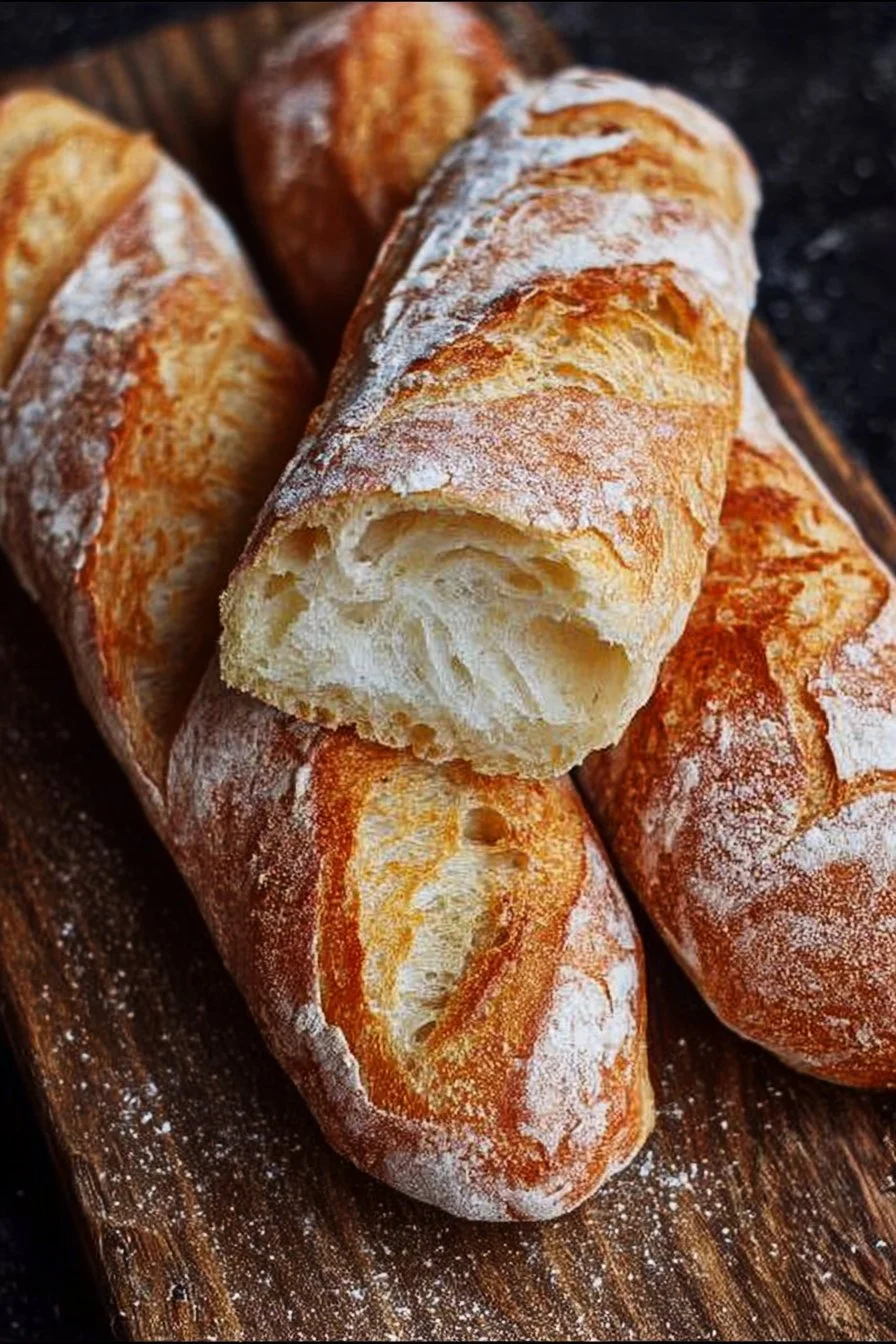
Start with a warm, crackling crust and a soft, open crumb — this easy baguette recipe gets you bakery-style loaves with everyday pantry ingredients and a bit of elbow grease. It’s perfect for weeknight sandwiches, weekend toasts, or whenever you want fresh bread without a long, fiddly process. If you like simple, crowd-pleasing sides with big flavor, also try this amazing loaded fries recipe for an easy complete meal.
Why you’ll love this dish
This version of the classic baguette trims unnecessary steps while keeping the essential techniques: a short autolyse (optional rest), a straightforward knead, single rise, and a hot bake with steam for that signature crust. It’s approachable for home bakers who want impressive results without a multi-day schedule.
"A crisp crust on the outside, airy crumb inside—better than any store loaf I’ve found."
Reasons to try it:
- Uses common ingredients: flour, water, salt, and instant yeast.
- Works in a single day — no overnight preferments required.
- Scales easily to 2 or 3 loaves depending on appetite.
- Flexible: add seeds or swap a bit of whole wheat for a rustic twist.
Step-by-step overview
You’ll mix dry ingredients, add warm water (and optional oil/sweetener), rest briefly, knead until elastic, let the dough double, divide and shape, then proof and bake with steam at high heat. The method emphasizes technique over complicated timings, so your flour, water, and oven take center stage.
What you’ll need
- 4 cups (about 480 g) all-purpose flour
- 1½ cups (360 g) warm water, 100–110°F (38–43°C)
- 2 teaspoons fine salt
- 1 packet instant yeast (≈2¼ teaspoons)
- 1 tablespoon olive oil (optional — yields a slightly softer crust)
- 1–2 teaspoons sugar or honey (optional — helps yeast and browning)
- Sesame or poppy seeds (optional, for topping)
Ingredient notes:
- If using active dry yeast, dissolve it in the warm water first and wait 5–10 minutes until foamy before mixing.
- For a heartier loaf, replace up to 25% of the flour with whole-wheat flour, but expect a denser crumb.
- Measuring by weight (grams) gives the most consistent results; the hydration here is relatively high (≈75%), which yields an open crumb if handled gently.
Step-by-step instructions
- In a large bowl, whisk the flour, salt, and instant yeast until evenly distributed. Keep the ingredients dry and well-mixed.
- Add the warm water (and olive oil and sugar/honey if using). Stir with a wooden spoon or spatula until a shaggy dough forms.
- Optionally cover the bowl and let the dough rest 15–20 minutes (autolyse). This helps hydrate the flour and makes kneading easier.
- Turn the dough onto a lightly floured surface. Knead for 6–8 minutes until smooth and elastic. The dough should feel tacky but not sticky. Use a bench scraper to help if needed.
- Place the dough in a lightly oiled bowl, cover, and let rise 1–1¼ hours at room temperature, until doubled in size. Warmer kitchens speed this up; cooler kitchens will take longer.
- Gently deflate the dough and divide into 2 or 3 pieces depending on desired baguette size. Pre-shape into loose cylinders and rest 10 minutes to relax the gluten.
- Shape each piece into a baguette: flatten into a rectangle, fold the long edges to the center, seal by rolling under your palms to form a tight cylinder. Taper the ends slightly.
- Place shaped loaves seam-side down on a parchment-lined baking sheet or a floured couche. Cover and proof 30–45 minutes until puffy but not overinflated.
- Preheat oven to 475°F (246°C). If you have a baking stone or steel, heat it in the oven for a crisper bottom. Place a shallow pan on the oven floor for steam.
- Score the loaves with a sharp lame or razor at a shallow 30–45° angle (three to five slashes per loaf). Just before sliding the loaves in, pour 1–2 cups of very hot water into the pan below to create steam, and quickly close the door.
- Bake 20–25 minutes until deep golden brown. Internal temperature should reach about 200–205°F (93–96°C) for fully baked bread.
- Cool on a wire rack at least 30 minutes before slicing to allow the crumb to set; cutting too soon yields a gummy interior.
How to plate and pair
Baguettes are endlessly versatile. Slice on the bias and serve with:
- Classic butter and flaky sea salt for a simple breakfast.
- A platter of cheeses, charcuterie, and olives for a casual party.
- Use for sandwiches — paninis, crostini, or hearty subs. If you’re planning a fun, family-friendly spread, you might also like these Big Mac wraps recipe as a playful sandwich alternative.
For presentation, warm slices briefly under the broiler or on a skillet to revive crust crispness.
Storage and reheating tips
- At room temperature: keep whole or partially used loaves in a paper bag or wrapped in a clean kitchen towel for up to 2 days. Paper allows the crust to breathe and stay crisp.
- Avoid the fridge — refrigeration accelerates staling.
- Freezing: slice and freeze in an airtight bag for up to 3 months. Toast slices directly from frozen or thaw at room temperature. Reheat whole loaves in a 350°F (175°C) oven for 10–15 minutes after sprinkling lightly with water and wrapping in foil to refresh the crumb.
- Reheat single slices in a toaster or briefly in a hot skillet to restore crunch.
Helpful cooking tips
- Hydration: This dough is fairly wet (around 75% hydration). If your kitchen is very humid or your flour is heavy, reduce water by 1–2 tablespoons until the dough is manageable.
- Kneading: If you prefer, use a stand mixer with a dough hook on low for 4–5 minutes until elastic instead of hand-kneading.
- Steam alternatives: If pouring hot water isn’t your style, place a metal tray on the oven floor and preheat it; then toss a few ice cubes onto the tray just after loading the loaves. Or spray the oven walls quickly with water using a mister.
- Scoring: A quick, confident slash makes a clean ear. A dull knife drags; use a razor blade or very sharp knife.
- Oven spring: Bake on a very hot surface (stone or steel) for better bottom crust and oven spring. Preheat at least 30 minutes.
Creative twists
- Seeded baguette: Brush loaves with water or egg white and roll in sesame, poppy, or mixed seeds before baking.
- Garlic-herb: Fold minced roasted garlic and chopped herbs into the dough during the first mix for a savory loaf.
- Cheesy: Add 1–1½ cups shredded cheese (cheddar, gruyère) folded into the dough in the last stages of kneading. Expect more browning.
- Whole-grain: Replace up to 25% of the flour with whole-wheat or spelt; increase water slightly to keep hydration.
- Olive or sundried tomato: Fold chopped olives or finely chopped sundried tomatoes into the dough for a Mediterranean spin.
Common questions
Q: Can I use active dry yeast instead of instant?
A: Yes. Dissolve active dry yeast in the warm water with the sugar/honey and wait 5–10 minutes until foamy before mixing with the flour. Instant yeast can be mixed directly with dry ingredients.
Q: How do I get a very crispy crust?
A: High initial oven heat (475°F/246°C), steam during the first 10 minutes, and baking on a hot stone or steel give the best crust. Let the bread cool uncovered on a rack so steam can escape.
Q: Why is my crumb dense or gummy?
A: Common causes are underbaking, cutting too soon, or insufficient kneading/proofing. Check internal temperature (200–205°F/93–96°C). Let cool fully before slicing.
Q: Can I make this dough ahead and refrigerate overnight?
A: Yes. After the first short rise, punch down, shape loosely, and refrigerate for up to 24 hours. Bring to room temperature and finish proofing before baking. An overnight cold retard develops flavor.
Q: How long does the dough take in cold kitchens?
A: Expect longer rises. If your kitchen is below ~70°F (21°C), allow 1.5–2 hours for the bulk rise and longer for the proof. Alternatively, create a warm proofing spot by using an oven with the light on or placing the bowl over a warm (not hot) water bath.
If you have other questions—about timings, equipment, or adapting this to a sourdough starter—ask and I’ll walk you through it.
Print
Easy Baguette
- Total Time: 45 minutes
- Yield: 2-3 baguettes
- Diet: Vegetarian
Description
A simple baguette recipe that yields bakery-style loaves with a warm crust and soft crumb, perfect for sandwiches or toasts.
Ingredients
- 4 cups (about 480 g) all-purpose flour
- 1½ cups (360 g) warm water (100–110°F / 38–43°C)
- 2 teaspoons fine salt
- 1 packet instant yeast (≈2¼ teaspoons)
- 1 tablespoon olive oil (optional)
- 1–2 teaspoons sugar or honey (optional)
- Sesame or poppy seeds (optional, for topping)
Instructions
- In a large bowl, whisk the flour, salt, and instant yeast until evenly distributed.
- Add the warm water (and olive oil and sugar/honey if using), and stir until a shaggy dough forms.
- Optionally cover the bowl and let the dough rest for 15–20 minutes (autolyse).
- Turn the dough onto a lightly floured surface and knead for 6–8 minutes until smooth and elastic.
- Place the dough in a lightly oiled bowl, cover, and let rise for 1–1¼ hours until doubled in size.
- Gently deflate the dough, divide it into 2 or 3 pieces, and pre-shape into loose cylinders.
- Shape into baguettes, place seam-side down on a baking sheet, and proof for 30–45 minutes.
- Preheat oven to 475°F (246°C) and prepare for steam by placing a shallow pan on the oven floor.
- Score the loaves and pour hot water into the pan to create steam.
- Bake for 20–25 minutes until golden brown and internal temperature reaches 200–205°F (93–96°C).
- Cool on a wire rack for at least 30 minutes before slicing.
Notes
For added flavor, consider incorporating minced garlic or herbs into the dough, or try using whole wheat flour for a heartier texture.
- Prep Time: 15 minutes
- Cook Time: 25 minutes
- Category: Baking
- Method: Baking
- Cuisine: French