
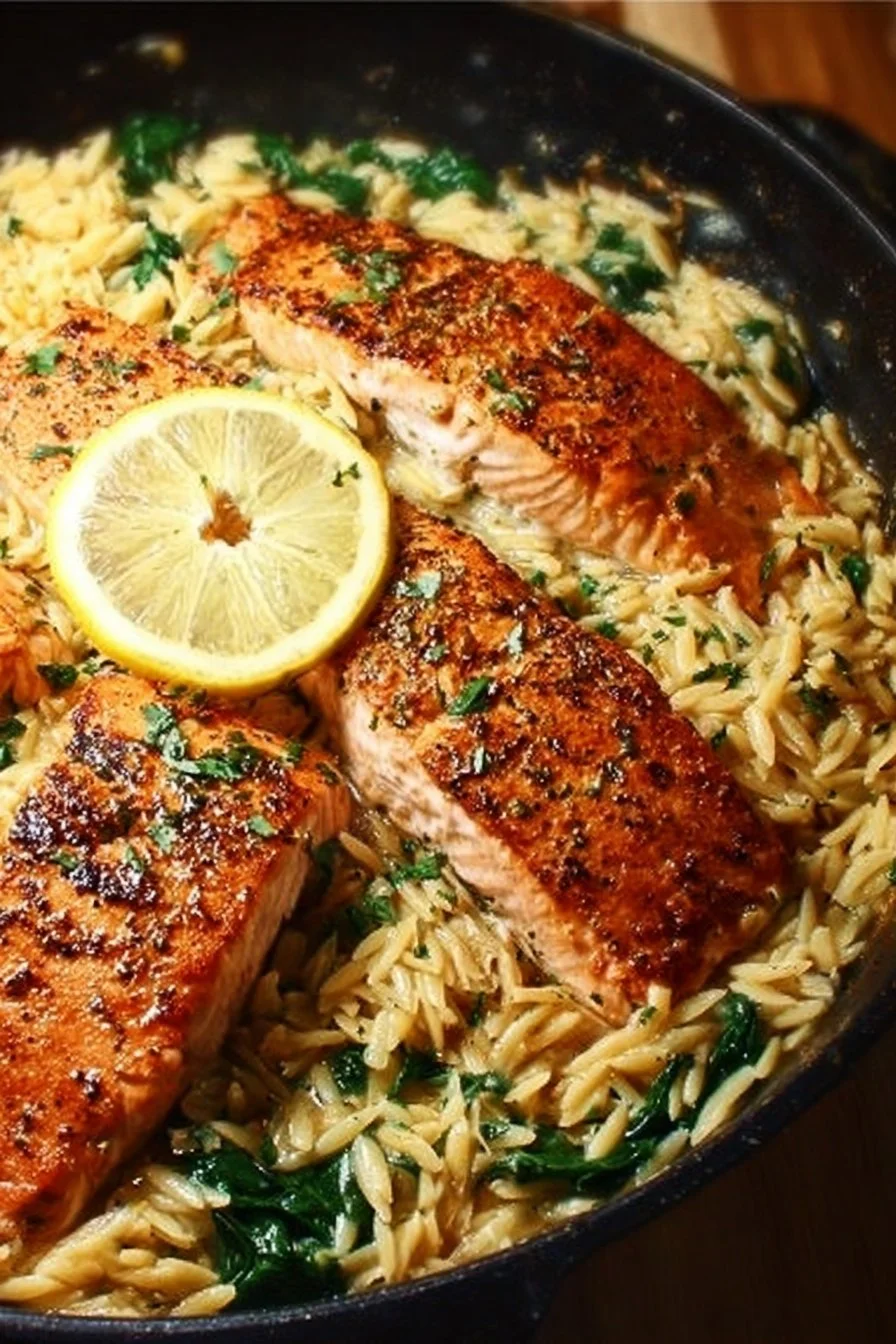
There’s something irresistible about a single-pan dinner that looks like you fussed but actually came together in under 30 minutes. This lemony orzo with seared salmon gives you browned, flavorful fillets and a creamy, bright bed of pasta and spinach — all without juggling multiple pots. If you enjoy fast skillet pasta dinners, you might also appreciate a hearty twist from another favorite: quick skillet pasta recipes that bring big flavor with minimal cleanup.
Why you’ll love this dish
This recipe combines a few things weeknight cooks prize: speed, one-skillet cleanup, and a balanced plate (protein, carbs, greens) in every forkful. The lemon and Parmesan brighten the orzo while a gentle sear develops a savory crust on the salmon. Serve it for busy weeknights, date-night dinners at home, or when friends drop by and you want something impressive without a lot of hands-on time.
“The lemon cuts the richness and the orzo soaks up all that pan flavor — it feels restaurant-level but is totally reachable on a Tuesday.”
Reasons this works:
- One skillet = fewer dishes and better flavor from fond deglazing.
- Toasting the orzo adds a nutty depth often missing in quick pasta dishes.
- The method keeps salmon tender: sear first, finish tucked into the orzo so it warms through without overcooking.
How this recipe comes together
A quick overview so you know the rhythm before you start:
- Season and sear the salmon to develop color. Remove and rest.
- Build the flavor base by softening onion and garlic; add thyme.
- Toast the orzo briefly in the pan to awaken oils and add nuttiness.
- Add broth and simmer until orzo is nearly tender.
- Fold in spinach, lemon, and Parmesan for creaminess and brightness.
- Nestle salmon back in the pan to finish and heat through. Serve immediately.
What you’ll need
- 4 skinless salmon fillets (about 6 oz each)
- 1 tsp salt, divided
- 1 tsp coarsely ground black pepper, divided
- 1 tsp sweet paprika
- 1 tsp garlic powder
- 1 tbsp olive oil
- 1 tsp unsalted butter
- 1 yellow onion, finely chopped
- 3 garlic cloves, minced
- 1 cup dry orzo pasta
- 1 tsp dried thyme
- 3 cups low-sodium chicken broth (or vegetable broth for pescatarians)
- 5 oz baby spinach
- Juice from ½ lemon (about 1–2 tbsp)
- ½ cup grated Parmesan
- Freshly ground black pepper and chili flakes, for serving (optional)
Notes and simple swaps:
- Use vegetable broth to keep this vegetarian-friendly except for the salmon (pescatarian).
- Swap Pecorino Romano for Parmesan for a saltier bite.
- If you prefer whole-grain pasta, use a short whole-wheat orzo—but expect longer cooking time and slightly different texture.
Step-by-step instructions
- Prep: Grate the Parmesan, finely chop the onion, mince the garlic, and pat the salmon dry. In a small bowl mix the paprika, garlic powder, and ½ tsp each salt and pepper. Rub this seasoning evenly over both sides of the fillets.
- Sear salmon: Heat the olive oil and butter in a large nonstick skillet over medium-high heat until shimmering. Add the salmon and sear 3–4 minutes per side, until nicely browned. The interior will still be a touch underdone — that’s fine. Remove the fillets and set aside.
- Build aromatics: Reduce heat to medium. Add the onion and garlic to the same skillet and cook until softened, about 2 minutes, scraping up any browned bits. Stir in the dried thyme and the remaining ½ tsp salt and ½ tsp pepper.
- Toast orzo: Add the orzo to the pan and stir, toasting for about 1 minute until it smells nutty. This step deepens flavor and helps prevent a mushy finish.
- Cook orzo: Pour in the broth and bring to a boil. Lower to a medium-low simmer and cook uncovered, stirring occasionally, for about 8 minutes, or until the orzo is al dente and has absorbed most of the liquid. If the orzo needs a touch more time, add 2–4 tbsp extra broth or water.
- Finish greens and cheese: Stir in the spinach until wilted. Add lemon juice and grated Parmesan, stirring to combine. Taste and adjust seasoning with salt and pepper.
- Return salmon: Nestle the seared salmon back into the skillet and simmer gently for 2–3 minutes until warmed through and the salmon reaches your preferred doneness. (For safety the USDA recommends an internal temperature of 145°F; many cooks pull salmon around 125–130°F for medium-rare texture.)
- Serve: Spoon the orzo onto plates, top with a fillet, and finish with freshly ground black pepper and chili flakes if you like heat.
How to plate and pair
Best ways to enjoy this:
- Spoon a generous bed of lemon orzo onto warm plates and place the salmon slightly off-center so the pan sauce can mingle with the pasta. Finish with a little extra grated Parmesan and a lemon wedge on the side.
- Pair with a crisp, acidic white wine such as Sauvignon Blanc or a dry rosé that complements the lemon and cuts the richness.
- For larger gatherings, serve family-style straight from the skillet so guests can help themselves.
If you’re feeding a mixed crowd and want an extra protein option, pair the dish alongside a simple roast or a faster grill favorite such as air-fryer boneless chicken thighs for people who prefer poultry — the flavors remain complementary without competing.
Storage and reheating tips
- Refrigeration: Cool to room temperature and store in an airtight container within 2 hours. Consume within 3 days for best quality.
- Freezing: Cooked salmon and orzo can be frozen, but texture will change — freeze in airtight containers up to 2 months. For best results freeze orzo separately from salmon if possible.
- Reheating: Gently reheat in a skillet over low heat with a splash of broth or water to loosen the sauce. If using a microwave, heat in short 30-second bursts to avoid drying out the salmon, and stir the orzo between intervals. Avoid reheating to very high temperatures; medium heat preserves texture.
Helpful cooking tips
- Pat the salmon dry before seasoning — dryness equals better browning.
- Use a heavy-bottomed nonstick or stainless steel skillet with a tight-fitting lid for even cooking.
- Don’t skip toasting the orzo; that 60 seconds adds a rounded nuttiness.
- If your broth reduces too fast, add hot water a tablespoon at a time — simmering uncovered concentrates flavor but can leave the orzo undercooked if too little liquid remains.
- For flaky but moist salmon, remove the skillet from heat when the internal thermometer reads about 5°F below your target and let residual heat finish it.
Creative twists
- Mediterranean: Add chopped sun-dried tomatoes, kalamata olives, and a handful of fresh basil instead of thyme. Swap Parmesan for crumbled feta.
- Pesto lemon orzo: Stir 2 tbsp of basil pesto into the finished orzo for a herb-forward boost.
- Spicy harissa: Mix 1 tsp harissa into the broth for a North African kick; finish with toasted pine nuts.
- Low-carb: Replace orzo with cauliflower rice; reduce broth to 1½ cups since cauliflower doesn’t absorb liquid like pasta. Cook just until the cauliflower is tender.
Common questions
Q: Can I make this ahead and reheat?
A: Yes. Store refrigerated for up to 3 days. Reheat gently in a skillet with a splash of broth to revive the sauce. Freezing is possible but expect some texture changes to the salmon.
Q: What if I only have skin-on salmon?
A: No problem — leave the skin on and sear skin-side down first for 4–5 minutes until crisp, then flip to finish. You can remove the skin before serving if you prefer.
Q: Can I use a different pasta?
A: Short pastas like orecchiette, small shells, or ditalini work well. Adjust cooking time to package directions and the liquid volume; you may need a little more broth.
Q: How do I know when the salmon is done?
A: A reliable method is an instant-read thermometer: 145°F is USDA-recommended for safety. For a moister, slightly less cooked texture, many chefs remove the salmon at 125–130°F and let carryover heat finish it.
Q: Is this recipe kid-friendly?
A: Absolutely — reduce or omit chili flakes and use extra Parmesan for kids who like a creamier flavor. You can flake the salmon and mix it into the orzo for picky eaters.
If you’d like a printable checklist or a scaled-up version for 8 servings, tell me how many people you’re feeding and I’ll convert the quantities and timings.
Print
Lemony Orzo with Seared Salmon
- Total Time: 30 minutes
- Yield: 4 servings
- Diet: Pescatarian
Description
A quick and flavorful one-pan dinner featuring seared salmon atop lemony orzo and spinach, perfect for busy weeknights.
Ingredients
- 4 skinless salmon fillets (about 6 oz each)
- 1 tsp salt, divided
- 1 tsp coarsely ground black pepper, divided
- 1 tsp sweet paprika
- 1 tsp garlic powder
- 1 tbsp olive oil
- 1 tsp unsalted butter
- 1 yellow onion, finely chopped
- 3 garlic cloves, minced
- 1 cup dry orzo pasta
- 1 tsp dried thyme
- 3 cups low-sodium chicken broth (or vegetable broth for pescatarians)
- 5 oz baby spinach
- Juice from ½ lemon (about 1–2 tbsp)
- ½ cup grated Parmesan
- Freshly ground black pepper and chili flakes, for serving (optional)
Instructions
- Prep: Grate the Parmesan, finely chop the onion, mince the garlic, and pat the salmon dry. Mix paprika, garlic powder, and ½ tsp each salt and pepper; rub this seasoning on the salmon fillets.
- Sear salmon: Heat olive oil and butter in a large skillet over medium-high heat. Add salmon, sear for 3–4 minutes per side until browned, the interior will be underdone. Remove and set aside.
- Build aromatics: Reduce heat to medium, add onion and garlic, cook until softened (about 2 mins), scrape up browned bits, stir in thyme and remaining ½ tsp each salt and pepper.
- Toast orzo: Add orzo to the pan, toast for 1 minute until nutty.
- Cook orzo: Add broth, bring to a boil. Simmer uncovered for about 8 minutes until orzo is al dente and most liquid is absorbed. Add extra broth if needed.
- Finish greens and cheese: Stir in spinach until wilted. Add lemon juice and Parmesan, adjust seasoning.
- Return salmon: Place salmon back in the skillet, simmer for 2–3 minutes until warmed through.
- Serve: Spoon orzo onto plates, top with salmon, and finish with pepper and optional chili flakes.
Notes
Use vegetable broth for a pescatarian-friendly version. Pecorino Romano can replace Parmesan for a saltier flavor. For whole-grain options, expect longer cooking time.
- Prep Time: 10 minutes
- Cook Time: 20 minutes
- Category: Main Course
- Method: Skillet
- Cuisine: Mediterranean