
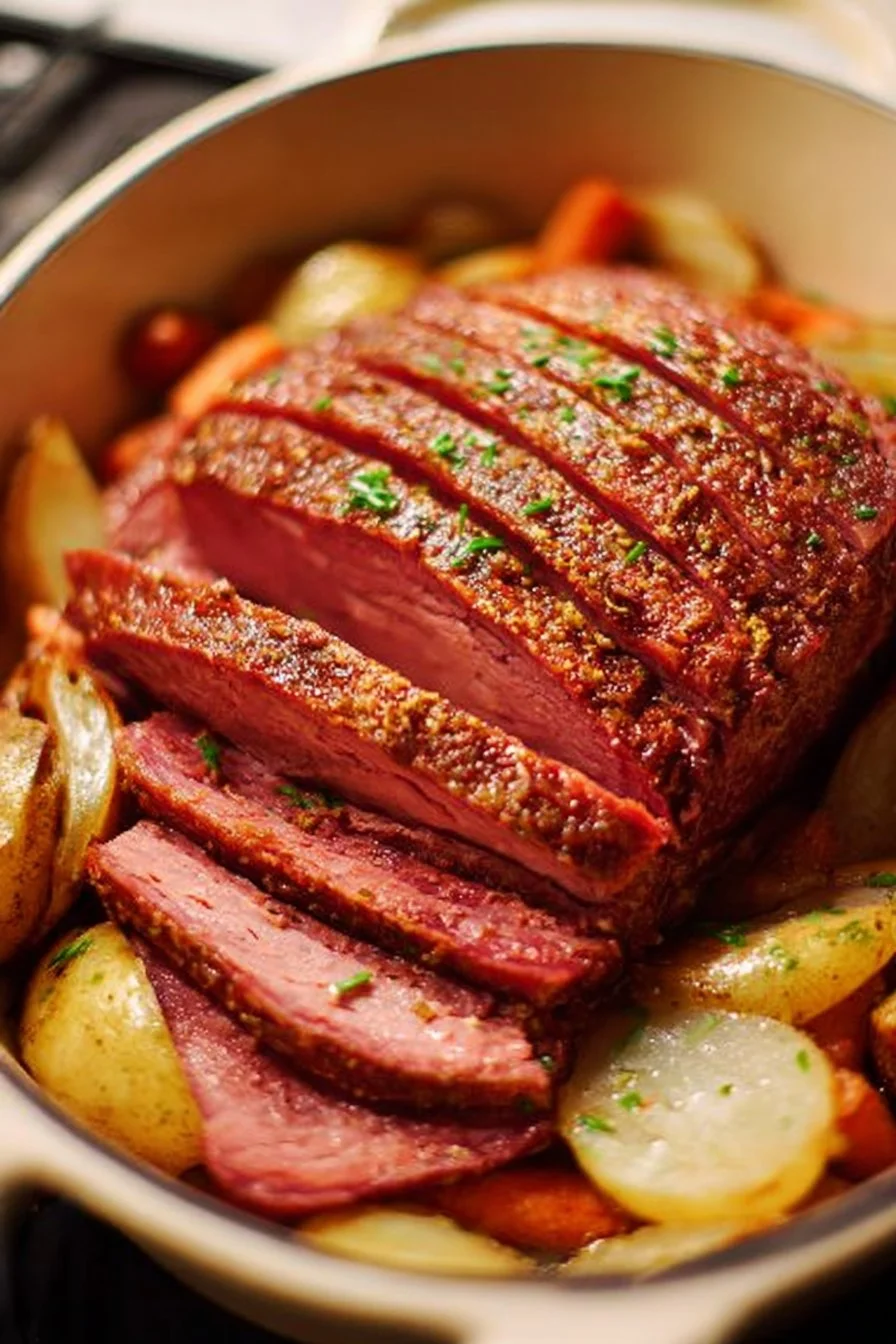
This Dutch oven corned beef is the kind of slow-simmered, homey meal that turns a busy weeknight into something celebratory. A 4–5 lb corned beef brisket braised gently with pickling spices, garlic, onions, carrots and potatoes yields fork-tender slices and vegetables that soak up the cooking liquid. It’s perfect for St. Patrick’s Day, a weekend family dinner, or any time you want a one‑pot comfort meal that scales up easily. If you want a crunchy, showy side for guests, try the air fryer blooming onions as a fun contrast to the classic braise.
Why you’ll love this dish
This recipe delivers that classic corned beef flavor with minimal fuss. A heavy Dutch oven gives even heat and enough room to nestle the brisket and vegetables so every bite is juicy and aromatic. It’s forgiving: low, long simmering turns a brisket that might otherwise be tough into tender slices that still hold together.
“Brisket that literally falls apart with a fork, and the veggies taste like they were cooked in beef stock all day — a total crowd-pleaser.”
Make it for family dinners, potlucks, or holiday spreads. It’s economical (large brisket goes a long way), kid-friendly, and ideal if you like making a big batch to enjoy leftovers the next day.
How this recipe comes together
A quick overview so you know what to expect:
- Place the brisket fat-side-up in a large Dutch oven. This lets the fat baste the meat while it cooks.
- Add whole spices (peppercorns, mustard seeds), garlic, and the seasoning packet if provided.
- Tuck aromatics and vegetables around the meat and cover with water or broth.
- Bring to a gentle boil, then reduce to a low simmer and cover.
- Cook 3–4 hours until the brisket is fork-tender; add cabbage in the final 25–30 minutes if using.
- Rest, slice against the grain, and serve with strained cooking liquid or reduced pan juices.
This method emphasizes low-and-slow moist heat, which produces tender brisket without a pressure cooker.
What you’ll need
- 4–5 lb corned beef brisket (with seasoning packet, if included)
- 1 tbsp black peppercorns
- 1 tbsp mustard seeds
- 1 bay leaf
- 4–5 garlic cloves, minced
- 1 onion, quartered
- 4–5 carrots, cut into large chunks
- 4–5 potatoes, quartered (Yukon gold or red potatoes hold shape well)
- Water or broth — enough to cover the brisket by about 1 inch
- Optional: cabbage wedges (add in last 25–30 minutes)
Notes/substitutions:
- Use low-sodium beef or chicken broth instead of water for more flavor.
- If your brisket came with a spice packet, add it but taste the final cooking liquid before salting — the packet can be salty.
- For firmer veggies, choose red potatoes or Yukon Gold; russets will break down more.
Step-by-step instructions
- Place the brisket in the bottom of a large Dutch oven, fat side up if it has a fat cap.
- Scatter peppercorns, mustard seeds, bay leaf, and minced garlic evenly over the brisket. Add the seasoning packet if provided.
- Tuck the quartered onion around the brisket. Arrange carrots and potatoes so they sit in the cooking liquid around the meat.
- Pour in enough water or broth to cover the brisket by about 1 inch. Leave a little room at the top to avoid boil-over.
- Bring the pot to a gentle boil over medium heat, then immediately reduce to low so the liquid simmers with small bubbles. Cover with the lid.
- Simmer for 3 to 4 hours, checking occasionally to ensure the liquid hasn’t dropped below the meat. The brisket is done when a fork slides into it easily and the meat is fork‑tender (internal tenderness typically occurs around 190–205°F).
- Optional: add cabbage wedges for the last 25–30 minutes so they become tender but not mushy.
- Remove the brisket to a cutting board and let it rest 10–15 minutes. Strain and reserve some cooking liquid. Slice the brisket against the grain into 1/4–1/2-inch slices. Serve with the cooked vegetables and a spoonful of strained cooking liquid or reduced pan juices.
Quick safety note: if you use a meat thermometer, avoid the fat cap and probe the thickest part; brisket will be safe long before connective tissue breaks down, so rely on fork-tenderness as your primary doneness cue.
Best ways to enjoy it
Serve slices with the braised carrots, potatoes and cabbage for a classic plate. For serving ideas:
- Spoon a little of the strained cooking liquid over slices to keep them juicy.
- Serve with mustard or a Dijon-mustard sauce for brightness.
- Make Reubens the next day: thin slices of corned beef on rye with Swiss and sauerkraut.
- For a larger spread, pair with roasted or fried sides — for example, a baked pork tenderloin or a crisp green salad to balance the rich meat.
Presentation tip: slice at a slight angle against the grain and fan slices on a warmed platter with vegetables tucked around for rustic appeal.
Storage and reheating tips
- Refrigeration: Cool leftovers to room temperature no longer than 2 hours after cooking, then refrigerate in an airtight container. Use within 3–4 days.
- Freezing: Slice the brisket, pack with a little cooking liquid, and freeze for up to 2–3 months. Freeze vegetables separately if possible.
- Reheating: Reheat slowly in a covered pan with reserved cooking liquid over low heat until warmed through to avoid drying. You can also reheat in a 300°F oven covered for 20–30 minutes. For microwave reheating, add a splash of liquid and cover to retain moisture.
- Safety: Always reheat to at least 165°F before serving.
Pro chef tips
- Keep the simmer low. A rolling boil makes the meat tough; a gentle simmer breaks down connective tissue.
- Fat side up matters: the fat renders and self-bastes the meat during cooking.
- Don’t skip resting. Resting lets the juices redistribute and makes slicing cleaner.
- Slice against the grain. This shortens muscle fibers and makes each bite tender.
- If your liquid ends up bland, reduce it on the stove by half, then whisk in a tablespoon of mustard or a splash of apple cider vinegar to brighten the sauce.
- If you want a glaze, brush a mixture of brown sugar and mustard on the sliced finished brisket and broil briefly.
Creative twists
- Instant Pot/pressure cooker: Cook on high pressure for about 90 minutes, natural release 10–15 minutes. Add vegetables in a steam basket and cook for 5–8 minutes separately to prevent overcooking.
- Beer-braised: Swap half the water for a malty lager for deeper flavor.
- Mustard‑maple glaze: Brush on sliced meat and broil for a caramelized finish.
- Smoky twist: Add a teaspoon of smoked paprika or a few drops of liquid smoke to the cooking liquid.
- Vegetarian spin: For a St. Patrick’s Day plant-based plate, roast portobello mushrooms with smoky seasonings and serve with the braised vegetables.
Common questions
Q: How long does this take start-to-finish?
A: Plan 3–4 hours active cooking time plus 10–15 minutes resting. Prep is minimal (10–15 minutes), so total time is around 3–4.5 hours.
Q: Can I cook corned beef from frozen?
A: It’s safer and better for texture to thaw first. If you must cook from frozen, add substantial extra time (typically 50% longer) and ensure the internal meat reaches tenderness; using a pressure cooker speeds this process more reliably.
Q: Is the seasoning packet necessary?
A: No — whole spices (peppercorns, mustard seeds, bay leaf, garlic, onion) create excellent flavor. The packet adds concentrated pickling spices but can make the dish salty; taste and adjust salt at the end.
Q: Why did my corned beef turn out tough?
A: Most likely cooked too hot (rolling boil) or not long enough for connective tissue to break down. Reduce to a simmer and cook until fork-tender.
Q: Can I use the cooking liquid as gravy?
A: Yes. Strain the liquid, simmer to concentrate, and whisk in a cornstarch slurry or a knob of butter to finish.
If you have more specific questions about timing for different brisket sizes or adapting this for pressure cookers or smokers, ask and I’ll walk you through it.
Print
Dutch Oven Corned Beef
- Total Time: 255 minutes
- Yield: 8 servings
- Diet: None
Description
A tender, slow-simmered corned beef brisket braised with aromatic vegetables, perfect for family dinners and special occasions.
Ingredients
- 4–5 lb corned beef brisket (with seasoning packet, if included)
- 1 tbsp black peppercorns
- 1 tbsp mustard seeds
- 1 bay leaf
- 4–5 garlic cloves, minced
- 1 onion, quartered
- 4–5 carrots, cut into large chunks
- 4–5 potatoes, quartered (Yukon gold or red potatoes)
- Water or broth — enough to cover the brisket by about 1 inch
- Optional: cabbage wedges (add in last 25–30 minutes)
Instructions
- Place the brisket in the bottom of a large Dutch oven, fat side up if it has a fat cap.
- Scatter peppercorns, mustard seeds, bay leaf, and minced garlic evenly over the brisket. Add the seasoning packet if provided.
- Tuck the quartered onion around the brisket. Arrange carrots and potatoes so they sit in the cooking liquid around the meat.
- Pour in enough water or broth to cover the brisket by about 1 inch. Leave a little room at the top to avoid boil-over.
- Bring the pot to a gentle boil over medium heat, then immediately reduce to low so the liquid simmers with small bubbles. Cover with the lid.
- Simmer for 3 to 4 hours, checking occasionally to ensure the liquid hasn’t dropped below the meat. The brisket is done when fork-tender.
- Optional: add cabbage wedges for the last 25–30 minutes.
- Remove the brisket to a cutting board and allow to rest for 10–15 minutes. Slice against the grain and serve with the vegetables and cooking liquid.
Notes
Use low-sodium broth for added flavor. If using a spice packet, taste the cooking liquid before adding more salt. Choose red or Yukon Gold potatoes for firmer texture.
- Prep Time: 15 minutes
- Cook Time: 240 minutes
- Category: Main Course
- Method: Braising
- Cuisine: Irish