
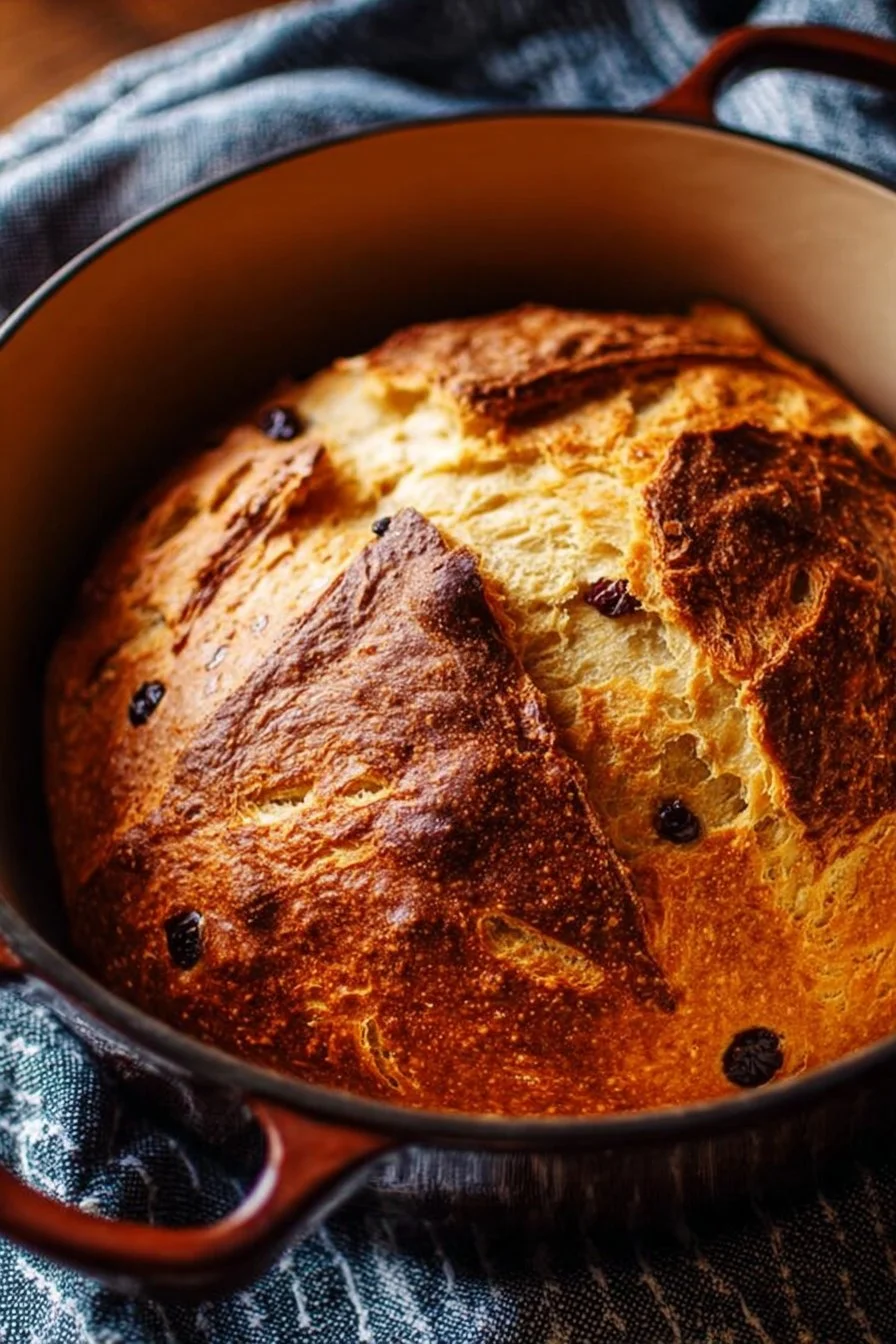
There’s something quietly magical about pulling a blistered, crackling loaf from a hot Dutch oven after a long, hands-off ferment. This simple no-knead recipe uses just flour, salt, a pinch of instant yeast, and lukewarm water to produce a rustic boule with an open crumb and a very crisp crust — perfect for butter, soup, or a weeknight bowl of stew. It’s also a natural companion on a balanced dinner plate; try it with a flaky fish like garlic-butter oven-baked tilapia for an easy, crowd-pleasing meal.
Why you’ll love this dish
This Dutch oven loaf hits a sweet spot: minimal hands-on time, pantry-friendly ingredients, and bakery-level results. You don’t need master baker skills — timing and a hot pot do most of the work.
“The first time I tried this, I expected a decent loaf. I got something that tasted like it belonged in a café — crunchy crust, tender inside, and zero complicated steps.” — a happy home baker
Reasons to try it:
- Extremely low-effort: mix and forget for 12–18 hours.
- Budget-friendly: pantry staples deliver great flavor.
- Versatile: makes excellent toast, sandwich bread, or a table centerpiece for company.
How this recipe comes together
This is a no-knead, long-ferment method. You whisk dry ingredients, add lukewarm water, and stir to a shaggy dough. A long bench rest (12–18 hours) develops flavor and the open crumb. After a gentle fold and shape, the preheated Dutch oven traps steam during the first part of baking for a blistered crust. Removing the lid finishes the crust color and crunch.
Expect about 15 minutes active work across the whole process, plus rise and bake time.
What you’ll need
- 4 cups all-purpose flour (about 500 g) — bread flour works if you want more chew.
- 2 teaspoons fine salt
- 1/2 teaspoon instant yeast (use the same amount of active dry yeast if you bloom it first)
- 1 1/2 cups lukewarm water (about 360 ml, 75–80°F / 24–27°C)
Notes and substitutions:
- Whole-wheat swap: replace up to 25% of the flour with whole-wheat for nuttiness, but add a touch more water.
- Instant yeast is used for convenience; if using active dry, dissolve it in the water and wait 5–10 minutes until foamy.
- For a non-Dutch-oven option, a heavy lidded casserole works, though heat retention will differ.
- For a fried-bread contrast and texture ideas, you can compare this loaf to Indian fry bread.
Step-by-step instructions
- In a large bowl, whisk together the flour, salt, and instant yeast until evenly distributed.
- Pour in the lukewarm water and stir with a spoon or spatula until you have a shaggy, sticky dough. Don’t overmix — you’re not aiming for a smooth ball.
- Cover the bowl with a clean dish towel and leave the dough on the counter for 12–18 hours. A longer rest gives more flavor; a shorter rest yields a milder loaf.
- After the rest, turn the dough onto a well-floured surface. With floured hands, fold the edges toward the center once or twice to create surface tension, then shape gently into a round.
- Let the shaped dough rest, uncovered or lightly covered, for about 30 minutes while you preheat the oven to 450°F (232°C). Place your Dutch oven (lid on) inside the oven to preheat as well.
- Carefully remove the hot Dutch oven, lift the dough (use parchment if you prefer), and transfer it into the pot. Cover with the lid and return to the oven.
- Bake covered for 30 minutes. Then remove the lid and bake another 15–20 minutes until the crust is deep golden brown and the loaf sounds hollow when tapped. Internal temperature should be around 200–210°F (93–99°C) for a fully baked crumb.
- Transfer the bread to a cooling rack and let it cool completely before slicing — at least 1 hour. Cooling sets the crumb and makes slicing cleaner.
Best ways to enjoy it
- Slice thick with good butter and flaky salt for breakfast or a snack.
- Serve alongside soups and stews so diners can mop up flavorful broths.
- Make open-faced sandwiches with roasted vegetables, soft cheese, or smoked fish.
- Turn cooled slices into croutons or breadcrumbs — quick toast in olive oil and herbs gives instant salad toppers.
Storage and reheating tips
- At room temperature: store in a paper bag or wrapped in a clean kitchen towel for up to 2 days. Plastic will soften the crust.
- Refrigeration: not recommended for storage (it speeds staling), but safe if you need it for longer — up to 5 days. Toast or refresh in the oven before eating.
- Freezing: slice the cooled loaf, wrap tightly in foil or freezer bags, and freeze up to 3 months. Reheat slices directly from frozen in a 350°F (175°C) oven for 8–12 minutes.
- Reheating for crisp crust: warm the whole loaf at 350°F (175°C) for 10–12 minutes, or 3–5 minutes in a toaster oven for slices.
Pro chef tips
- Temperature matters: use lukewarm water (75–80°F / 24–27°C) so the long ferment proceeds steadily without overproofing.
- Preheating the pot creates the steam and oven-spring you need. Handle the Dutch oven with heavy mitts — it will be extremely hot.
- Use parchment paper to lift the dough into the pot if the dough is sticky; it also makes transferring safer.
- For an extra-crackly crust, spritz the inside of the oven with water once when you return the covered pot (careful with steam).
- Don’t slice too early: a slightly under-cooled loaf will tear and gummy crumbs result.
Creative twists
- Herb and garlic: fold in 1–2 tablespoons of chopped fresh herbs and a crushed garlic clove for an aromatic loaf.
- Seeded crust: brush the dough lightly with water before baking and press sesame, sunflower, or poppy seeds on top.
- Whole-grain hybrid: use 150 g whole-wheat and 350 g all-purpose for better nutrition and flavor. Add 10–20 ml more water if needed.
- Sourdough variation: substitute part of the flour and water with an active starter and reduce commercial yeast or omit it entirely; proofing times will change.
- Cheesy pull-apart: fold in 3/4 cup grated sharp cheddar before shaping for a gooey loaf.
Common questions
Q: Can I use active dry yeast instead of instant?
A: Yes. Dissolve active dry yeast in the lukewarm water and wait 5–10 minutes until bubbly, then proceed. Quantities stay the same.
Q: How do I know the bread is done?
A: The crust should be deep golden and the loaf should sound hollow when tapped on the bottom. An internal temp of 200–210°F (93–99°C) is a reliable measure.
Q: My dough is very sticky — is that normal?
A: Yes. This method produces a wet, shaggy dough by design. Flour your hands and work surface lightly; avoid adding too much flour during shaping to keep an open crumb.
Q: Can I make this smaller or larger?
A: You can scale the recipe, but oven times will vary. Maintain the same hydration ratio (about 72% water by flour weight here) and use a pot that allows 1–2 inches of clearance around the dough.
Q: Is it safe to leave the dough on the counter for 18 hours?
A: Yes, with this small amount of yeast and room temperatures in the 65–75°F range. If your kitchen is very warm, shorten the rest to avoid overproofing or refrigerate overnight for a slower ferment.
If you want a simple bread that feels and tastes like a bakery loaf without complicated techniques, this Dutch oven method is a dependable go-to.
Print
No-Knead Dutch Oven Bread
- Total Time: 780 minutes
- Yield: 1 loaf
- Diet: Vegetarian
Description
A simple no-knead recipe producing a rustic boule with a crispy crust, perfect for butter or soups.
Ingredients
- 4 cups all-purpose flour (about 500 g)
- 2 teaspoons fine salt
- 1/2 teaspoon instant yeast
- 1 1/2 cups lukewarm water (about 360 ml)
Instructions
- In a large bowl, whisk together the flour, salt, and instant yeast until evenly distributed.
- Pour in the lukewarm water and stir until you have a shaggy, sticky dough.
- Cover the bowl with a clean dish towel and leave the dough on the counter for 12–18 hours.
- Turn the dough onto a well-floured surface and fold the edges toward the center, then shape into a round.
- Let the shaped dough rest for about 30 minutes while preheating the oven to 450°F (232°C) with the Dutch oven inside.
- Carefully remove the hot Dutch oven, lift the dough into the pot, cover with the lid, and return to the oven.
- Bake covered for 30 minutes, then remove the lid and bake for another 15–20 minutes until the crust is golden brown.
- Transfer the bread to a cooling rack and let it cool completely before slicing.
Notes
For added flavor, replace up to 25% of the flour with whole-wheat. Use parchment paper for easier dough transfer.
- Prep Time: 15 minutes
- Cook Time: 50 minutes
- Category: Bread
- Method: Baking
- Cuisine: American